The Man Who Sold the World by Nirvana Lyrics Meaning – Unraveling the Enigmatic Ode to Identity
Lyrics
We spoke of was and when
Although I wasn’t there
He said I was his friend
Which came as a surprise
I spoke into his eyes
I thought you died alone
A long, long time ago
Oh no, not me
We never lost control
You’re face to face
With the man who sold the world
I laughed and shook his hand
And made my way back home
I searched for form and land
For years and years, I roamed
I gazed a gazeless stare
We walked a million hills
I must have died alone
A long, long time ago
Who knows?
Not me
I never lost control
You’re face to face
With the man who sold the world
Who knows?
Not me
We never lost control
You’re face to face
With the man who sold the world
“Thanks, that was a David Bowie song”
“What’s next?”
“I didn’t screw it up, did I?
Okay, but here’s another one I could screw up”
“What is it?”
“Am I going to do this by myself?”
“Do it by yourself”
“Okay, well, I think I’ll try it in a different key
I’ll try it in the normal key
And if it sounds bad, these people are just gonna have to wait”
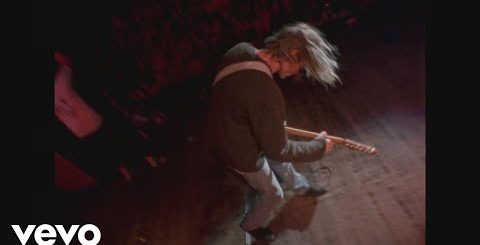
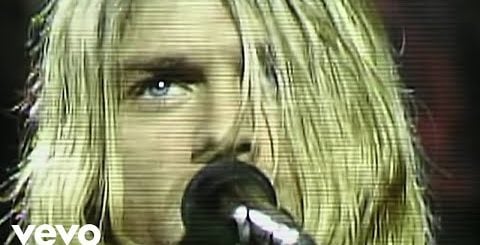
Nirvana’s rendition of ‘The Man Who Sold the World’ bears the haunting weight of a classic reborn, its every chord infused with the raw, unfiltered energy signature to the band’s meteoric but tragically brief era. When Cobain’s gravelled voice collides with Bowie’s enigmatic lyrics, the result is an evocative exploration of self, memory, and the ephemeral nature of life itself.
The lyrics, a tangled web of introspection and surrealism, could be perceived through countless lenses—Cobain’s delivery of them added an extra layer of melancholy and introspection, prompting the song to cross temporal and emotional boundaries. Exploring the meaning behind this visceral track leads us down a path of speculative analysis on themes ranging from existential dread to the facades of control we construct.
Searching for Self in the Ghost of a Melody
The opening lines establish a spectral encounter, ‘We passed upon the stair,’ giving a sense of deja vu or an otherworldly meeting. The melancholic musings about past and present, the acknowledgement of a friendship never realized, grips the listener with an immediacy that invites further contemplation. Cobain’s delivery transforms Bowie’s retrospective confrontation into a deeply personal narrative, one that could be Nirvana’s own wistful reflection on fame and legacy.
This spectral confrontation on the stairs serves as a metaphor for confronting oneself or perhaps the self one used to be. Cobain’s interaction with this stranger, ‘Which came as a surprise,’ underlies the song’s persistent theme of identity, both lost and found, and the realization that the self is a fluid concept, constantly in flux and subject to the interpretations and memories of others.
Face to Face with the Specter of Control
The chorus reverberates with a triumphantly eerie declaration: ‘We never lost control.’ The phrase is a paradoxical anthem, for in the raw honesty of Cobain’s voice, listeners sense the irony. Control, much like the world spoken of in these lyrics, is an illusion, one sold to us as the ultimate goal in a society that values power and composure above vulnerability.
Cobain’s potent refrain breathes life into the oxymoronic assertion, reminding us that our grasp on reality, control, and even identity is ethereal. The song confronts listeners with the unsettling prospect of their own facade, challenging the narrative of self-mastery that we hold dear. It is an ironic salute to the futility of attempting to dominate life’s unpredictably twisting narrative.
Exploring the Once Traveled, Now Lost Paths
The second verse is a wanderer’s recollection, ‘I searched for form and land / For years and years, I roamed.’ These lines evoke an enduring quest, a search for meaning or place that remains perennially unfulfilled, resonating with the nomadic journey of the soul through the trials of life and fame.
The gaze ‘a gazeless stare’ could be the blankness that comes from too much introspection or the numbness of chronic disconnection. It is a powerful image of desolation, a motif that captures the heart of human disorientation. Cobain’s voice carries this despair, an echo from Bowie’s original sentiment, into a space that feels undeniably personal and weighted with history.
The Haunting Echoes of Memorable Lines
Certain phrases from the song have etched themselves into the collective consciousness, such as ‘I thought you died alone, a long long time ago.’ Their resonance lies not in their clarity but in their vagueness — lines that speak to the isolating nature of disillusionment and the recognition of mortality.
Another moment that continues to captivate is the simple yet profound encounter, ‘I laughed and shook his hand,’ a gesture that implies both the acceptance and resignation to the absurdity and randomness of existence. The familiarity in Cobain’s laugh, and the universality of a handshake, bring an odd comfort amidst the song’s existential dread.
Deciphering The Song’s Hidden Layers
When diving deeper into ‘The Man Who Sold the World,’ there’s an intricate interplay between the song’s textual meaning and the subtext of Nirvana’s (and specifically Cobain’s) state of being. Cobain’s affinity for the misfits and the outliers resonates through his adoption of the song, echoing a similar sentiment from Bowie’s original—a communion of those who tread the periphery.
The ghostly encounter at the song’s opening reappears throughout; it’s a motif that serves as a mirror to the fragmented self. It begs the question of whether we can ever truly escape the versions of ourselves ingrained in the minds of others or if in seeking to find home in ‘form and land,’ we’re merely chasing reflections, never to hold the world that we feel we’ve sold.