So Says I by The Shins Lyrics Meaning – Decoding the Anthem of Discontent
Lyrics
I was strumming on a stone again
Pulling teeth from the pimps of gore
When hatched a tragic opera in my mind
And it told of a new design in which every soul is duty bound
To uphold all the statutes of boredom
Therein lies the fatal flaw of the red age
‘Cause it was nothing like we’d ever dreamt
Our lust for life had gone away with the rent we hated
‘Cause it made no money, nobody saved no one’s life this time
So we burned all our uniforms
And let nature take its course again
And the big ones just eat all the little ones
That sends us back to the drawing board
In our darkest hours
We have all asked for some
Angel to come
Sprinkle his dust all around
But all our crying voices they can’t turn it around
And you’ve had some crazy conversations of your own
We’ve got rules and maps and guns in our backs
But we still can’t just behave ourselves
Even if to save our own lives
So says I
We are a brutal kind, whoa
‘Cause this is nothing like we’d ever dreamt
Tell Sir Thomas More we’ve got another failed attempt
‘Cause if it makes them money
They might just give you life this time
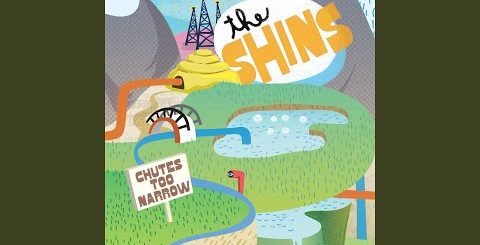
Penned by the indie rock connoisseurs, The Shins, ‘So Says I’ reverberates with a sense of revolutionary zeal, wrapped in a melodic insurgency. This track off their acclaimed 2003 album ‘Chutes Too Narrow’ harnesses a potent blend of discontent and societal critique, inviting listeners to untangle its complexities.
In an era punctuated by social upheaval and the search for deeper meaning, ‘So Says I’ serves not just an infectious tune, but as a capsule of cultural commentary. It’s a song that both brushes with the abstract and resonates with the concrete realities of our times, sifting through the layers of metaphor to reach the crux of modern life’s conundrum.
An Anthemic Surge Against Societal Constraints
The opening chords of ‘So Says I’ are a clarion call, a defiance against the stone-cold edifice of structured societal norms. ‘An address to the golden door’ could very well be an invocation of opportunity, juxtaposed against ‘strumming on a stone again,’ which signals a return to the foundational, yet mundane aspects of life. As lead singer James Mercer delves into a ‘tragic opera’ of his mind, the song swiftly characters a world where innovation is impeded by the overarching ‘statutes of boredom,’ enforced upon every soul.
This isn’t just a desolate landscape painted by disillusioned brush strokes; it’s a sharp critique of what Mercer perceives as the ‘fatal flaw of the red age.’ Here lies a provocative poke at the social inertia that stifled the zeitgeist of yesteryears, echoing a sentiment of generational disillusionment that’s palpable throughout the track.
Lamenting Lost Passions: A Line That Cuts Deep
Mercer’s lyrical prowess bleeds poignantly in ‘Our lust for life had gone away with the rent we hated.’ It’s a memorable line that encapsulates a core tenant of modern disillusionment. The harsh reality of subsistence living overshadowing intrinsic pleasures and passions is laid bare, unvarnished by poetic fluff.
Detachment from the quintessential ‘lust for life’ symbolizes a broader discontent as monetary pressures suffocate the genuine zest for existence. ‘Cause it made no money, nobody saved no one’s life this time,’ Mercer critiques the capitalistic structure where human life’s worth is embroiled with its financial productivity, a sentiment that resonates with today’s discerning listener.
A Cycle of Dominance and Subservience Unveiled
The naturalistic imagery of the apex predation ‘And the big ones just eat all the little ones’ unveils the intrinsic hierarchy of survival, reflecting a societal parallel. Mercer does not mince words when illustrating the bleak realities of life, suggesting how the dominion of the powerful serves to subjugate and consume the less fortunate.
The notion of returning ‘to the drawing board’ conveys an endless loop of starting over, questioning the progress as much as it recognizes the perpetual struggle for advancement and equity. It’s a hauntingly cynical view of the world’s operations, laid out with poetic precision.
Unpacking the Hidden Meaning of Angelic Symbolism
The song bridges to a universal plea for salvation, ‘Angel to come, sprinkle his dust all around,’ evoking the desperate human search for divine intervention in the darkest hours. Yet, this celestial longing is futile—the ‘crying voices’ cannot alter the course of destiny, suggesting a loss of agency in influencing the outcome of one’s circumstances.
Any personal ‘crazy conversations’ align with the notion of internal dialogue, potentially reflecting Mercer’s own struggles with the duality of seeking meaning in a world that appears indifferent to individual yearnings for purpose.
A Brutal Kind: The Indelibility of Human Nature
Mercer’s concluding self-reflection, ‘We are a brutal kind,’ taps into the inherent nature of human beings. Despite having ‘rules and maps and guns in our backs,’ the lyrics suggest that even with all the tools and knowledge at our disposal, there is an innate inability to ‘behave ourselves,’ casting a shadow on the human condition.
Binding together existential strands from the previous verses, ‘So Says I’ ultimately posits that, irrespective of survival’s stakes, there’s a fundamental flaw within humanity—a flaw that perpetuates conflict and undermines our very survival. The finality of the title itself, ‘So says I,’ cements Mercer’s authority on the subject matter, asserting a resigned wisdom accepted after thorough introspection.