The Seer’s Tower by Sufjan Stevens Lyrics Meaning – A Lyrical Voyage into Cosmic Reflection and Earthly Division
Lyrics
There is a view that reaches far
Where we see the universe
I see the fire, I see the end
Seven miles above the earth
There is Emmanuel of mothers
With his sword, with his robe
He comes dividing man from brothers
In the tower above the earth, we built it for Emmanuel
In the powers of the earth, we wait until it rips and rips
In the tower above the earth, we built it for Emmanuel
Oh my mother, she betrayed us, but my father loved and bathed us
Still I go to the deepest grave
Where I go to sleep alone
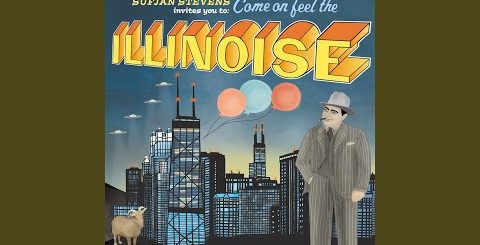
Sufjan Stevens, a bard for the modern soul, enchants once again, this time with ‘The Seer’s Tower’. A deep dive into the track from Stevens’s critically acclaimed album ‘Illinois’ reveals more than just a structured progression of notes and narratives. It stands as a profound introspection and commentary, carrying listeners to towering heights of cosmic wonder and plunging them into the earth’s tumultuous divide.
With every chord and lyric, Stevens crafts a journey of existential dimensions that metaphorically articulates human experience from a grandiose, almost celestial perspective. ‘The Seer’s Tower’ is not simply a piece of music – it is an auditory tableau, intertwining religious allegory, familial dynamics, and apocalyptic foreboding.
A Skyscraping Perspective: Unraveling the Cosmic Gaze
The opening lines of ‘The Seer’s Tower’ immediately transport the listener to an almost otherworldly vantage point. Stevens’s ‘tower above the earth’ is far more than a physical construct; it is a symbol of spiritual ascent, an ivory satellite where one can witness the vast expanse of creation. The ‘view that reaches far’ speaks to the human longing for omniscience, for understanding the maze of existence from a perch untouched by its chaos.
‘I see the fire, I see the end’—these words are a potent harbinger, chilling in their simplicity. Through this foreseen conclusion, Stevens grapples with the cyclical nature of life and the finite limits set against the backdrop of an infinite universe. It’s the artist’s insight, looking both outward and inward, catching a glimpse of destiny and destruction entwined.
Clashing Swords and Robes: The Allegory of Emmanuel
‘Seven miles above the earth, there is Emmanuel of mothers’—in these lyrics, Stevens intertwines the celestial with the religious. Emmanuel, a name for Christ, represents divine intervention from immense heights. Emanuel’s sword and robe, traditional symbols of justice and authority, allude to a discerning figure, compelling a narrative of divine judgment and separation.
The division ‘from brothers’ suggests a poignant separation intrinsic to the human condition. Stevens’s use of biblical motifs isn’t just mere storytelling; it is an evocative exploration of choosing paths, of schisms carved by beliefs, and ultimately, the revelation of our innate longing for guidance from a force greater than ourselves.
The Dichotomy of Parental Love and Betrayal
The familial lament embedded within ‘Oh my mother, she betrayed us, but my father loved and bathed us’ transforms the lofty imagery of the preceding verses into a visceral stab of earthly hurt. Here, Stevens invokes the archetype of parental relationships to illustrate duality and discord. The mother’s betrayal is a nearly archetypal wound, manifesting in the narrative as a fundamental break in trust and care.
In counterbalance, the father’s ‘love and bathe’ conjure a contrast of nurture and cleansing. Stevens positions these acts as a salvage from betrayal, a redemptive ritual that pours affection where neglect once festered. It is perhaps in these lines that Stevens’s artistry shines brightest—every word is a painted stroke on the canvas of human complexity.
Eternal Edifices or Fleeting Folly?: ‘We Built it for Emmanuel’
The recurring chant ‘In the tower above the earth, we built it for Emmanuel’ resonates like an anthem through the song. It begs the question, what do our towers—our achievements, establishments, and legacies—truly stand for? There is profound room for interpretation here, as building for Emmanuel can be seen as an act of homage, a dedication to the divine, or even a futile attempt to please an unreachable diety.
The phrase ‘we wait until it rips and rips’ then augments that potential futility with impending doom. Any endeavors, however grand, may eventually succumb to some inevitable unmaking. Stevens doesn’t give room for nihilism, but rather challenges the listener to ponder the purpose and permanence of our human constructs in the face of eternity.
The Isolation Anthem: ‘Where I Go to Sleep Alone’
In the conclusive sentiment, ‘Still I go to the deepest grave/Where I go to sleep alone’, Stevens emphasizes solitude as the ultimate human condition. The ‘deepest grave’ could symbolize both the literal end of life as well as the most profound depths of introspection or depression. To ‘sleep alone’ therein could be a resignation to solitude or an acceptance of personal responsibility and sovereign identity.
This line is perhaps the most gripping, as it can be interpreted as the acknowledgment of mortal reality or the embrace of individual strength. It’s a testament to Stevens’s muse that the song leaves the listener arrested between lingering despondence and a quietly hopeful introspection.