King of Pain by Police Lyrics Meaning – Delving Into the Depths of Despair and Destiny
Lyrics
It’s the same old thing as yesterday
There’s a black hat caught in the high tree top
There’s a flag pole rag and the wind won’t stop
I have stood here before inside the pouring rain
With the world turning circles running ’round my brain.
I guess I’m always hoping that you’ll end this reign
But it’s my destiny to be the king of pain.
There’s a little black spot on the sun today, that’s my soul up there
It’s the same old thing as yesterday, that’s my soul up there
There’s a black hat caught in a high tree top, that’s my soul up there
There’s a flag pole rag and the wind won’t stop, that’s my soul up there
I have stood here before inside the pouring rain
With the world turning circles running ’round my brain.
I guess I’m always hoping that you’ll end this reign
But it’s my destiny to be the king of pain.
There’s a fossil that’s trapped in a high cliff wall, that’s my soul up there
There’s a dead salmon frozen in a waterfall, that’s my soul up there
There’s a blue whale beached by a springtide’s ebb, that’s my soul up there
There’s a butterfly trapped in a spider’s web, that’s my soul up there
I have stood here before inside the pouring rain
With the world turning circles running ’round my brain.
I guess I’m always hoping that you’ll end this reign
But it’s my destiny to be the king of pain.
There’s a king on a throne with his eyes torn out
There’s a blind man looking for a shadow of doubt;
There’s a rich man sleeping on a golden bed
There’s a skeleton choking on a crust of bread.
There’s a red fox torn by a huntmen’s pack, that’s my soul up there
There’s a black winged gull with a broken back, that’s my soul up there
There’s a little black spot on the sun today
It’s the same old thing as yesterday
I have stood here before inside the pouring rain
With the world turning circles running ’round my brain.
I guess I’m always hoping that you’ll end this reign
But it’s my destiny to be the king of pain.
King of pain
King of pain, king of pain, I always be king of pain…
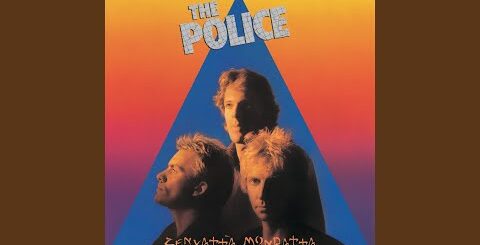
The song ‘King of Pain’ by The Police, written by the charismatic and introspective Sting, is more than just a melodic lament; it’s a rich tapestry woven with symbols of suffering and existential reflection. Released in 1983 as part of their album ‘Synchronicity’, the song became an anthem for those resonating with its profound sense of angst and poetic dissection of the human condition.
Through its melancholic verses, ‘King of Pain’ paints vivid imagery of a soul desperately navigating the landscape of sorrow. But what lies beneath the surface of this ostensibly bleak narrative? Explore the layers of Sting’s masterpiece as we dive into the dark albeit liberating meanings that have cemented ‘King of Pain’ as one of the most thought-provoking entries in the lexicon of rock.
Metaphors of Misery: Decoding Sting’s Lyrical Imagery
‘King of Pain’ is a masterclass in metaphor, with Sting using a multitude of natural and surreal images to convey the debilitating grasp of inner turmoil. Each verse is a stanza of struggle, with the ‘little black spot on the sun today’ symbolizing a stain on the brightness of life, an eclipse of happiness by a persistent dark presence felt within the self.
The ‘black hat caught in the high tree top’ and ‘flag pole rag’ further arouse feelings of entrapment and the relentless, enduring power of despair. These repeated visual motifs pull the listener into a spiral of the speaker’s woeful psyche, where gloom is a permanent resident and agony is regally enthroned.
Inside the Reign: Unveiling the Song’s Hidden Meaning
At its core, ‘King of Pain’ carries an undercurrent of reluctant acceptance and prescient acknowledgment of one’s fate. The song’s chorus whispers a reluctant submission to the ‘destiny to be the king of pain.’ Here, Sting subtly nudges at the possibility of pain being not just an emotional experience, but a defining character of one’s identity.
‘King of Pain’, then, becomes an unwitting declaration of sovereignty over a kingdom no one desires to rule. Sting encapsulates the paradox of embracing one’s darkest moments to fully understand the spectrum of human emotion and the pursuit of self-realization, however grim that may be.
The Cyclic Struggle: ‘The World Turning Circles’
The recurring line ‘With the world turning circles running ’round my brain’ serves as a mnemonic for the relentless, cyclical nature of mental anguish. It echoes the inescapable recurrence of grim thoughts and the dizzying effect of the world’s incessant and unforgiving pace.
There’s a profound existentialism embedded within these words. Sting suggests not only the personal conflict but also taps into a universal plight, where every human is bound to the wheel of their own mental constructs, which, regardless of effort, seems destined to revolve around the axis of pain and confusion.
Memorable Lines: ‘Eyes Torn Out, Shadows of Doubt’
The juxtaposition of the blind man seeking a shadow of doubt and the king with eyes torn out stand out with striking poignancy. Here, the absence of sight metaphorically amplifies the insight into the human soul’s quest for meaning, even when blinded by their own suffering.
These lines scream of the struggle to find certainty in a world that is inherently uncertain. Perhaps through these vicarious experiences, we confront the futility of comfort and the depth of understanding we gain when we navigate through our darkness with eyes wide open, even if they are metaphorically torn out.
A Legacy of Loneliness: The Soul’s Representation in Nature
Throughout ‘King of Pain’, nature is painted not as the romantic, serene backdrop poets often pay homage to, but as a theater of enduring agony. The ‘fossil trapped in a high cliff wall,’ the ‘dead salmon frozen in a waterfall,’ or the ‘blue whale beached by a springtide’s ebb’ each tell tales of lives paused mid-narrative, encapsulating the visceral sense of being caught in a moment of despair.
By framing his soul as being one with these suspended echos of life, Sting communicates an intimacy with suffering that is not only his own but is also shared by the world around him. It’s a profound reminder of the interconnectedness of all things, in anguish or otherwise, and how pain can be a universal, yet deeply personal experience.