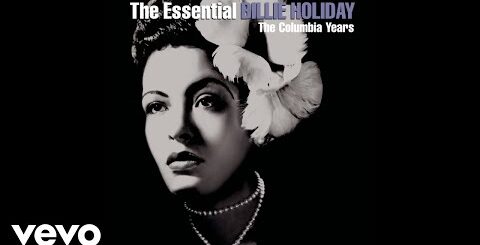
Strange Fruit by Billie Holiday Lyrics Meaning – Unveiling the Haunting Realities of Racial Terror
Lyrics
Blood on the leaves and blood at the root
Black bodies swingin’ in the Southern breeze
Strange fruit hangin’ from the poplar trees
Pastoral scene of the gallant South
The bulgin’ eyes and the twisted mouth
Scent of magnolias sweet and fresh
Then the sudden smell of burnin’ flesh
Here is a fruit for the crows to pluck
For the rain to gather, for the wind to suck
For the sun to rot, for the tree to drop
Here is a strange and bitter crop
Billie Holiday’s ‘Strange Fruit’ remains one of the most hauntingly acute musical reflections on American racism and violence. Known for its chilling imagery and somber mood, the song transcends the realm of traditional jazz, painting a stark picture of Southern lynchings. Its profound impact on the listener carries forward Holiday’s legacy as a truth-teller and an artistic revolutionary.
This analysis peels back the layers of ‘Strange Fruit’ to explore the depths of its commentary. Billie Holiday delivers a societal critique that is as relevant today as it was back in 1939, exposing the ugly truth about America’s historical treatment of African Americans through her powerful vocals and poignantly expressive lyrics.
The Agonizing Metaphor of ‘Strange Fruit’
The term ‘strange fruit’ serves as a devastating metaphor for the black victims of lynching, with the ‘Southern trees’ becoming the silent witnesses to these atrocities. Holiday doesn’t resort to graphic descriptions but allows the metaphor to seep into the listener’s consciousness. The contrast between the natural beauty of the South and the grotesque reality of racial violence creates an unsettling image that is hard to forget.
Each line of the song drips with the bitterness of reality, as Holiday gracefully wields the power of understatement to convey a message far louder than any explicit narrative could muster. The ‘blood at the root’ is a poignant metaphor for the deep-seated racism ingrained within American society, something that, like the roots of a tree, is often hidden beneath the surface yet is essential to the existence of the ‘fruit’ it yields.
A Scent That Shifts: From Magnolias to Burning Flesh
Billie Holiday crafts a journey for the senses—a juxtaposition of the sweet smell of magnolias which then gives way to the harrowing ‘sudden smell of burnin’ flesh.’ This sensory detail does not just paint a picture but serves as an allegory for the illusion of Southern gentility that, when stripped away, reveals an underlying brutality.
The scent of magnolias—often associated with the genteel South—clashes with the odor of burned bodies to force a contemplation of the dichotomy between perceived Southern hospitality and the horrific acts of violence perpetrated within its borders. It’s a clever way of demonstrating how deeply terror has seeped into what might otherwise seem like an idyllic landscape.
Lynchings: The American Pastoral Turned Macabre
Holiday refers to the scene of the lynchings as a ‘pastoral scene of the gallant South,’ a line drenched in irony. The gallantry is a façade, a bitter commentary on the South’s romantic image, sharply conflicting with the grim reality of racial terror against African Americans.
In this single line, the singer exposes the hypocrisy of a region that prides itself on nobility and valor, yet allows the perpetuation of such inhuman acts. The scene is far from the serene and harmless pastoral—a term often used to describe the countryside—that one would imagine.
Bearing the Fruit of Horror: The Chilling Imagery
The song’s most memorable lines—’Black bodies swingin’ in the Southern breeze / Strange fruit hangin’ from the poplar trees’—are almost unbearable in their visual force. The image is stark, the bodies described with an earth-shattering normalcy that belies the grotesquery of this ‘fruit.’
Holiday sings of the ‘bulgin’ eyes and the twisted mouth,’ elements that could have been part of a physical description of a person in life, now grotesquely transformed into markers of death’s deep injustice. The normality with which these horrors are presented is meant to shock—to highlight the routine nature of such violence in some parts of the country at the time.
The Poetic Structure as a Cries for Justice and Memory
The song wields a simple yet profound structure, much like a poem, ensuring its message cannot be lost amidst complexity. Holiday ends with the lines, ‘For the sun to rot, for the tree to drop, Here is a strange and bitter crop,’ suggesting not just an ending but an invitation to witness, to acknowledge, and to remember.
These final words leave listeners with the notion of inevitability and the cyclic nature of violence, evoking a sense of responsibility to break the cycle and address the systemic rot metaphorically represented by the song. In this manner, ‘Strange Fruit’ not only remembers the past but calls for action in the present.