European Son by The Velvet Underground Lyrics Meaning – Unraveling the Enigmatic Ode to Cultural Dissonance
- Music Video
- Lyrics
-
Song Meaning
- An Audit of Angst: The Youthful Rebellion in ‘European Son’
- Cultural Iconoclasm: Making Love to the Scene
- The Disillusioned Departure: The Haunting Echoes of ‘Bye bye bye’
- Peeling Back the Sonic Layers: The Hidden Meaning Beneath the Noise
- The Melancholic Mime: Understanding the ‘Clown’s Bid You Goodbye’
Lyrics
You spit on those under twenty-one
But now your blue car’s gone
You better say so long
Hey hey, bye bye bye
You made your wallpapers green
You want to make love to the scene
Your European son is gone
You’d better say so long
Your clown’s bid you goodbye
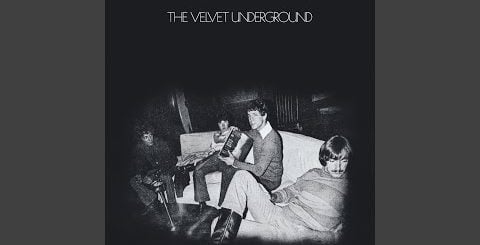
As a mosaic of bewildering soundscapes and poetic defiance, The Velvet Underground’s ‘European Son’ crawls into the annals of rock history, shrouded in enigma and rebellion. The track, a pulsating close to their debut album ‘The Velvet Underground & Nico,’ reflects the band’s eloquent noise experimentations and deconstructs the traditional forms of songwriting, popular in the ambient 1960s culture.
Dissecting the lyrics of ‘European Son’ is akin to excavating the cultural rupture of the era it was born into: a testament to generational divide, a critique of societal norms, and the navigation of identity within a changing landscape. The Velvet Underground’s audacious message resonates through a cacophony that assaults the senses and challenges the listener to find coherence within chaos.
An Audit of Angst: The Youthful Rebellion in ‘European Son’
Lyrically sparse but sonically ravenous, ‘European Son’ is less a song than a confrontation. The opening lines ‘You killed your European son / You spit on those under twenty-one’ scorn the generational disconnect gripping 60’s America. It’s a declaration from the voice of youth to authority: the end of deference to the established societal order, a shredded social contract, and a youth culture ready to bid farewell to the old guard.
This isn’t a gentle parting; it is a raucous, defiant shove against the expectation of the young to quietly inherit a world they find themselves increasingly alienated from. The ‘blue car’s gone’ metaphorically signals a transition of power, of the ostentatious symbols of the previous generation’s status and pride slipping away into obsolescence.
Cultural Iconoclasm: Making Love to the Scene
The Velvet Underground aren’t just making music; they’re ‘making love to the scene.’ This line isn’t just simply about a physical act; it’s a love affair with the burgeoning counterculture – a fusion of art, music, and societal comments intertwining with the very essence of what they represented. The ‘wallpapers green’ could be seen as an attempt to fade into this backdrop, becoming one with the movement that strives for a future untainted by convention.
But the romance with revolution is as fleeting as it is fervent. The green of new life is ephemeral, and the desire to blend into the landscape of change is fraught with disillusionment. And it is this play between eagerness to belong and the unease of rapid transformation that ‘European Son’ encapsulates.
The Disillusioned Departure: The Haunting Echoes of ‘Bye bye bye’
The repeated ‘Hey hey, bye bye bye’ isn’t just a catchphrase or an earworm—it’s the harbinger of an era concluding abruptly, an adieu that resonates as much as it ridicules. There’s a sneer in these goodbyes, a sort of musical mic drop that punctuates the dissatisfaction with the status quo and the readiness to engage with the new, unpredictable yet invigorating.
The simplicity of the repetition belies its depth. Each ‘bye’ is a nail in the coffin of old Europe – the Europe of colonialism, of old wars, of rigid class systems – with each ‘hey’ is the call to attention for what comes next: the undiscovered, the undetermined, the liberation.
Peeling Back the Sonic Layers: The Hidden Meaning Beneath the Noise
To the untrained ear, ‘European Son’ might dissolve into the realms of noise rock without a second thought given to its chaos. But within these final minutes of auditory fireworks, The Velvet Underground embeds a multitude of meanings—an urgency, a wake-up call, a revolution. This isn’t noise for noise’s sake; this is noise as a vehicle for change, a reflection of the internal turmoil that begged for expression in a time that demanded it.
The experimental outro, a mixture of feedback, improvisation, and what some may call cacophony, is in fact a meticulous craft that weaves sensation and sentiment into a tapestry of sound. It’s a rebellion against conventional musical form, a testament to The Velvet Underground’s avant-garde reputation.
The Melancholic Mime: Understanding the ‘Clown’s Bid You Goodbye’
In the track’s cryptic concluding line, ‘Your clown’s bid you goodbye,’ one senses a deeper despondency that underpins the overt tone of revolt. The ‘clown’ perhaps symbolizes those parts of ourselves we send out to distract from reality, the roles we act out to appease societal performances. Now, even the clown has had enough, leaving us with a mirror that reflects our true discontent.
This final farewell is emblematic of the song’s fractured narrative—a story pieced together through fragments of disillusionment, defiance, and the longing for something genuine beyond society’s curtain of pretense. ‘European Son,’ in its essence, is an exploration of identity, liberation, and the existential wanderings of a generation coming into its own amidst the turbulent playground of history.