War by Burzum Lyrics Meaning – Peering Into the Abyss of Human Conflict
Lyrics
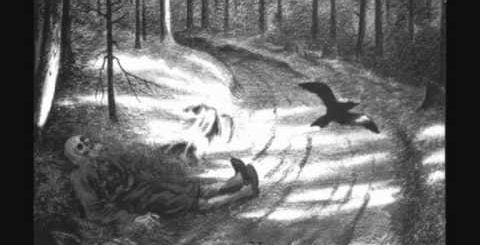
I lie wounded on wintery ground
With hundred of corpses around
Many wounded crawl helplessly around
On the blood red snowy ground
War
Cries of the (ha, ha) suffering sound
Cries for help to all their dead moms
War
Many hours of music
Many drops of blood
Many shiverings and now I am dead
And still we must never give up
War
Few tracks have captured the harrowing spectacle of human conflict as starkly as Burzum’s ‘War.’ Within the minimalistic but potent lines of this musical piece, there lurks a deeper narrative – one that transcends its abrasive exterior to reveal raw insights on the nature of war and its haunting, immutable presence within the human condition.
Navigating through the frostbitten and somber soundscapes crafted by Varg Vikernes, the mastermind behind Burzum, ‘War’ proves to be an aural igniter of contemplation. What might initially strike the listener as rudimentary, both in structure and lexicon, unfurls as a canvas on which the stark realities of war are vividly painted in shades of desolation and despair.
The Battlefield’s Bleak Symphony: An Overture to Desolation
The song ‘War’ opens with a chilling line that sets the stage for the narrative: a solitary figure, wounded amidst a bleak winter landscape, surrounded by the fallen. These words are not simply visceral; they encapsulate the sense of isolation – both physical and emotional – that consumes the spirit in the throes of war.
It’s this juxtaposition of the coldness of the scene with the heat of battle that manifests a profound statement about the duality of war. Vikernes is not just painting a picture with his lyrics but is inviting us to feel the desolate chill and confront the inherent solitude that warfare inflicts upon its participants, regardless of the side.
Suffering’s Echo: Haunting Cries Piercing Through Silence
Arguably, the most potent weapons of ‘War’ are its haunting cries – screams that seem both distant and uncomfortably close. These ‘cries of the suffering’ are delivered with a near-mocking laughter, suggesting a sense of futility and madness encapsulating the essence of war itself.
As one reflects on these moments in the track, a painful picture of war’s aftermath is sketched – where the intermingling of pain and the quest for a rapidly fading hope leaves its indelible mark on the human soul. The mention of ‘cries for help to all their dead moms’ amplifies the lament, the universal loss of innocence, and the collapse of the comforting constructs of childhood amidst the chaos of adult-made war.
The Clockwork of Carnage: Time Measured in Blood and Music
Vikernes uses ‘many hours of music’ to indicate the unrelenting passage of time during the conflict, with music possibly serving as a metaphor for the rhythm of ongoing battles – gunfire, explosions, and the agonized screams of the combatants.
This phrase, coupled with ‘many drops of blood,’ anchors the listener in the reality that war’s currency is the blood of those who fight. The repetition and pacing of these lines evoke a relentless tempo, hinting at the weariness but inevitability of passage within war’s grasp, forever counting its toll in human lives and suffering.
The Silent Comrade: Death’s Inevitable Embrace
Vikernes succinctly closes the circle of life and death with the phrase ‘and now I am dead.’ There’s a stark finality in these words, an acceptance that can only come with acknowledging death as an inseparable ally to every soldier. The resigned cadence paints death not as an enemy, but as the ultimate quietus to the chaos of war, offering a contrasting form of peace.
The line’s placement at nearly the song’s end serves a dual purpose – it acts as both the climax of the narrative and an epitaph celebrated in its simple truth. It bears testament to the countless unknowns who have been enveloped by the shroud of obscurity after serving as mere participants in larger power plays.
Unyielding in the Shadow of Death: The Enduring Spirit of Combat
‘And still we must never give up.’ These words, appearing near the song’s end, reverberate with a defiance that seems almost counterintuitive given the preceding admission of death. Here lies the song’s enigmatic heart – a stubborn persistence reflecting humankind’s resilient yet often self-destructive stride within conflicts.
It speaks to the indomitable human spirit that persists even when faced with the certainty of demise. Vikernes presents a paradox – the intangible human essence that drives us to survive, to fight, even against overwhelming odds, is both our curse and our most profound strength.