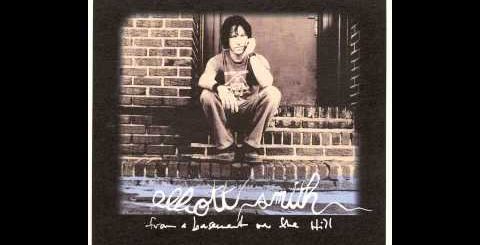
Oh Well Okay by Elliott Smith Lyrics Meaning – Unraveling the Enigma of Melancholic Acceptance
Lyrics
the face always turned away
the bleeding color gone to black
dying like a day
couldn’t figure out what made you so unhappy
shook your head to say no no no
and stopped for a spell
and stayed that way
oh well, okay
i got pictures, i just don’t see it anymore
climbing hour upon hour through a total bore
with the one i keep where it never fades
in the safety of a pitch black mind
an airless cell that blocks the day
oh well, okay
if you a get a feeling the next time you see me
do me a favor and let me know
‘cos it’s hard to tell
it’s hard to say
oh well, okay
oh well, okay
oh well, okay
The haunting strains of Elliott Smith’s ‘Oh Well Okay’ resonate with the unmistakable echo of resignation and contemplative acceptance that characterizes the artist’s work. Smith, a poet of the downtrodden and disenchanted, weaves a minimalist tapestry of words that, like his melody, are at once sparse and profoundly loaded.
Through the lens of this composition, we explore the caverns of a troubled psyche, confront the shadows of despair, and glimpse the ephemeral nature of pain and acceptance. The song’s deceptive simplicity invites us to take a deeper dive into the lyrics, uncovering layers of emotion and meaning that Smith masterfully imbedded in this melancholy melody.
The Silhouette of Despair and Disconnect
Smith introduces us with ‘Here’s the silhouette, the face always turned away,’ immediately setting a mood of isolation and anonymity. The silhouette, an ephemeral outline devoid of detail or discernible emotion, is a powerful metaphor for the disconnect between what is inside and what the world sees.
Darkness pervades as ‘the bleeding color gone to black’ conveys a sense of fading life – the draining away of vibrancy, ‘dying like a day.’ Within these lines, we sense the struggle to understand the root of such profound unhappiness, the unanswered pleas evidenced in the stark repetition of ‘no no no.’
A Maze of Mental Imprisonment
Smith paints a chilling picture of internal confinement with ‘in the safety of a pitch black mind, an airless cell that blocks the day.’ The imagery is stark, illustrating a place where one is trapped in their own mind, a personal hell that is both safe and suffocating.
The ‘pitch black mind’ is a paradoxical sanctuary; it numbs and protects from the external stimuli while simultaneously acting as a cell – a place of torment and stagnation where time and existence blur into ‘a total bore.’
The Resonance of Heartbreaking Honesty
‘Couldn’t figure out what made you so unhappy’ serves as a heart-rending confession of helplessness and incomprehension. His candid acknowledgment of emotional opacity not just in others, but within oneself, strikes a chord with anyone who has ever observed a loved one’s pain from an impotent distance.
The line captures a universal experience of observing distress without the capacity to alleviate it, adding a layer of helpless empathy to the song’s narrative.
Oh Well, Okay: The Mantra of Reluctant Acceptance
‘Oh well, okay’ – the phrase is almost a shrug in the face of overwhelming emotions and situations. It is a resignation to the immutable, a reluctant acceptance of what cannot be changed or even fully grasped.
This refrain, repeated throughout the song, becomes a coping mechanism, a way to release the tension that comes with the desire for control and comprehension we so desperately seek but often cannot find.
The Hidden Meaning behind the Veil of Simplicity
The simplicity of ‘Oh Well Okay’ belies the depth of its themes. While on the surface, it appears as a standard ballad, beneath is an intricate web of emotions, from heartache to resignation, and a quiet contemplation of the human condition.
The hidden meaning is not so much hidden as it is woven subtly into the fabric of the song, compelling listeners to look within themselves to find their own parallel stories. Smith doesn’t spell out the narrative but gives each listener a mirror to hold up to their own experiences.