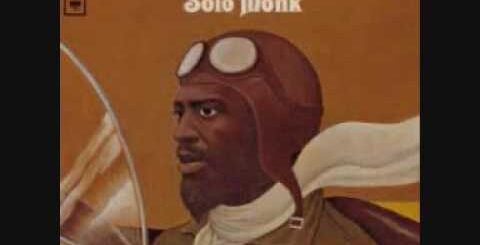
’round Midnight by Thelonious Monk Lyrics Meaning – The Midnight Musings of a Jazz Legend
Lyrics
‘Round midnight, midnight
I do pretty well, till after sundown
Suppertime I’m feelin’ sad
But it really gets bad
‘Round midnight
Memories always start ’round midnight
Haven’t got the heart to stand those memories
When my heart is still with you
And ol’ midnight knows it, too
When a quarrel we had needs mending
Does it mean that our love is ending
Darlin’ I need you, lately I find
You’re out of my heart
And I’m out of my mind
Let our hearts take wings’
‘Round midnight, midnight
Let the angels sing
For your returning
Till our love is safe and sound
And old midnight comes around
Feelin’ sad
Really gets bad
Round, Round, Round Midnight
Within the velvety folds of night, when shadows grow long and the world quiets down, lies the time when hearts beat the truth of their aches and yearnings. Thelonious Monk’s jazz standard, ’round Midnight,’ captures this introspective hour with a poignancy that has resonated through the decades. The song, a masterpiece of melancholy, teeters on the brink of evening’s sorrow and the whisper of hope that lies in wait. It is within this delicate balance that Monk communicates a universal truth about love, loss, and longing.
To grasp the full essence of ’round Midnight,’ one must dive into the core of night’s introspective nature – the hour when the past and present, the heart and mind, seem to hold a silent conversation. Through the interpretation of its haunting lyrics, we uncover the layers of emotional depth that have solidified Monk’s creation as a staple in the jazz repertoire, enchanting musicians and listeners alike.
When the Clock Strikes Melancholy: The Power of Midnight
The setting of Monk’s narrative is as essential to the song as the notes themselves. It’s ’round midnight when the story unfolds—a time historically linked with transformation and contemplation. The dichotomy between day and night is stark, with daylight often symbolizing clarity and action, while midnight ushers in reflection and stillness. Monk taps into this motif, using the time as a backdrop to explore the emotional intricacies of the heart.
But why midnight? In this instance, it represents a turning point, the pinnacle of darkness before the promise of dawn. Similarly, the protagonist in the song finds himself lamenting his lost love, stuck in the heartache until he allows himself the hope for reconciliation. The ticking of the clock thus becomes a metronome to the soul’s own rhythm, oscillating between sorrow and the faint possibility of joy.
The Heart’s Echoes: Dissecting the Song’s Most Memorable Lines
‘Memories always start ’round midnight, haven’t got the heart to stand those memories,’ laments the narrator. These lines penetrate the listener’s soul, acting as the refrain to a ballad of reminiscence. The night can often call to mind the moments we’ve tried to bury in the busyness of daylight, and Monk captures this inevitability with a raw honesty. The memories, once dormant, begin their ghostly waltz as midnight draws near, becoming the protagonists of a bittersweet recollection.
This familiarity with the past is echoed in the acknowledgment that ‘ol’ midnight knows it, too,’ suggesting a shared experience between the hour and the heartbroken. It’s at those witching hours when personal grievances and regrets find solace in the universality of the night’s knowing silence. The soul, laid bare, converses with the backdrop of the time—both partners in the dance of nostalgia.
A Pathway to Reconciliation: The Hidden Meaning in ’round Midnight
Thelonious Monk crafts a narrative of not just sadness, but of intrinsic human hope. When he writes, ‘Let our hearts take wings’ ’round midnight, midnight. Let the angels sing for your returning,’ he underscores the yearning for the resolution of conflict and the restoration of love. These optimistic undertones serve as the counterbalance to the melancholic reminiscence that pervades the piece.
Divining the hidden meaning, ’round Midnight’ is less about succumbing to heartache and more about the transformative power of the night. It’s an invitation to let the late hours serve as a sanctuary for reconciliation and to emerge from the dusk with a renewed spirit, ready to heal breaches caused by daylit quarrels. The anticipated return of a lover mirrors the anticipated rebirth that comes with the conclusion of every midnight.
Fathoming the Psychology of ‘Round the Clock Romanticism
Delving deeper beneath the surface, ’round Midnight’ can be regarded as a psychological study set to music. It explores the notion that as night falls, our defenses weaken and the emotional floodgates open, releasing the streams of consciousness that we hold at bay during the day. Monk’s choice of the midnight hour thus becomes a tool for viewers, allowing a rare look into the psyche of the romantic.
It’s a relatable plight that Monk delineates—the way our thoughts scatter to the wind, only to be caught in the tender trap of night, prodding at heartstrings and rattling the cages we’ve built around our most vulnerable selves. His evocative lyrics invite listeners to examine their own midnight musings and acknowledge the universal dance of love and loss, truth and denial, that ricochets within us all when the world falls quiet.
Since Monk’s Midnight: The Lasting Legacy of the Song
’round Midnight’ has transcended Monk’s own era, whispering its stories into the annals of time, a testament to the timeless relevance of its composition. It stands as a beacon for jazz aficionados and musicians who seek to catch a glimpse of the intimacy Monk so effortlessly weaves. His song has been covered, interpreted, and adored by generations, each finding their own stories amidst its lines.
And so the legacy of ’round Midnight’ persists—a song that does not just signify the end of the day but becomes a companion through the night. It is there in the breath between darkness and light, in the silent spaces where hearts silently beat against the stillness. In every melody and every midnight since, Thelonious Monk has left an indelible mark on the canvas of jazz and on the wandering souls that find solitude in his timelessly crafted midnight confessional.