Wasted Time by Skid Row Lyrics Meaning – A Ballad of Loss and Longing in the Key of Despair
Lyrics
Sacred ties would never fray
Then why can I let myself tell lies
And watch you die every day?
I think back to the times
When dreams where what mattered
Though talking youth naivete
You said you’d never let me down
But the horse stampedes and rages
In the name of desperation
Chorus:
Is is all just wasted time
Can you look at yourself
When you think of what you left behind
Is it all just wasted time
Can you live with yourself
When you think of what you’ve left behind
paranoid delusions they haunt you
Where’s my friend I used to know
He’s all alone
He’s buried deep within a carcass
Searching for a soul
Can you feel me inside your heart as it’s bleeding
Why can’t you believe you can be loved
I hear your scream in agony
And the horse stampedes and rages
In the name of desperation
[Chorus]
is it all just wasted time
Can you look at yourself
When you think of what you left behind
Is it all just wasted time
Can you live with yourself
When you think of what you’ve left behind
You said you’d never let me down
But the horse stampedes, it rages
In the name of desperation
[Chorus]
The sun will rise again
The Earth will turn to sand
Creation’s colors seem to fade to grey
And you’ll see the silky hands of time
Will write your final rhyme
And end our memory
I never thought you’d let it get this far boy
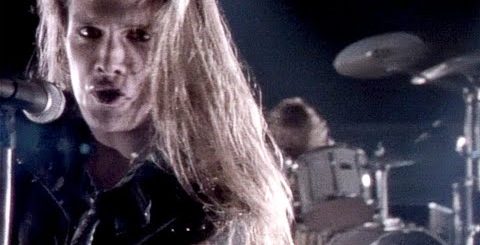
In the annals of rock balladry, few songs capture the raw emotion and the essence of regret quite like Skid Row’s ‘Wasted Time.’ The track is an odyssey through the landscape of loss and the perils of reminiscence, layered with the stark poetry of sorrow. It’s a power ballad with a punch, one that eschews typical romantic lamentations for a deeper, more existential angst.
Nestled in the heart of the band’s 1991 album, ‘Slave to the Grind,’ ‘Wasted Time’ stands as a haunting anthem that weaves a tale of intimacy’s collapse and the harrowing realization that comes with looking back on what might have been. Through its poignant lyrics and crescendoing melodies, the song taps into a universally human experience, inspiring a visceral reaction from listeners who have found themselves questioning the path taken.
The Heart’s Echo Chamber: A Dive Into the Chorus
At the core of ‘Wasted Time’ lies a chorus echoing the song’s central dilemma: the agonizing confrontation with self in the wake of choices made. It’s a stark moment of self-awareness, encapsulated by the plaintive refrain, ‘Is it all just wasted time?’ This question is not just a lyrical hook but an emotional one, imploring the listener to peer into their own life with a critical eye – to measure the weight of past against the present.
The haunting repetition of the question suggests a cyclical nature of regret, a sense of inescapability that Skid Row vocalizes through both the melody’s descent and Sebastian Bach’s soaring vocals. It encapsulates one’s struggle to reconcile with lost time, the haunting that comes not from without, but from within the corridors of the mind.
A Desperate Charge: The Horse Stampedes Metaphor
Among the most striking metaphors in ‘Wasted Time’ is the recurring image of a stampeding horse, representing unbridled desperation. This vibrant and violent imagery conjures a sense of uncontrollable force, a wild and reckless energy that tramples what was once serene. It’s a deft lyric that speaks to the chaos introduced into relationships and lives by desperation’s grip – an internal battle that rages and leaves wreckage in its path.
In this fight of flight, stability and promises are the victims underfoot. The metaphor is no gentle muse but an arresting call to recognize the destructive capability of unchanneled emotion, of dreams deferred or denied, channeled into a destructive torrent that respects neither past bonds nor future aspirations.
Cries in the Silence: The Haunting Poignancy of Verse One
The song’s opening salvo sets the scene with a powerful evocation of betrayal. There’s a sacredness invoked, a covenant implied between souls, that is shatteringly questioned. ‘Then why can I let myself tell lies and watch you die every day?’ The lyricism here is both intimate and indicting, a journey from shared dreams to the slow death of connection – a process both party is aware of, yet seemingly helpless to prevent.
This confessional tone, paired with Bach’s raw vocal delivery, crafts a veneer of vulnerability and the resonance of truth – a sense that these aren’t simply words, but lived experiences. Each line is a ghost of memory, haunting with the specter of what once was, yet painfully is no longer.
The Inevitability of Time: Unraveling the Song’s Hidden Meaning
While ‘Wasted Time’ may initially seem a ballad of mere romantic dissolution, a deeper reading suggests existential undercurrents. The song confronts the listener with the inexorable passage of time, the immutable fact that with each moment making choices, we set forth ripples – consequences that can’t be undone and time that cannot be reclaimed. It’s a sobering meditation on the human condition and the finite nature of our existence.
Skid Row manages to capture this sense of impermanence and the encroaching finality of time, especially in the line: ‘And you’ll see the silky hands of time.’ There is much to be deciphered in this recognition of time’s relentless march – a march that softens the edges of memory and eventually writes our final chapter, leaving behind the specter of potentially wasted moments.
Lingering Echoes: The Siren Call of Memorable Lines
The lyrical masterstroke of ‘Wasted Time’ isn’t just in its chorus or vivid metaphors but also in the sticky sentiments sprinkled throughout the verses. Lines like ‘Can you feel me inside your heart as it’s bleeding? Why can’t you believe you can be loved?’ pierce the listener’s armor, striking chords of relatable pain and the tragedy of self-doubt. In these questions, the song posits the notion that sometimes the greatest obstacles to love and acceptance come not from without, but from an inability to see oneself as worthy.
And with the stark finality posed in the line ‘I never thought you’d let it get this far boy,’ there’s the powerful implication of regret and disbelief over an unexpected outcome. It’s a lament that succinctly captures the disbelief one feels when they’ve witnessed a loved one – or themselves – drift too far from the shore of who they once were.