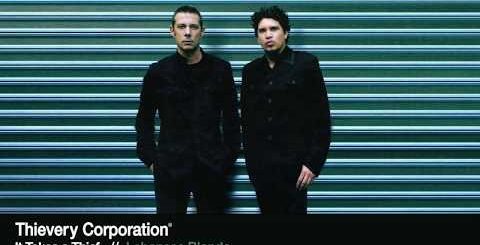
The State of the Union by Thievery Corporation Lyrics Meaning – Unmasking Political Disillusionment
Lyrics
Govemment a work
But govemment them is a monckery
Respect to the youths
Whether in front and all dem a back a me
Why don’t you treat them the way you should
And I know all the things you hide
Even though it’s a good disguise
And we see all the things you do
And what you do will comeback on you
You think we can’t fight what the eyes can’t see
Because we are blinded by poverty
The people live in misery
Govemment a work
But govemment them is a monckery
Respect to the youths
Whether in front and all dem a back a me
Why don’t you treat them the way you should
The people live in misery
Govemment a work
But govemment them is a monckery
Respect to the youths
Whether in front and all dem a back a me
Why don’t you treat them the way you should
It’s like the people you want them to rebel
And fire gunshots and burn buildings to hell
And after that you a go want treat me well
It’s like you have the people under a spell
Talking to the people in a congress
A we vote you in, so you must put out your best
After all we no in a contest
It’s the state of the union address
The people live in misery
Govemment a work
But govemment them is a monckery
Respect to the youths
Whether in front and all dem a back a me
Why don’t you treat them the way you should
The people live in misery
Govemment a work
But govemment them is a monckery
Respect to the youths
Whether in front and all dem a back a me
Why don’t you treat them the way you should
Broadcasting lies on the television sreen
Trying to get us hooked on your american dream
We up on your games if you know wha me mean
When you cheated on your wife with your money and your schemes
People rule and a that you fi follow
We and nuh no call me no nigga
Do a good term and you deserve another
Signed musically yours, the general sleepywonder
The people live in misery
Govemment a work
But govemment them is a monckery
Respect to the youths
Whether in front and all dem a back a me
Why don’t you treat them the way you should
The people live in misery
Govemment a work
But govemment them is a monckery
Respect to the youths
Whether in front and all dem a back a me
Why don’t you treat them the way you should
In an era where political activism and social awareness are at the forefront of artistic expression, Thievery Corporation’s ‘The State of the Union’ resonates as a profound anthem of dissent and a critique of governance. As a standout track from their album ‘The Richest Man in Babylon’, the duo crafts a sonic manifesto that stirs the listener into a contemplative state, questioning the very fabric of societal and political norms.
The track is a fusion of downtempo electronic beats and world music influences sprinkled with the righteous indignation of reggae-infused vocals. It’s a call to arms for the disenfranchised and a melodic indictment of those who wield power without conscience. But to uncover the true depth of the song, one must peel back the layers of its compelling lyrics and arresting rhythms.
Rhythms of Resistance: How Beats and Culture Craft Rebellion
Thievery Corporation has long been celebrated for their genre-defying soundscapes, but ‘The State of the Union’ stands out for how it turns these into a backdrop for resistance. The track’s oscillation between a laid-back groove and an insistent tempo mirrors the fluctuating energy of a society on the brink of revolt.
It’s a cultural mosaic, pulling together disparate elements that underlie a shared experience of discontent. This rhythmic rebellion doesn’t just reflect anger; it’s a space for solidarity, where the global south meets the urban heartbeat in a united front against oppression.
Decoding the Mockery of Governance: A Lyrical Deep Dive
With a poignant simplicity, ‘The State of the Union’ dissects the concept of a ‘government at work’ as being nothing but a ‘monckery,’ implying a system rife with mockery and deception. The repeated refrain about government and the ensuing misery of the people serves to cement the idea of a cyclical struggle—one where the disenfranchised remain trapped in a web woven by those in power.
The lyrics are achingly straightforward, allowing no room for misinterpretation. It’s a call to the people—especially the youth—to recognize the facade of their leaders and demand the treatment and respect they rightfully deserve.
A Siren Call for the Youth: Respect and Rebellion
Thievery Corporation pays homage to the next generation, consistently reverting to ‘respect to the youths’ throughout the song. It acknowledges the young as both the backbone and the frontline of change, recognizing their potential to reshape the political landscape.
There’s a palpable tension between calling for respect and inciting rebellion. The song suggests that without due respect, youth are pushed towards insurrection—’to rebel and fire gunshots and burn buildings to hell.’ It is a stark reminder of what may come when a society fails to value its young.
The Hidden Meaning Behind ‘American Dream’ Recast
Amidst the global criticism in ‘The State of the Union’, there lies a hidden meaning in the seemingly cliché reference to the ‘American dream.’ The song challenges the listener to reconsider the dream as a mere illusion, one peddled through ‘broadcasting lies on the television screen.’
More significantly, it sheds light on subtle forms of cultural imperialism and the mass exportation of American ideologies, spotlighting the insidious ways in which global politics are shaped by this dream that benefits the few at the expense of the many.
Memorable Lines: Musical Signatures of Dissent
Perhaps the most haunting line of the song, ‘And what you do will come back on you’, serves as a prophetic warning to those in power. It resonates with the concept of karma, stressing an inevitable reckoning for the injustices inflicted by the ruling class.
The close of the track leaves us with the impactful signature of ‘Signed musically yours, the general sleepywonder’—a pseudonym that not only embeds the artists within the narrative but also validates the authenticity of their message. It’s a musical sign-off that remains etched in memory, a parting salvo from the socially conscious to the power structures that be.