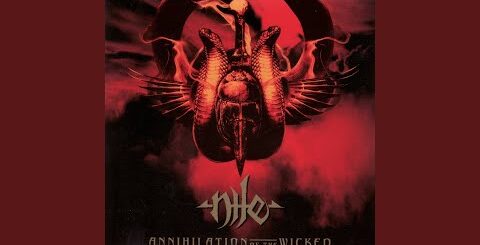
Sacrifice Unto Sebek by Nile Lyrics Meaning – Unveiling the Ancient Echoes in Death Metal
- Music Video
- Lyrics
-
Song Meaning
- Who Is Sebek? – Decoding the God of Power and Protection
- The Ceremony of the Sacrifice – A Gritty Tribute to Ritualistic Devotion
- A Connection with the Afterlife – The Mysticism Behind the Music
- Echoes of Egypt in Modern Metal – The Intelligence of Nile’s Composition
- The Legacy of the Lyrics – Memorable Lines that Bridge Millennia
Lyrics
He who crawleth amongst the Sacred Waters
And Devoureth the Flesh of that Which is sacrificed unto him
Tua Ashemu
Tua Ashemu
Rekhes Au Sebek
Rekhes Au Sebek
Tua Ashemu
Tua Ashemu
Sebek Neter Ashemu
Whose teeth rendeth and teareth with terrible violence
Restore the eyes of the dead
Collect their skulls
Join their bones together again
Lord of the temple of the Mount of Sunrise
Open the way unto the underworld
Cause the dead to rise to new life
Bring the child Horus upon the throne of Osiris
For the uninitiated, the realm of technical death metal might seem like an auditory maelstrom characterized by unrelenting rhythms and growled lyrics—an impenetrable fortress for those seeking deeper lyrical substance. However, within the chaos lies a rich tapestry of history and mythology, woven with precision by bands such as Nile.
Nile’s track ‘Sacrifice Unto Sebek’ is not just another blistering composition in their discography; it’s a conduit to the ancient world, carrying listeners on a journey through the rituals and deities of old Egypt. Parsing the layers of this intense opus reveals not only a testament to the band’s musicianship but a profound reflection of their dedication to bringing the ancient past to visceral life.
Who Is Sebek? – Decoding the God of Power and Protection
Sebek, known variably as Sochet, Suchos, and seemingly the most enigmatic figure within Nile’s ‘Sacrifice Unto Sebek’, stands as the crocodile god of ancient Egyptian mythology. A sentinel of the Nile, Sebek was revered for his ferocity and feared for his raw power, portraying the dual nature of protectiveness and predatory aggression.
Through the vivid imagery of Sebek ‘crawling among the Sacred Waters,’ Nile encapsulates the deity’s dominion over his element—the life-giving and death-dealing river itself. The invocation of Sebek’s name, recited like spells, resonates the band’s all-encompassing portrayal of a deity that demanded respect and obedience.
The Ceremony of the Sacrifice – A Gritty Tribute to Ritualistic Devotion
The track doesn’t just nod to the myth; it delves into the heart of the ceremonial act: the sacrifice unto Sebek itself. With each line, we’re drawn further into the ritual, visualizing the offerings presented to the deity—an experience both barbaric and sacred, underscoring the unrelenting reality of death as homage.
Nile achieves a musical replication of this sacrificial ceremony, their instruments roaring forth with the severity of the act being depicted. The growled chants of ‘Tua Ashemu’ serve as a rhythmic incantation, driving the ritual forward and leaving listeners awash in the sanctity of this ancient practice.
A Connection with the Afterlife – The Mysticism Behind the Music
The lyrics, intense in their depiction of gore, transcend mere shock value as they conjure the Egyptian preoccupation with life after death. The ‘restoration of the eyes of the dead’ and the entreaty to ‘join their bones together again’ hint at the Egyptians’ intricate burial rites and their focus on rebirth and resurrection.
Nile doesn’t just entertain; they educate. The reference to ‘the temple of the Mount of Sunrise’ and the ‘way unto the underworld’ continues the theme of revival. This precise articulation of mythological cosmology elevates the piece from visceral thrash to an intellectual exploration of the mysteries of death and afterlife.
Echoes of Egypt in Modern Metal – The Intelligence of Nile’s Composition
Peering behind the curtain of their aggressive front, Nile’s work reveals a sound intricately tied to musicology and anthropology. ‘Sacrifice Unto Sebek’ intertwines ancient Egyptian instrumentation and scales with modern metal, creating a soundscape that is uniquely transcendent, respecting both its metal roots and the historical narrative it channels.
This synthesis is not accidental. Nile’s founder, Karl Sanders, is known for his scholarly interest in ancient Egyptian culture, which is expertly reflected in the band’s outputs—’Sacrifice Unto Sebek’ being a magnificent case in point. The song manifests how metal can serve as an educational device, an ode to histories lost but not forgotten.
The Legacy of the Lyrics – Memorable Lines that Bridge Millennia
In ‘Cause the dead to rise to new life, bring the child Horus upon the throne of Osiris’, Nile encapsulates the essence of Egyptian mythology—the cycle of life, death, and rebirth. These lines are not just aspects of an ancient culture; they speak to universal truths about the human condition and the endless search for meaning beyond mortal existence.
The profound nature of such lyrics has an enduring impact on listeners. To engage with ‘Sacrifice Unto Sebek’ is to grapple with the same existential themes that preoccupied our distant ancestors, highlighting an unbroken continuity of human contemplation and the power of music to keep this connection alive.