Night by Morphine Lyrics Meaning – Unraveling the Ethereal Mystique of Lilah’s Tale
Lyrics
You’re a folk tale, the unexplainable
You’re a bedtime story. The one that keeps the curtains closed.
I hope you’re waiting for me cause I can make it on my own.
I can make it on my own.
It’s too dark to see the landmarks. I don’t want your good luck charms.
I hope you’re waiting for me across your carpet of stars.
You’re the night, Lilah. You’re everything that we can’t see.
Lilah, you’re the possibility.
You’re the bedtime story. The one that keeps the curtains closed.
And I hope you’re waiting for me cause I can make it on my own.
I can make it on my own.
Unknown the unlit world of old. You’re the sounds I never heard before.
Off the map where the wild things grow. Another world outside my door.
Here I stand I’m all alone. Drive me down the pitch black road.
Lilah you’re my only home and I can’t make it on my own.
You’re a bedtime story. The one that keeps the curtains closed.
And I hope you’re waiting for me cause I can make it on my own.
I can make it on my own.
You’re the paint can falling off the wall at the door that slams at the end of the hall where the kid rings sounds of basketball. The battle of the earth of the angels. The shifting snow drifts so realistic, so realistic – call you carpet of stars. See there is something in the yard. It’s awful dark. With the painted strings, the cross, the good luck charm, the prayer, the extra layer. The group ?
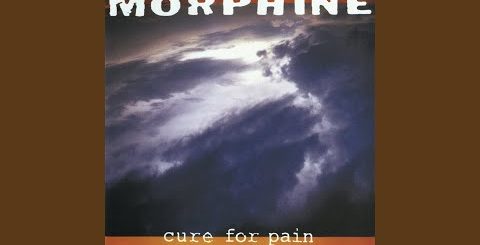
Morphine’s ‘Night,’ a hauntingly beautiful track from their 1993 album ‘Cure for Pain,’ weaves a web of imagery and introspection, drawing listeners into a nocturnal world suspended between reality and fiction. The enigmatic lyrics, rich with metaphor and emotion, serve as the canvas for a deeper exploration of loneliness, longing, and the human condition.
The song is a delicate balance between the literal and the symbolic, beckoning us to seek the hidden laden within each line. Through the song’s lyrical journey, we become acquainted with ‘Lilah,’ a spectral figure both comforting and elusive, and are left pondering the profound impact of her presence in the narrative.
Lilah: A Metaphor for the Untamed and Unknown
At the heart of ‘Night’ lies the enigmatic Lilah, a character that radiates a sense of otherworldliness. The song’s repeated references to Lilah paint her as a shape-shifting being – part folk tale, part bedtime story. But who or what she represents is continually obscured by the dark, rendering her meaning as elusive as a dream.
The duality of Lilah’s character invites a deeper dive into the nature of human comprehension and the allure of the unexplained. She embodies the mysteries that lie beyond the reach of our understanding, both feared and revered for what they may hold. It’s in the seeking of Lilah that the song finds its true quest.
An Ode to Independence Shadowed by Reliance
On the surface, ‘Night’ carries an anthem-like quality, championing self-reliance with the refrain, ‘I can make it on my own.’ This declaration of autonomy resounds with a tone of defiance against the need for any external aid or validation.
However, beneath this veneer of self-sufficiency, there’s a palpable sense of irony. The song’s narrator contradicts their own proclamation of independence, revealing an underlying dependence on Lilah. The contrast between these two sentiments captures the quintessential human struggle between wanting to be alone and needing to belong.
The Allegory of Night and Its Hidden Meaning
Nighttime is often synonymous with uncertainty and the subconscious. In ‘Night,’ this time of darkness symbolizes the internal world of the psyche, a place where fears and desires merge into one. The song speaks to the parts of ourselves that we keep hidden, the stories we tell when the curtains are drawn and the world outside ceases to exist.
This allegory is further compounded by the reference to the ‘carpet of stars,’ which hints at the possibility of infinite worlds beyond our own, simultaneously beautiful and isolating. The night, like Lilah, becomes a symbol of infinite potentiality, an embrace of the unknown that we must all traverse.
Haunting Lyrics: The Echoes of Existential Solitude
‘It’s too dark to see the landmarks,’ Morphine’s frontman Mark Sandman sings, a line that underlines our quest for orientation in the bewildering journey of life. It’s a sobering admission of our propensity to feel lost, to wander without direction in search of a place or a person to call ‘home.’
The ‘bedtime story’ that keeps the curtains closed serves as a metaphor for the stories we tell ourselves to find comfort amidst the chaos. These narratives are both a sanctuary and a prison, cradling us from the storms outside while isolating us from the reality of daybreak when the fantastical gives way to the mundane.
Remembering Night: The Lines That Linger
Some songs leave an indelible mark on the listener, and ‘Night’ accomplishes this through its vivid imagery and stark admissions of vulnerability. ‘Lilah you’re my only home and I can’t make it on my own’ stands out as a line that cuts to the core of human emotion, a raw acknowledgment of dependence in spite of the façade of independence.
As listeners, we are drawn into the paradoxical relationship between the singer and Lilah. They exist in a dance of mutual need and denial, with lines that echo in the minds of those who have ever felt the tug-of-war between solace in solitude and the ache for companionship.