If I Should Fall From Grace Wi by The Pogues Lyrics Meaning – An Ode to the Dichotomy of Existence
Lyrics
Where no doctor can relieve me
If I’m buried ‘neath the sod
But the angels won’t receive me
Let me go, boys
Let me go, boys
Let me go down in the mud
Where the rivers all run dry
This land was always ours
Was the proud land of our fathers
It belongs to us and them
Not to any of the others
Let them go, boys
Let them go, boys
Let them go down in the mud
Where the rivers all run dry
Bury me at sea
Where no murdered ghost can haunt me
If I rock upon the waves
Then no corpse can lie upon me
It’s coming up threes, boys
Keeps coming up threes, boys
Let them go down in the mud
Where the rivers all run dry
If I should fall from grace with god
Where no doctor can relieve me
If I’m buried ‘neath the sod
But the angels won’t receive me
Let me go, boys
Let me go, boys
Let me go down in the mud
Where the rivers all run dry
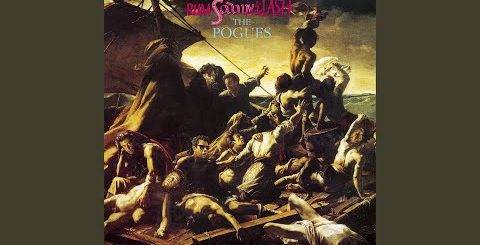
The Pogues, known for their raucous blend of punk and traditional Irish music, weave a tapestry of lyrical depth that transcends the boisterous surface of their sound. ‘If I Should Fall From Grace With God,’ a track from their renowned album of the same name, is a poignant exploration of the human condition, wrapped in the fervor of folk-punk energy.
Shane MacGowan, the band’s frontman, and chief lyricist delivers a potent narrative of life, death, heritage, and transcendence. The song’s narrative arcs through a landscape of folkloric and personal significance, providing a rich soil for interpretation. Let’s delve into the profound layers beneath the rollicking rhythm of ‘If I Should Fall From Grace With God.’
Dancing on the Tightrope of Mortality
At the core of ‘If I Should Fall From Grace With God’ lies a meditation on mortality. The lyrics confront the inevitability of death and the isolation one may face in its grasp. ‘Where no doctor can relieve me…’ speaks to the universal human truth that regardless of our efforts, mortality is the great equalizer.
The juxtaposition of seeking solace in both divine grace and earthly pleasures – or rather, the mud – highlights the dual nature of human desires. Where one moment the protagonist could be reaching for absolution, the next they are accepting their earthly fate without fanfare or ceremony.
A Rebel’s Cry for Autonomy
The repeated exclamation ‘Let me go, boys’ serves as a passionate rallying cry for freedom and self-determination. It’s a refusal to be constrained by society’s norms or expectations, even in death.
This expression of autonomy is emblematic of The Pogues’ anti-establishment ethos. It paints a picture of a character who embodies the rebellious spirit at the heart of punk, even as they face the ultimate rebellion against life itself.
Sailing to the Horizon of Myth and Memory
The call to be ‘buried at sea’ where ‘no murdered ghost can haunt me’ evokes imagery of mythology and folklore, tying individual narrative to a collective cultural memory. The sea is often seen as a place of passage between worlds, a fitting metaphor for the transition between life and whatever lies beyond.
There is a poetic liberation in the idea of a body rocking upon the waves, unencumbered by the weight of terrestrial existence. The song taps into the symbolic power of the ocean as both grave and cradle of myth.
The Bittersweet Lament of Heritage
Shane MacGowan, son of Irish immigrants, touches on the theme of ancestral land and heritage with a bittersweet tone. ‘This land was always ours’ is a declaration of ownership, not just of physical territory, but of the cultural and historical legacy that it represents.
By asserting the land belongs to ‘us and them’, MacGowan bridges the gap between past and present. He acknowledges a shared lineage while confronting the contentious history of colonialism and dispossession.
Unlocking the Hidden Meaning: Rivers and Revelations
The repeated lines ‘Let them go down in the mud / Where the rivers all run dry’ could symbolize the drying up of life and the futility of clinging to it. As rivers represent life and continuous movement, their drying is a powerful metaphor for the end of a journey.
It’s the acceptance of the inevitable, an embrace of the descent back to the earth. The song invites listeners to view this not as a moment of despair, but as a surrender to the natural cycle of life, death, and rebirth.