
Dear God by XTC Lyrics Meaning – Unveiling the Controversial Message Behind the Melody
Lyrics
I pray you can make it better down here
I don’t mean a big reduction in the price of beer
But all the people that you made in your image
See them starving on their feet
‘Cause they don’t get enough to eat from God
Can’t believe in you
Dear God, sorry to disturb you but
I feel that I should be heard loud and clear
We all need a big reduction in amount of tears
And all the people that you made in your image
See them fighting in the street
‘Cause they can’t make opinions meet about God
I can’t believe in you
Did you make disease and the diamond blue?
Did you make mankind after we made you?
And the Devil too
Dear God, don’t know if you’ve noticed but
Your name is on a lot of quotes in this book
And us crazy humans wrote it, you should take a look
And all the people that you made in your image
Still believing that junk is true
Well I know it ain’t, and so do you
Dear God
I can’t believe in
I don’t believe in
I won’t believe in heaven, hell
No saints, no sinners, no devil as well
No pearly gates, no thorny crown
You’re always letting us humans down
The wars you bring, the babes you drown
Those lost at sea and never found
And it’s the same the whole world ’round
The hurt I see helps to compound
The Father, Son and Holy Ghost
Is just somebody’s unholy hoax
And if you’re up there you’d perceive
That my heart’s here upon my sleeve
If there’s one thing I don’t believe in
It’s you
Dear God
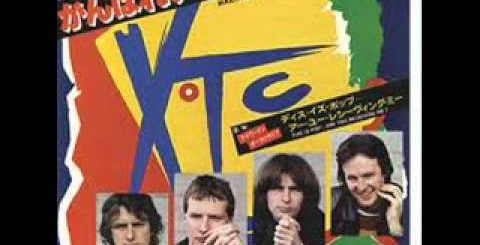
In the landscape of 1980s British rock, XTC carved out a unique place for themselves, mashing wry English sensibilities with power pop melodies and undercurrents of punk angst. Among their wide-ranging oeuvre is ‘Dear God’—a song that stood out not only for its arresting arrangement but for its thought-provoking, some would say blasphemous, lyrics that take a hard, critical look at the concept of a divine creator.
The lyrics of ‘Dear God’ pose pointed questions and searing observations about the state of the world, which lead to a powerful narrative that challenges the orthodox narrative of faith and the existence of a benevolent deity. This challenging discourse wrapped in a melodic pop song format makes ‘Dear God’ a particularly rich piece of art to dissect.
A Provocative Plea to a Silent Heaven
The song begins with a sarcastic plea, laden with irony, as the narrator seeks divine intervention not in grand gestures but in pragmatic needs—’a big reduction in the price of beer.’ But quickly, that sarcasm shifts to a deeper despair as the singer looks at the pain of those ‘starving on their feet,’ setting the stage for an inquiry into the silence and suffering in the world apparently created by God.
This juxtaposition of triviality with deeper human suffering is a masterful lyrical technique, showing how, in the search for meaning and aid from the divine, the human condition oscillates between trivialities and profound pain. The theological implication is clear: if there is a God created in the image of man, why is there so much disparity and suffering allowed in His watch?
The Strife Amongst The Divine Image
In the second stanza, the lyrics hone in on human discord, symbolized through the clashing of opinions ‘in the street.’ This conflict among those created in God’s image underscores the song’s challenging of divine omnipotence and benevolence. The inability to reconcile views on religious beliefs serves as a critique of religiously motivated wars and discord.
Despite being made in God’s image, humanity seems unable to find a semblance of unity or peace, thus calling into question the efficacy and even the existence of a divine model. The songwriting thus delves into the observation that if human strife is evident, and if God made man in His image, it suggests a flaw in the divine itself.
Questioning the Creation Narrative
Midway through the song, the lyrics shift to a more direct confrontation, questioning the very nature of creation. The narrator asks if God crafted diseases and natural beauty with the same hand and, critically, whether mankind had a hand in creating God—flipping the script on the creation narrative.
This clever inversion of roles challenges the listener to ponder the possibility that rather than being divine creations, gods could be the constructs of human culture, fashioned to explain phenomena that primitive man couldn’t comprehend. In questioning this, ‘Dear God’ not only disputes divine genesis but also the very foundation of religious belief systems.
Unmasking Divine Hypocrisy Through Memorable Lines
The vivid imagery of drowned babies and wars, alongside the litany of religious tropes like heaven, hell, saints, and sinners, amalgamates into a powerful monologue. The narrator declares disbelief in the ‘Father, Son, and Holy Ghost,’ suggesting that religious edifices might be an elaborate façade.
These stark lines in the lyrics resonate as a declaration of independence from the constraints of dogma and as a representation of the hurt and disillusionment felt by many towards organized religion. The singer’s proclamation of disbelief and rejection of religious constructs is a bold affirmation of personal faith—and perhaps a lack thereof—in the face of societal and cultural norms.
The Hidden Meaning Amidst the Denial of Faith
While the song is a potent denunciation of religious belief, there is a hidden layer of meaning that transcends a simple critique of theism. It’s a commentary on the human condition and the universal search for answers to existential questions—searching for meaning and yearning for solace in a world fraught with injustice and sorrow.
Ironically, despite vehemently expressing disbelief in God, the act of addressing the song to ‘Dear God’ can be interpreted as an acknowledgment of a deep-seated human desire to understand the incomprehensible. In essence, the song reflects a yearning for dialogue with something greater than ourselves, whether that ‘something’ is divine, nature, or the collective human consciousness. ‘Dear God’ isn’t just a dismissal but also a lament of the failure to find meaning and guidance in traditional religious dogma.



Your words make perfect sense.
Thank you for sharing your insight.