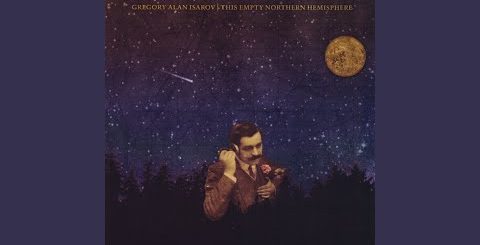
Words by Gregory Alan Isakov Lyrics Meaning – Unraveling the Lyrical Labyrinth of Love and Longing
Lyrics
Like a song
And did you ever notice
The way light means more than it did all day long?
Words mean more at night
Light means more
Like your hair and your face and your smile
And our bed and the dress that you wore
And I’ll send you my words
From the corners of my room
And though I write them by the light of day
Please read them by the light of the moon
And I wish I could leave my bones and my skin
And float over the tired, tired sea
So that I could see you again
Maybe you would leave too
And we’d blindly pass each other
Floating over the ocean blue
Just to find the warm bed of our lover
And I’ll send you my words
From the corners of my room
And though I write them by the light of day
Please read them by the light of the moon
Please read them by the light of the moon
Please read them by the light of the moon
In the sprawling canvas of music, it’s the quiet, unassuming strokes that often paint the most vivid portraits of the human soul. Gregory Alan Isakov, with his tender ballad ‘Words,’ invites us into an intimate space where longing and beauty intertwine under the mantle of night. This enchanting song, a tangle of gentle melodies and poignant lyrics, speaks to the hearts of those who wrestle with the nuances of love and distance, casting a light on sentiments that are often felt but seldom articulated with such grace.
Isakov’s artistry lies not in grandiose declarations but in the subtle craft of observation, a quality that renders ‘Words’ a masterpiece in its own right. Through examining the intricate layers of this song, we explore a hidden landscape of emotion where every note and every lyric leads us down an enthralling path of discovery, offering new insights with each listen.
Nighttime Narratives: When Darkness Elevates Desire
There is an inherent magic to night, oft-captured in the shroud of poetics and song. Isakov distills this enchantment, pondering on how ‘Words mean more at night.’ In the quietude that dusk brings, one finds solace in reflection, allowing emotions to surface and crystallize. For the lovers he croons to, the night becomes a conduit for expression, amplifying their yearning deep as the darkness encases them.
Not only does the night enhance words, but everything gains weight under its cloak. Light ‘means more than it did all day long,’ reinforcing the idea that scarcity inflates value. The night makes visible the loom of love’s delicate threads. By highlighting this contrast, Isakov emphasizes a universal truth — in absence and silence, our feelings grow louder, more profound, and they demand to be acknowledged.
The Transcendent Power of Serenades Sent from Solitude
Isakov’s verses beautifully paint the picture of an artist confined to the quarters of his quietude, sending his words across an expanse to reach the beloved. The physical distance plays a significant role here, portraying the ache of separation, but also illustrating the lengths one would go, ‘From the corners of my room,’ to bridge that gap. This solitude is both a burden and a muse, from which his melodies are born.
The reference to writing ‘by the light of day’ and reading ‘by the light of the moon’ establishes a powerful connection between the lovers, tethered by words regardless of time or space. In this transmission of thought and feeling, Isakov spells out an essential truth about human connection — it is often sustained by the sheer force of our expressions, transcending all barriers.
The Desire to Shed the Mortal Coil for Love’s Sake
One cannot help but be moved by Isakov’s longing to ‘leave my bones and my skin.’ It’s a visceral desire for transcendence, yearning to cast off the physical restraints and exist in a realm where only emotion reigns. This haunting wish to ‘float over the tired, tired sea’ metaphorically strips the body to the essence of spirit, all for the pursuit of an unencumbered reunion with the object of his affection.
This verse is a poetic expression of love’s most profound aspirations, the will to surmount the earthly in favor of the ethereal. Its spiritual undertones echo a theme common in the greatest of love stories — to be free from this corporeal existence that keeps lovers apart, suggesting that such love knows no bounds, neither of flesh nor of the world.
The Ephemeral Encounter: Love’s Ships in the Night
A particularly poignant imagery Isakov conjures is that of two souls ‘blindly pass[ing] each other’ amidst the vastness of the ‘ocean blue.’ The fear of missing one another even in the act of seeking is a striking sentiment, pointing to the uncertainty and vulnerability inherent in love. The ocean becomes a leitmotif for the unpredictable journey that one must embark on to find the ‘warm bed of our lover’.
These lines speak volumes of the delicate dance between risk and reward in affairs of the heart. The thought of passing by without a moment of convergence evokes a sense of tragic beauty — a reminder that even when the course is set for love, there is no guarantee of reaching its harbor, underscoring love’s quintessential risk: It is as much about enduring the journey as it is about cherishing the destination.
‘Please Read Them by the Light of the Moon’: The Catchphrase That Catches Hearts
A refrain that is repeated in ‘Words’ deserves its own meditation. ‘Please read them by the light of the moon’ becomes a plea, a hopeful incantation for the connection to be maintained despite the spatial divide. It’s reminiscent of a time when letters carried love across the miles and had the power to light up a face amidst the deepest night.
Isakov, through this simple yet enduring line, crafts a tender call-and-response, ensuring that the message, imbued with his feelings, isn’t just received but felt in the same ambiance it was conceived. This recurring line in the song offers listeners a semblance of thematic sanctuary—a place to rest within the rhythm, as if concentrating the entire emotional essence of the song into one resonant echo.