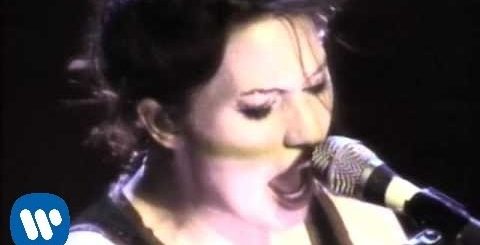
Delilah by Dresden Dolls Lyrics Meaning – Unraveling the Enigmatic Tale of Love and Liberation
Lyrics
When you change your point of view to underfoot
Very good
You may be flat but you’re breathing
And there’s no doubt he’s at home in his room
Probably watching porn of you from the fall
It’s last call
And you’re the last one leaving
And you thought you could change the world
By opening your legs
Well it isn’t very hard
Try kicking them instead
And you thought you could change his mind
By changing your perfume to the kind his mother wore
O god Delilah why?
I never met a more impossible girl
In this same bar where you slammed down your hand
And said “Amanda, I’m in love”
No you’re not
You’re just a sucker for the ones who use you
And it doesn’t matter what I say or do
The stupid bastard’s gonna have his way with you
You’re an unrescuable schizo
Or else you’re on the rag
If you take him back
I’m gonna lose my nerve
I never met a more impossible girl
I never met a more impossible girl
At four o’clock he got off
And you called up
“I’m down at Denny’s on route one
And you won’t guess what he’s done”
Is that a fact Delilah?
Larry tap let you in through the back
And use his calling card again
For a quick hand of gin
You are impossible, Delilah: the princess of denial
And after 7 years in advertising you are none the wiser
You’re an unrescuable schizo
Or else you’re on the rag
‘Cause if you take him back
I’m gonna lose my nerve
He’s gonna beat you like a pillow
You schizos never learn
And if you take him home
You’ll get what you deserve
So don’t cry Delilah
You’re still alive Delilah
You need a ride Delilah?
Let’s see how fast this thing can go
The Dresden Dolls’ ‘Delilah’ is a tour de force of theatrical rock, replete with the boundless energy and raw emotion fans have come to expect from the duo. The song serves not just as an auditory experience but an expedition into the complex facets of human relationships, personal empowerment, and the perennial battle with vulnerability.
Beneath the melodramatic surface of ‘Delilah’ lies a narrative that resonates with anyone who’s grappled with the gravity of toxic relationships. Amanda Palmer, the song’s cunning narrator and half of The Dresden Dolls, crafts a scenario that’s at once deeply personal and strikingly universal. It’s a soul-stirring hymn that deconstructs the damsel in distress trope and muses on the futility of attempting change through self-compromise.
The Anti-Ballad of the Impossible Girl
Throughout the aural landscape of ‘Delilah,’ we’re greeted with the character of a woman who’s as enigmatic as she is familiar. Beyond the Dickensian name that conjures images of an archetype, Delilah is the modern woman who relentlessly, yet fruitlessly, seeks validation through her romantic conquests.
Palmer’s clever lyricism builds around an anti-ballad—a stark repudiation of the usual love songs that celebrate romantic endeavors. Instead, ‘Delilah’ speaks truth to the often grim reality of love: that it has the potential to strip us bare, to lead us into the realms of self-betrayal and loss of agency. This is love, not as a poetic fancy, but as a battlefield of the psyche.
Through the Lens of Metaphor: Love Underfoot
Right from the opening lines, the song uses metaphor to drive its point home. Delilah is advised to change her point of view ‘to underfoot,’ perhaps insinuating that to understand the gravity of her predicament fully, she must first recognize her self-worth.
The gesture of being ‘underfoot’ reveals a double entendre. It can symbolize being trampled upon or alternatively, grounding oneself. Therefore, the apparent flatness of her being is a cry for Delilah to rise from being trampled— to breathe and reclaim her life’s rhythm.
The Perfumed Chains of Delusion
The lyrics ‘you thought you could change his mind / by changing your perfume to the kind his mother wore / O god Delilah why?’ is a poignant critique of the extreme lengths one may go to appease and hold onto a lover. Herein, Palmer is cutting through Delilah’s delusion, illustrating the absurdity of these attempts at change.
By invoking the Oedipal implications of adopting a mother’s perfume, the song poignantly underscores how self-identity is often sacrificed on the altar of love. It isn’t through these performative gestures but through authentic self-expression that one can hope to enact change. The tragic irony is that Delilah hasn’t yet grasped this truth.
The Hidden Meaning: A Requiem for Agency
At its core, ‘Delilah’ is less about a particular character and more about the concept of individual agency in the face of love’s allure. It’s a requiem for every time we’ve forfeited our power in the hope of saving a relationship that, deep down, we knew was beyond redemption.
The Dresden Dolls do not narrate merely to tell a story—they implore the listener to face their own Delilahs. It’s a song that resonates on a personal level, asking, ‘Have you, too, been an impossible girl (or boy)? Have you, too, mistaken self-depreciation for love?’
Memorable Lines: A Reflection of Disempowerment
‘I never met a more impossible girl’ echoes as a haunting refrain—an ode to the tragic heroine of the song. It’s memorable not because it’s a catchy hook, but because it encapsulates the crux of Delilah’s tale: the impossibility not of her love, but of her liberation from a cycle she perpetuates.
This line reflects the essence of the song’s meaning, serving as both an indictment and an epitaph for opportunities lost. Delilah represents every person who, like Sisyphus, pushes the boulder of futile love uphill, only to have it roll back down—caught within a self-created myth of impossible redemption.