Voodoo Child by The Jimi Hendrix Experience Lyrics Meaning – Decoding the Mysticism in Rock’s Psychedelic Era
Lyrics
And I chop it down with the edge of my hand
Well, I stand up next to a mountain
Chop it down with the edge of my hand
Well, I pick up all the pieces and make an island
Might even raise a little sand, yeah
‘Cause I’m a voodoo child
Lord knows I’m a voodoo child, baby
Want to say one more last thing
I didn’t mean to take – up all your sweet time
I’ll give it right back to you one of these days
I said, I didn’t mean to take up all your sweet time
I’ll give it right back one of these days, yeah
And if I don’t meet you no more in this world
Then I’ll, I’ll meet you in the next one
Now don’t be late, don’t be late
‘Cause I’m a voodoo child, voodoo child
Lord knows I’m a voodoo child, hey, hey, hey
I’m a voodoo child, baby
I don’t take no for an answer
Just want you to know
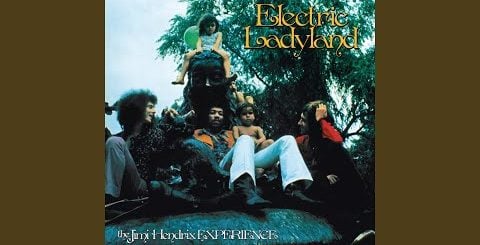
When Jimi Hendrix unleashed the sonic whirlwind known as ‘Voodoo Child (Slight Return)’ upon the world, he did more than just issue a staple of psychedelic rock; he provided a conduit for an era’s supernatural fascination and personal empowerment. The Jimi Hendrix Experience’s closing track on the seminal album ‘Electric Ladyland’ is a declaration of self, suffused with the mystique of voodoo and the transcendental spirit of the ’60s. Featuring Hendrix’s signature guitar work, which unequivocally shaped the future of rock music, this song is as enigmatic as it is electrifying.
The lyrics are succinct yet layered with meaning, continuing to resonate with audiences more than half a century after their release. Hendrix’s ‘Voodoo Child’ is a powerful cultural touchstone, exploring themes of identity, change, and otherworldliness. Diving into these lyrics unveils a multifaceted narrative that speaks to both the personal ambitions of Hendrix and the zeitgeist of an entire generation looking for a new horizon.
Summoning the Spirit of Change Through Divine Guitar Strings
To begin decoding ‘Voodoo Child,’ one must start with its most visceral aspect: the soul-stirring, raw guitar riffs. Hendrix, often hailed as a guitar god, seems to summon the elements of change with each strum, effectively ‘standing next to a mountain’ of the established social order and ‘chopping it down’ with the edge of his hand—or in this case, the power of his music. The transformational events of the time, from civil rights marches to anti-war protests, are encoded in the aggressive energy of Hendrix’s guitar work.
This musical tumult aligns with the idea of casting away the old to build something new. As Hendrix talks of picking up the pieces to make an island, the listener is thrust into a creation myth, one where the artist himself is the deity, forging new realities amidst the chaos and noise of the times.
An Invocation of Voodoo’s Mystique
‘Voodoo Child’ does not shy away from leaning into the mystical allure of its title’s reference to voodoo, a religion with West African roots often misunderstood and sensationalized in Western culture. Through the song, Hendrix taps into the exotic and powerful imagery that voodoo conjures, indicative of themes like rebirth, connection to nature, and accessing hidden inner forces.
By adopting the ‘voodoo child’ persona, Hendrix positions himself as both a product and a channeler of unseen energies. The term ‘child’ in this context amplifies the sense of being at the beginning of a journey, exploring the potential within and acknowledging a universal force that does not adhere to conventional understanding.
‘I’ll Meet You in the Next One’: The Cycle of Existence
One of the song’s most compelling aspects is its articulation of Hendrix’s sense of time and continuity. As he proclaims that even if not meeting his audience in this world, he’ll meet them in the next, he transcends the ordinary linear sequence of events. This forward-looking perspective is not only an echo of voodoo beliefs in the circularity of existence but also hints at Hendrix’s acknowledgment of his own mortality and the legacy he intended to leave.
Additionally, the insistence on not being late to this otherworldly rendezvous touches on themes of destiny and the importance of seizing the moment. It’s a reminder that amidst the turbulence of life, there’s a larger narrative at play—one that may not be immediately discernible, yet is ever-present.
The Enigmatic Apology: ‘I Didn’t Mean to Take Up All Your Sweet Time’
Between the grandiose declarations of self and the raw energy of the music lies a strikingly humble interlude. Hendrix’s promise to ‘give it right back to you one of these days’ stands out as an unexpected moment of introspection. It’s as though the artist is momentarily stepping back, aware of the space he occupies in listener’s lives and the broader cultural dialogue.
This awareness creates a tension within the song—as if Hendrix is both commandeering the listener’s attention with the demands of a ‘voodoo child’ and being cognizant of the gift of their time. It’s a delicate balance between confidence in one’s destiny and an appreciation for the transient nature of fame and life’s moments.
Every Line Resonates: ‘Well, I Stand Up Next to a Mountain’
Perhaps one of the song’s most memorable lines, ‘Well, I stand up next to a mountain,’ underscores the magnitude of what Hendrix sought to accomplish—not only in his music career but also as a figure within the broader social revolutions of his time. It portrays an individual challenging colossal structures, whether they be of nature, society, or personal limitations.
This imagery is as potent today as it was when the song debuted, resonating with new generations who find themselves confronting seemingly insurmountable obstacles. It also continues to epitomize the emboldened spirit of the counter-culture that characterized the ’60s, making ‘Voodoo Child’ an enduring anthem of self-assertion and societal transformation.