Comfort Me by Feist Lyrics Meaning – Unveiling the Layers of Solace and Dissonance
Lyrics
It doesn’t bring me comfort actually
When you comfort me
True life in haiku
Imbalance is the phrase out of the blue
The meaning shown to you
What does sadness see?
The mirror has a mirror in its teeth
That’s what sadness is
Big sky, tiny bird
And when the paragraph betrays the word
Big sky, tiny bird
While you held me up
I held my calendar out like a cup
While you held me up
Make it about me
I want to hold the blame to guillotine
Make it all blame-free
When you comfort me
It doesn’t bring me comfort actually
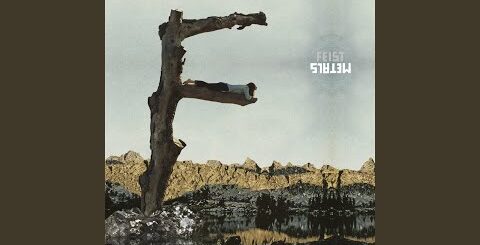
In the mosaic of modern music, Leslie Feist, known as Feist, places tiles of poetic vulnerability, creating a picture that invites listeners into realms of introspection. ‘Comfort Me,’ a track off her fourth studio album, ‘Metals,’ carries the weight of a siren’s call, luring one toward the rocky shores of self-reflection. It’s a composition that effortlessly binds the subtle complexity of emotions with the simplicity of raw human experience.
Diving into ‘Comfort Me,’ we uncover a lyrical paradox where solace meets discomfort, and understanding flirts with confusion. This song isn’t just a melody; it’s a narrative, a haiku for the soul that seeks to find balance in life’s incessant chaos. Here we dissect the poignant message behind Feist’s harmonious paradox and explore the intricacies of what makes this song a beacon for the contemplative heart.
The Paradox of Seeking Solace
The opening lines of ‘Comfort Me’ present a stark contradiction that captures the essence of the song. ‘When you comfort me / It doesn’t bring me comfort actually’ is more than just a play on words; it illustrates the depth of isolation that can be felt even in the presence of empathy. Feist brings to light an emotional disconnect, where the act of comforting does not fulfill its intended purpose, reflecting possibly a deeper yearning for understanding rather than just solace.
This contradiction speaks volumes about the human condition—how sometimes the remedies we seek or are offered fail to heal our internal disquiet. Feist approaches this with a poetic grace, leaving listeners with the task of introspective analysis. Why does comfort not comfort? Is it the nature of the comforter, the situation, or a reflection of our internal chaos? These are the questions that linger long after the song ends.
Unpacking the Haiku of Life
Feist’s reference to ‘True life in haiku’ serves as a metaphor for the brevity and structure we attempt to impose on the sprawling, often unruly narrative of our existence. ‘Imbalance is the phrase out of the blue / The meaning shown to you’ evokes the unexpected moments of clarity in amidst day-to-day turmoil. Our journey of understanding and acceptance can often resemble the unexpected twist in a well-crafted haiku—surprising yet fitting perfectly into the tale.
Feist’s ‘haiku’ challenges the listener to accept the ebb and flow of balance and imbalance in their lives, suggesting that true understanding stems from embracing this unpredictable pendulum. The artist nudges us to see beyond the confinement of our troubles, to the meaning that can only be revealed when we are willing to confront the reality of our emotions.
Mirror, Mirror: The Reflection of Sadness
In the poignant verse, ‘What does sadness see? / The mirror has a mirror in its teeth / That’s what sadness is,’ Feist takes us on a revelatory journey through the nature of sorrow. The imagery of a mirror within a mirror suggests an infinite regression, a recursive loop of introspection that sadness often encapsulates. Sadness is self-reflective, and within it, there’s a depth that—just like an abyss—seems to gaze back into us.
The mention of teeth might indicate that this reflection has the potential to be biting, painful. It’s a compelling visual that encapsulates the self-consuming nature of sorrow, which can gnaw at our psyche, manifesting as a recursive loop from which escape can seem ephemeral and momentary solace provided by another can feel futile.
Sky-bound Aspirations and Earthly Limitations
One of the memorable lines of the song, ‘Big sky, tiny bird / And when the paragraph betrays the word,’ conveys the vastness of the world in contrast with the individual’s smallness. The ‘big sky’ is a wide-open vessel of potential, yet the ‘tiny bird’—representative of a person or their dreams—faces a massive expanse to navigate. This juxtaposition illustrates life’s overwhelming possibilities and our own limitations.
Furthermore, the second part, ‘when the paragraph betrays the word,’ touches upon the discordance that arises when a larger narrative undermines the individual elements that comprise it. It’s the notion that within a grander scheme, our personal truths, represented by ‘the word,’ can be lost or distorted by the overarching ‘paragraph’ of society’s expectations or norms.
Delving into the Hidden Meanings Behind the Comfort
The song’s continual refrain, ‘When you comfort me / It doesn’t bring me comfort actually,’ may be the cornerstone to understanding its hidden layers. In psychology, the concept of ‘requiring external validation’ is widely discussed, and it’s plausible that Feist is hinting at the inadequacy of such comfort when what is truly needed is self-validation and the embrace of one’s inner turmoil.
This recurring mantra-like phrase gently invites us to probe the distinction between the comfort that merely soothes the surface, and the acknowledgment of grief that fosters genuine healing. In essence, Feist’s cryptic lyrics may suggest that true comfort lies not in empty consolations, but in the courageous grappling with our deepest fears and sorrows, ultimately finding peace within ourselves.