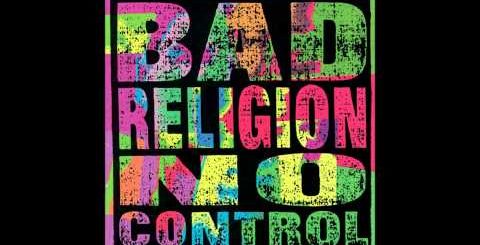
I Love My Computer by Bad Religion Lyrics Meaning – Decrypting Digital Devotion in the Modern Age
Lyrics
You make me feel alright
Every waking hour
And every lonely night
I love my computer
For all you give to me
Predictable errors and no identity
And it’s never been quite so easy
I’ve never been quite so happy
All I need to do is click on you
And we’ll be joined
In the most soul-less way
And we’ll never
Ever ruin each other’s day
’cause when I’m through I just click
And you just go away
I love my computer
You’re always in the mood
I get turned on
When I turn on you
I love my computer
You never ask for more
You can be a princess
Or you can be my whore
And it’s never been quite so easy
I’ve never been quite so happy
The world outside is so big
But it’s safe in my domain
Because to you
I’m just a number
And a clever screen name
All I need to do is click on you
And we’ll be together for eternity
And no one is ever gonna take my love
From me because I’ve got security,
Her password and a key
In an era where digital connectedness constantly weaves through the fabric of daily existence, Bad Religion’s ‘I Love My Computer’ serves as a clever, sardonic ode to our relationship with technology. While at first glance, the lyrics might seem to indulge in a superficial love song trope, a deeper dive reveals a complex commentary on intimacy, isolation, and the ironies of the Information Age.
As we peel back the layers of the track, examining the nuanced lyrics and the emotions they evoke, we uncover a rich tapestry of meaning—a critique of modern love as refracted through the glowing screens of our digital confidants. Now, let’s plug into the significance of this digital-age anthem and explore the complexities of the seemingly simple phrase ‘I love my computer.’
A Playful Parody or a Profound Proclamation?
The initial verses of ‘I Love My Computer’ can be perceived as nothing more than a playful jab at the growing dependency on technology. Setting the tone with a light-hearted anthemic cadence, it feels as though we’re witnessing a humorous exaggeration of the lulling comfort that our computers promise us day after day.
However, the continuation of this technophilic sentiment quickly morphs into a mirror reflecting our own insecurities and escapisms, drawing us into an emotional vortex between man and machine. Isolation and the certainty of the digital embrace versus the unpredictable nature of human interaction start to become central themes as the song progresses.
Interfacing Intimacy: A Digital Domain’s Love Affair
The chorus of the song becomes a repeated declaration of love—but not for another person. The computer here stands in as an ever-willing, ever-obedient lover, void of emotional needs, always ‘in the mood.’ It’s a commentary on how technology fulfills our instant gratification without requiring the work, vulnerability, and uncertainty that true intimacy with another human demands.
This electronic partnership is celebrated for its simplicity and lack of identity, highlighting the growing trend of finding solace in the soulless. The human need for connection is satirically met with a password and screen name, calling into question whether we are collectively losing the distinction between personhood and persona.
The Anthem of the Atomized: Dissecting Societal Seclusion
Bad Religion dares to ask a poignant question about the price we pay for our online conveniences and the arena of ‘safe domains.’ The more we embrace the vastness of the world wide web, the easier it becomes to feel atomized, hidden behind clever screen names and reduced to mere numbers in an infinite digital sea.
This isolation is praised in the song, illustrating the trade-off between the promise of worldwide connection and the reality of a personal sense of being lost in the crowd. The duality between seeking an all-encompassing reach to others while simultaneously reveling in the anonymity provided by digital walls offers a stark gaze into our societal shifts.
Unplugged from Reality: The Irony of Artificial Affection
As the song continues, the juxtaposition of affection and disaffection becomes more jarring. The artist proclaims a fearless state of happiness and contentment derived from his computer love—yet the computer’s lack of emotional engagement is starkly apparent, perhaps echoing our own fraught relationships with ephemeral online connections.
By highlighting the ease of ‘turning on’ and ‘clicking away’ without repercussion, the lyrics throw a contentious punch at the superficiality of interactions that technology can breed. The love professed is fraught with irony—it is safe because it is void of the very qualities that make love profound: risk, depth, and mutual understanding.
The Most Memorable Lines: Unveiling the Hidden Meaning
Among the song’s most striking lyrics, ‘Because to you, I’m just a number and a clever screen name,’ and ‘I’ve got security, her password, and a key,’ exist layers of significance nestled within the snark. They point to the dichotomy of our quest for interpersonal connection and the facade of anonymous intimacy online.
In these lines, Bad Religion unmasks a truth about digital dependency—our devices and platforms offer a pseudo-relationship where personal details are reduced to login credentials, and ‘security’ comes in the form of passwords, not emotional bonds or human touch. It’s an interaction that’s as locked-down and guaranteed as it is devoid of life’s inherent unpredictability and joy.