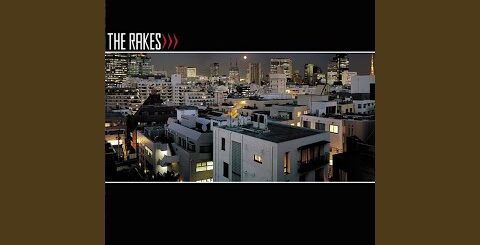
22 Grand Job by The Rakes Lyrics Meaning – Dissecting the Urban Dream in a Post-Punk Anthem
Lyrics
22 grand job
In the city it’s alright
22 grand job
In the city it’s alright
22 grand job
In the city that sounds nice,
It’s alright, it’s alright
In the city it’s alright
Come from the work, looks alright
Put the lattitude right
Different sails lots of tunes
What am I supposed to do?
But he’s only 28
No more 22
It’s alright, it’s alright
In the city it’s alright
[Chorus]
Dancing up street Thursday night
In the city that sounds nice
Looking sharp in my (calise?)
Did we do the same degree?
I’ve said less to me all week
Got to go on Emily
That’s alright, that’s alright
If the money is alright
[Chorus]
22 grand job
22 grand job
22 grand job
22 grand job
In the city that sounds nice
The Rakes’ ’22 Grand Job’ is a quintessential post-punk exposition set against the backdrop of early 2000s Britain, an era where economic prosperity juxtaposed with cultural dissatisfaction among the youth. At first glance, the song encapsulates a straightforward message—a celebration of a decent paying job in the bustling city. But there’s more to ’22 Grand Job’ than its repetitive chorus might suggest.
Digging deeper, the lyrics are a sharp commentary on the mechanical life of white-collar workers. Through the disenchanted lens of The Rakes, we explore the nuanced relationship between financial stability and individual fulfillment, and whether the trade-off skews towards the former in the urban dream.
The Urban Dream’s Glossy Facade
‘In the city it’s alright’—the song’s recurring affirmation sounds almost like a mantra for those trying to convince themselves that their career choice was sound. The Rakes touch upon the notion of ‘making it’ in the city, a destination that promises wealth and success. But the repeated line becomes a hypnotic drone, symbolizing the monotonous grind of city life and the constant self-persuasion that one needs to endure it.
By setting the song in the city, the band provides a backdrop where dreams are both made and shattered. The ’22 grand job’ represents not just a salary, but a threshold for minimal acceptance into society’s perception of success, fueling the ever-burning desire to align oneself with an urban identity often defined by occupation and income.
The Haunting Refrain: Repetition as a Mirror to Monotony
The chorus is as infectious as it is simple. Its repetition doesn’t just make for a catchy tune; it’s an artistic choice mirroring the cyclical nature of the typical 9-to-5 life. This artistic mimicry of life’s repetitions reflects the song’s existential underpinning. The more we hear ’22 grand job’, the more it ingrains itself, representing the inescapable loop of seeking validation through work.
Moreover, the simplicity of the chorus highlights the superficial measurement of life’s worth—with the number ’22 grand’ acting as a shorthand for personal success. It underlines the metrics-driven view of achievement where financial earnings overshadow personal growth, passion, and happiness.
A Chronicle of Missed Opportunities
The Rakes don’t just condemn the notion of financial success; they also present a sense of what’s lost in the pursuit—identity, creativity, and connection. The verses hint at a disconnect between what’s expected (‘put the lattitude right’) and what’s desired (‘different sails lots of tunes’). The narrative is of a person stuck at the crossroads of conformity and individuality, unable to navigate a path that honors both.
Moreover, the protagonist, ‘he’s only 28, no more 22’, symbolizes a desire to revert to a time when possibilities seemed endless, before the realities of adulthood and employment took hold. This retrospect spans the gap between youthful aspiration and the weight of adult responsibility.
The Hidden Meaning: Decoding Life Beyond Salaries
At its core, ’22 Grand Job’ serves as an exposé on how societal validations shape one’s own views of success. While the job title and the salary appear to reflect prosperity and security, the narrative’s subtext screams of a predictable, sometimes soul-sapping reality—a shared sentiment among those who have come to realize that monetary reward isn’t the panacea it’s made out to be.
This motif draws attention to questions rarely addressed openly: Can financial stability ever replace the need for personal accomplishment? Does ‘alright’ mean satisfied, or is it just a shade better than outright misery? The song weaves these profound queries into an upbeat tempo, forcing listeners to confront the discrepancy between outer prosperity and inner peace.
Memorable Lines: The Echoes of Urban Reality
‘In the city that sounds nice’—a line that stands out for its sardonic edge. The phrasing intentionally contrasts ‘sounds’ with the potential reality, creating an audible dissonance. It encapsulates the allure of city life while simultaneously highlighting its often hollow ring. This particular line resonates beyond the context of the song, questioning the cost of urban life on one’s personal narrative and well-being.
‘Did we do the same degree? I’ve said less to me all week’—it’s a line drenched in wry commentary on the homogenization of experience and the alarming impersonality in a crowded, yet isolating urban existence. These lines articulate the song’s subtext about the search for meaning in a world that often reduces individuality to a bullet point on a resume.