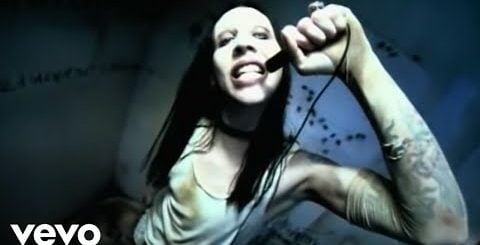
Tainted Love by Marilyn Manson Lyrics Meaning – Unwrapping the Layers of Heartache and Rebellion
Lyrics
Run away, I’ve got to
Get away from the pain you drive into the heart of me
The love we share
Seems to go nowhere
I’ve lost my light
For I toss and turn I can’t sleep at night
Once I ran to you (I ran)
Now I run from you
This tainted love you’ve given
I give you all a boy could give you
Take my tears and that’s not nearly all
Tainted love
(Ooh) Tainted love
Now I know I’ve got to
Run away, I’ve got to
Get away
You don’t really want anymore from me
To make things right
You need someone to hold you tight
And you think love is to pray
But I’m sorry I don’t pray that way
Once I ran to you (I ran)
Now I run from you
This tainted love you’ve given
I give you all a boy could give you
Take my tears and that’s not nearly all
Tainted love
(Ooh) Tainted love
Don’t touch me, please
I cannot stand the way you tease
I love you though you hurt me so
But now I’m gonna pack my things and go
Touch me baby, tainted love
Touch me baby, tainted love
Touch me baby, tainted love
Touch me baby, tainted love
Once I ran to you (I ran)
Now I run from you
This tainted love you’ve given
I give you all a boy could give you
Take my tears and that’s not nearly all
Tainted love
(Ooh) Tainted love
(Ooh) Tainted love
(Ooh) Tainted love
Marilyn Manson, the master of musical macabre, takes on the 80s classic ‘Tainted Love’ and injects it with his own brand of dark, industrial energy. Originally by Gloria Jones and brought to mass popularity by Soft Cell in the 80s, Manson’s cover twists the already melancholic tune into a grim anthem of love gone awry. Navigating through the haunting lyrics, we delve into the depths of a harrowing emotional journey.
In this gothic rendition, Manson doesn’t just cover a song; he redefines it. His interpretation becomes a narrative of taint and torment— a lover’s desperate escape from a poisonous relationship. With each sinew of his eerie voice, he peels back the layers of a faded romance, exploring the nuanced dynamics of an affection that consumes, rather than nurtures.
The Heart’s Dark Voyage – An Escapist Anthem
The opening lines of ‘Tainted Love’ are a rally cry for the broken-hearted, for those who feel the urge to flee from the pain inflicted by the one they love. Manson’s gravelly timbre crafts an image not just of sadness, but of the weary soul’s relentless search for sanctuary. It is this feeling of inescapable sorrow that envelops listeners, compelling them down the same turbulent path Manson articulates with viscerally raw emotion.
Love, as depicted in this song, does not offer comfort but rather incarcerates the spirit. It’s a portrayal of affection that is far from the idyllic; it’s oppressive and suffocating, transforming what should be a source of light into a wellspring of darkness, leading inevitably to the heart’s heed for liberation.
Crying Out in the Wilderness – The Song’s Memorable Lines
The refrains ‘Once I ran to you, Now I run from you’ showcase the core transformation within the narrative. Manson captures the essence of a love that has mutated from sanctuary to prison. His rendition amplifies the original’s plea for release, turning it into a full-throated scream. The repetition serves as a reminder of the cyclical nature of such toxic attachments and the difficulty of severance.
‘Take my tears and that’s not nearly all’ speaks to the magnitude of sacrifice made in the name of love. It isn’t just the tears or the emotional turmoil; it’s everything that is given, often in vain. Manson’s interpretation echoes with the weight of these burdens, carrying within each note the depth of sacrifice made at love’s altar.
A Prayer for the Damned – Dissecting the Promise of Prayer
‘But I’m sorry I don’t pray that way’ overturns conventional beliefs about love and salvation. Manson’s inclusion in the song addresses the notion that love requires a form of spiritual submission or prayer—implying that some expect love to be an act of suffering or penance. However, Manson rejects this masochistic approach, instilling a thought-provoking challenge against the romanticizing of pain within relationships.
His defiance is a declaration of self-respect and autonomy. It’s an outcry against the glorification of the sacrificial aspects of love that often normalize unhealthy bonds. Instead, Manson champions the idea that true love does not demand one’s spirit to bleed in worship, nor does it confine one to the role of the martyr.
The Seductive Snare – The Paradox of Desire
‘Don’t touch me please, I cannot stand the way you tease’ lays bare the agonizing push and pull of a toxic allure. Manson’s rendition turns these words into a powerful dichotomy—acknowledging the remaining shards of affection while also recognizing the corrosive nature of his lover’s touch. There is a magnetism present, but it is one that repels as much as it attracts.
The complexity of such relationships is encapsulated in the internal conflict these lines evoke. He conveys the sense of a pleasure-pain boundary that’s been breached, leaving only a raw nerve exposed. Manson excels in expressing the depth of this paradox, where the very source of hurt remains a perverse comfort.
Packaging Pain – The Hidden Meaning Within
To perceive ‘Tainted Love’ as merely a retelling of a romance gone wrong is to overlook the symbolism Manson threads through his delivery. It becomes a commentary on the tainted state of human connections, an exploration of the darkness that can dwell within desire. Each verse serves as a reminder that love can be corrupted, polluted by the very beings who once sought solace in its embrace.
Manson successfully captures the zeitgeist of a generation that views relationships through a lens of skepticism and wariness. The song, in his hands, becomes an anthem for the disillusioned—those who have witnessed love’s potential for destruction and emerged more cautious, bearing the scars of their tainted affections.