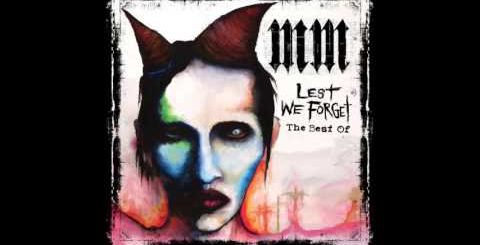
Personal Jesus by Marilyn Manson Lyrics Meaning – A Sinister Embrace of Faith and Isolation
Lyrics
Your own personal Jesus
Someone to hear your prayers
Someone who cares
Your own personal Jesus
Someone to hear your prayers
Someone who’s there
Feeling unknown
And you’re all alone
Flesh and bone
By the telephone
Lift up the receiver
I’ll make you a believer
Take second best
Put me to the test
Things on your chest
You need to confess
I will deliver
You know I’m a forgiver
Reach out and touch faith
Reach out and touch faith
Your own personal Jesus
Someone to hear your prayers
Someone who cares
Your own personal Jesus
Someone to hear your prayers
Someone who’s there
Reach out and touch faith
(Faith, faith, faith, faith, faith…)
Feeling unknown
And you’re all alone
Flesh and bone
By the telephone
Lift up the receiver
I’ll make you a believer
I will deliver
You know I’m a forgiver
Yeah, reach out and touch faith
(Your own personal Jesus)
Reach out and touch faith
Reach out and touch faith
Yeah, reach out and touch faith
Reach out and touch faith
Reach out and touch faith
Marilyn Manson has always been a master at weaving dark themes with thought-provoking provocation, and his cover of ‘Personal Jesus’ is no exception. The song, originally penned by Depeche Mode, was given a gothic-industrial twist by Manson, bringing new depth to its brooding introspection. What emerges is not just a sonic transformation, but a profound commentary on the nature of faith and the need for connection in the modern world.
Digging beneath Manson’s signature growl and atmospheric chords lie layers of meaning that resonate with the human condition, particularly the aspects of our society rife with spirituality and loneliness. But what exactly is Manson telling us through this anthemic overhaul? Let’s decode the subtext behind the growls and grit.
An Ecclesiastical Confidant in a Godless World
At the heart of ‘Personal Jesus’ is the depiction of a deity-like figure meant for a singular individual— ‘your own personal Jesus.’ Marilyn Manson takes this notion and injects it with a visceral urgency, almost as if challenging the listener to find solace in a world bereft of traditional religious comforts.
The repetitive invocation of ‘someone to hear your prayers, someone who cares’ is a powerful reflection of our collective search for meaning and understanding. Manson’s rendition becomes a dark hymn for those wandering through life looking for an anchor in the tumultuous sea of existential doubt.
The Lonely Cry of the Disconnected
Manson’s poignant lines, ‘Feeling unknown, And you’re all alone,’ capture a universal struggle with isolation. As technology connects us superficially, the craving for genuine human interaction remains unfulfilled, leaving individuals to grapple with a sense of being lost in the crowd.
The refrain ‘Reach out and touch faith’ becomes a haunting plea for connection in this bleak landscape. It echoes the desperation behind every call ‘Flesh and bone, By the telephone,’ underscoring an era where the promise of connection is always one call away yet ever elusive.
A Melody of Damnation and Redemption
Manson’s vocals, tinged with a forbidden lure, seem to both damn and redeem. The twisted offer ‘Lift up the receiver, I’ll make you a believer’ suggests an opportunity to convert the aimless into followers, promising a path to deliverance for those who dare to subscribe to Manson’s nefarious brand of spiritual guidance.
However, Manson’s allure is not just to doom but to forgive, ‘I will deliver, You know I’m a forgiver,’ proposing an odd form of absolution—a twisted salvation where the consequences of capitulation to this dark mentor remain intriguingly ambiguous.
Interpreting the Mantra of Modern Faith
‘Take second best, Put me to the test,’ Manson’s provocative cover demands that we question the idols we choose to hold dear. These lines challenge the listener to confront the authenticity of what they consider sacred and whether settling for less than divine is the symptom of a spiritually bankrupt society.
Manson’s cover thus acts as a mirror, reflecting how personal belief systems have evolved, or regressed, in an age of information and consumerism. It lays bare our willingness to submit to a less-than-omnipotent figurehead, so long as it fills the god-shaped hole within a generation hell-bent on gratification.
Decoding the Resonance Behind ‘Reach out and touch faith’
The song’s crescendo, a fervent exhortation to ‘Reach out and touch faith,’ is not merely a memorable line; it’s a clarion call, a mantra for the desperate and the devout alike. It compels the listener to ACTION—to physically manifest their belief, to touch the intangible.
In Manson’s gravelly call to arms is the duality of desperation and empowerment. This is no ordinary church hymn; this is a rock anthem for the spiritually starved, a command for the disillusioned to grasp at something greater, no matter how personal or peculiar that faith may be.