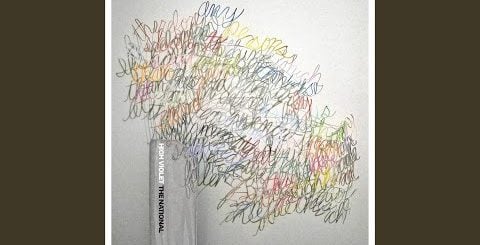
I Should Live in Salt by The National Lyrics Meaning – A Lyrical Dive into Regret and Understanding
Lyrics
You should know me better than that
It takes me too much time
You should know me better than that
You’re not that much like me
You should know me better than that
We have different enemies
You should know me better than that
I should leave it alone but you’re not right
I should leave it alone but you’re not right
Can’t you write it on the wall?
You should know me better than that
There’s no room to write it all
You should know me better than that
Can you turn the TV down?
You should know me better than that
There’s too much crying in the sound
I should know you better than that
I should leave it alone but you’re not right
I should leave it alone but you’re not right
I should live in salt for leaving you behind
Behind
Think about something so much
You should know me better than that
Start to slide out of touch
You should know me better than that
Tell yourself it’s only noise
You should know me better than that
Learn to appreciate the void
You should know me better than that
I should live in salt for leaving you behind
Behind
I should live in salt for leaving you behind
Behind
I should live in salt for leaving you behind
Behind
In the complex tapestry of contemporary music, The National’s ‘I Should Live in Salt’ emerges as a poignant and dense exploration of regret, miscommunication, and personal understanding. At first listen, the track from their 2013 album ‘Trouble Will Find Me’ seems to envelop the listener in a melancholic embrace, yet upon further investigation, it reveals layers of emotional intricacy that demand to be unwoven.
The beauty of the song rests not only within its wistful melodies but also in its enigmatic lyrics that lead the listener down a path filled with self-reflection and the stark realization of one’s limitations in knowing another person, even one you’re close to. What at first may seem like a straightforward commentary on a strained relationship unfolds as a rich narrative compelling us to dissect every word and every pause.
The Salt of Sorrow – Dissecting the Song’s Penetrating Pain
Lead singer Matt Berninger’s baritone haunts the verses of ‘I Should Live in Salt’ with a vulnerability that is both raw and reserved. Through the recurring plea ‘You should know me better than that,’ the song articulates the frustration borne from the chasm of understanding often found between people, even those who are theoretically intimate. The National captures the essence of strained personal connections where each party is left yearning for more profound recognition.
The very idea of living in salt, an element known for its preserving qualities, speaks volumes about the desire to maintain the past’s taste, the regret over what is lost, and the bitterness that lingers. It’s a song that stands tall in its depiction of the human condition’s nuances, scratching the surface of existential questions, and pressing the listener to confront their innermost reflections of loss and repentance.
A Symphony of Miscommunication – The National’s Lingering Echo
Communication, or the lack thereof, serves as a dominant theme in ‘I Should Live in Salt.’ The repetitious requests creeping through the lyrics are met with silence, symbolizing the disconnection and misunderstandings that follow. This begs the question, is it self-imposed isolation, or is it a mutual failure to truly empathize and comprehend the other’s inner workings?
The song doesn’t just want us to consider the words unsaid or the feelings unexpressed; it plunges deeper, reflecting on the innate solitude that accompanies human existence. Each question posed in the lyrics, wrapped in the expectancy of shared knowledge, hints at the complexities of human relationships and the often-desperate search for a common wavelength.
Behind the Lyrics – The Hidden Lament in ‘I Should Live in Salt’
While the surface of the song hints at a superficial separation, the hidden meaning in ‘I Should Live in Salt’ alludes to a deeper, self-inflicted estrangement. The idea of living in salt, symbolizing a self-imposed penance for ‘leaving you behind,’ captures the artist’s internal struggle and the hefty price that can come with personal decisions.
This repeated confession, ‘I should live in salt for leaving you behind,’ serves not only as an act of contrition but also as a self-imposed exile from the consolation they seek. Thus, Berninger isn’t just singing about physical distance; he brings to light the emotional and psychological remoteness that sometimes envelopes our closest relationships.
Appreciating the Void – Embracing the Silence
What does it mean to ‘appreciate the void’? The National doesn’t shy away from the less colorful sides of human emotion. Learning to embrace the silence around and within us can be a stirring journey, and Berninger’s voice guides us through this path—sometimes unclear, always profound. ‘Tell yourself it’s only noise, you should know me better than that’ contrasts the external chaos with the internal void, potentially finding solace in the quiet.
Ironically, it is within this void, this silence, that the song finds its most powerful voice. The contemplative nature of the lyrics, coupled with the somber instrumentation, creates a space for introspection—a rare feat in the cacophony of modern music.
Memorable Lines – The Echoes That Define ‘I Should Live in Salt’
‘Don’t make me read your mind, you should know me better than that,’ stands out as a striking line that encapsulates the song’s theme of frustrated communication. It is a mournful acknowledgment of the flawed assumption that closeness equals understanding, and the line provokes a universal resonance, reflecting the shared human experience of assuming and being misunderstood.
Every repetition of ‘you should know me better than that’ evolves throughout the song, taking on new shades of meaning with each iteration. It’s a testament to The National’s ability to craft lyrics that while simple in structure, are drenched in emotional subtext and are ultimately unforgettable, leaving an indelible impression upon the soul of the listener.