Chicago Is So Two Years Ago by Fall Out Boy Lyrics Meaning – Unveiling Emotional Undercurrents in a Modern Punk Anthem
Lyrics
Wear it like a bruise or black eye
My badge of witness
Means that I believed
Every single lie you said
‘Cause every pane of glass that your pebbles tap
Negates the pains I went through to avoid you
And every little pat on the shoulder for attention
Fails to mention I still hate you
But there’s a light on in Chicago
And I know I should be home
All the colors of the street signs
They remind me of the pickup truck out in front of your neighbor’s house
She took me down and said
“Boys like you are overrated, so save your breath”
Loaded words and loaded friends
Are loaded guns to our heads
‘Cause every pane of glass that your pebbles tap
Negates the pains I went through to avoid you
And every little pat on the shoulder for attention
Fails to mention I still hate you
But there’s a light on in Chicago
And I know I should be home
All the colors of the street signs
They remind me of the pickup truck out in front of your neighbor’s house
You want apologies
Girl, you might hold your breath
Until your breathing stops forever, forever
The only thing you’ll get
Is this curse on your lips
I hope they taste of me forever (every pane of)
And there’s a light on in Chicago (every pane of glass)
And I know I should be home (every pane of)
And all the colors of the street signs (every pane of glass)
They remind me of your pickup truck out in front of your neighbor’s
With every breath, I wish your body will be broken again, again
With every breath, I wish your body would be broken again, again
(But there’s a light on)
With every breath, I wish your body will be broken again, again
With every breath, I wish your body would be broken again, again
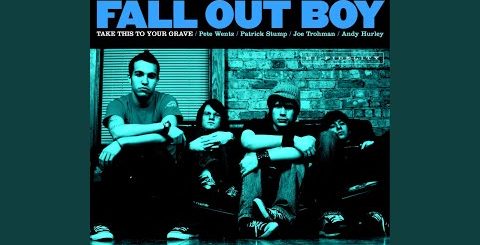
The early aughts were ripe with punk’s pop resurgence, and at the heart of this bustling scene were bands that carved their emotional turmoils into memorable anthems. Fall Out Boy’s ‘Chicago Is So Two Years Ago,’ from their 2003 album ‘Take This to Your Grave,’ stands tall as an emotionally charged account of personal struggle and complex relationships.
At first glance, the song appears to be steeped in the specific geography of Chicago, yet it transcends its local boundaries, speaking to the universal themes of heartache, longing, and the scars left by betrayal. Below, we will delve into the profound layers of meaning behind the lyrics, exploring why this song captures the zeitgeist of a generation wrestling with the complications of love and the longing for a sense of belonging.
The Bruises We Wear: Vulnerability In Plain Sight
Lead vocalist Patrick Stump opens the song with a confession that sets the tone of vulnerability: ‘My heart is on my sleeve.’ This imagery instantaneously evokes a sense of exposure and susceptibility. To ‘wear your heart on your sleeve’ is to openly express your emotions, risking harm and mockery. The song takes this metaphor further, comparing it to a visible bruise or black eye, a ‘badge of witness’ to the deceit and hurt caused by others.
By choosing such raw, unguarded visualizations of emotional pain, Fall Out Boy taps into the profound depths of how we process betrayal. It’s not merely an internal ache; it’s a physical and observable affliction—a testament to the wounds inflicted upon us by the words and actions of those we once trusted.
Pebbles Against The Pane: The Siren Call of Attention
The song’s narrative hints at a tireless effort to avoid someone, musing that even the slightest gestures, compared to pebbles tapping against glass, stir up memories of a struggle to maintain distance. It paints a poignant picture of how even minimal contact or acknowledgment (the ‘pat on the shoulder’) from a person associated with pain can disrupt one’s peace and evoke old emotions, no matter how hard one tries to evade them.
Notably, every attempt at attention not only resurrects buried pain but also paradoxically serves as a reminder of the protagonist’s enduring antipathy: ‘Fails to mention I still hate you.’ This line shows the complex relationship with attention—craving it in some facades while loathing its consequences.
City Lights as Beacons of Memory: Chicago as a Symbolic Heirloom
Chicago, with its vividly described street signs, transforms into more than just a geographical location—it’s an emotionally charged canvas where every aspect of the cityscape becomes a trigger of memories and emotions. The neon glow casts its light upon the shadows of former relationships, offering glimpses of what once was and what could have been.
The city thus stands as a powerful metaphor, an arrow pointing to the past, to the dwelling of old flames and faded recollections. The presence of a ‘pickup truck out in front of your neighbor’s house’ becomes an anchor point, a site of memory that further ties the artist’s experience back to a specific place, a poignant emblem of love and loss.
Breaking Down the Song’s Poignant Heartbeat: A Chorus of Vengeance
Amid the melodic hooks that characterize Fall Out Boy’s style, the song’s chorus builds a bridge between the catchy and the cathartic. Patrick Stump’s visceral delivery of wishes for the other person’s physical downfall reveals a darker undercurrent—a desire for retribution and the manifestation of internal turmoil as outward harm.
The repetition of ‘With every breath, I wish your body will be broken again, again’ serves a dual purpose: it cements the depth of the protagonist’s scars, while also hypnotically engaging the listener in an almost chant-like resolve. It’s a searing exploration of the spiteful corners of hurt, wrapped in the deceptively sweet package of rhythm and melody.
Lyrically Loaded: Words as Weapons
In ‘Chicago Is So Two Years Ago,’ words are not just carriers of meaning; they are ammunition. Take the line ‘Loaded words and loaded friends are loaded guns to our heads.’ Here, Fall Out Boy underscores the potency of discourse in enflaming scenarios, elevating words to the destructive power of firearms. The embodiment of deceit, false companionship, and the lingering threat of damage imminently shapes the song’s landscape.
Furthermore, the notion of an apology becomes as futile as the expectation of ceasing to breathe—a powerful image that casts forgiveness as an impossible endeavor, akin to squeezing life from the lifeless. This defines the song as a battleground where each lyric is a salvo in the ongoing conflict surrounding personal regret and unresolved resentment.