The Glorious Land by PJ Harvey Lyrics Meaning – Dissecting the Anthem of Disillusion
Lyrics
Not by iron ploughs
How is our glorious country ploughed?
Not by iron ploughs
Our land is ploughed by tanks and feet
Feet marching
Our land is ploughed by tanks and feet
Feet marching
Oh, America
Oh, England
Oh, America
Oh, England
How is our glorious country sown?
Not with wheat and corn
How is our glorious country sown?
Not with wheat and corn
How is our glorious land bestowed?
How is our glorious land bestowed?
Oh, America
Oh, England
Oh, America
Oh, England
Oh, America
Oh, England
Oh, America
Oh, England
What is the glorious fruit of our land?
The fruit is deformed children
What is the glorious fruit of our land?
The fruit is deformed children
What is the glorious fruit of our land?
The fruit is orphaned children
What is the glorious fruit of our land?
The fruit is deformed children
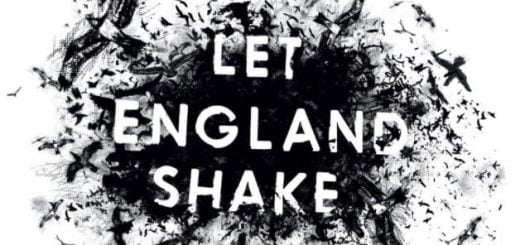
In the ever-evolving tapestry of modern music, few songs manage to strike at the heart of geopolitical discourse with the poetic precision of ‘The Glorious Land’ by PJ Harvey. The track, a standout piece from her 2011 album ‘Let England Shake’, is layered with a disquieting mixture of martial trumpets and folkloric eeriness, beckoning the listener into a profound reflection on the cost of national pride.
Eclipsed by its haunting melody, ‘The Glorious Land’ juxtaposes the nurturing concept of a homeland with the stark reality of military aggression and its aftermath. In interpreting Harvey’s evocative verses, one is compelled to wade through the murky waters of patriotism, war, and the loss of innocence, revealing an underlying message that is as poignant as it is sobering.
Harvesting Iron: The Militarization of National Identity
The recurring rhetorical question ‘How is our glorious country ploughed?’ serves as more than a symbol of agricultural prosperity; it is a metaphorical probe into the means by which nations foster their global dominion. The ironic neglect of ‘iron ploughs’ for ‘tanks and feet’ suggests a perversion of labor from cultivation to destruction, from life-giving to life-taking, wherein the machinery of war ravages the ‘glorious land’ it purports to defend.
Harvey’s lyrical prowess deconstructs the notional pillars upholding nationhood, imploring listeners to reconsider the celebration of a country’s might when its power is derived from the mill of war. The relentless march of ‘feet’ in her song is a grim cadence that resonates with the echoes of soldiers, sent to sow not grains of peace but seeds of discord and death.
A Chorus of Allies: The Transatlantic Echoes
In invoking ‘Oh, America’ and ‘Oh, England,’ Harvey evokes the historic and contemporary alliances that have often defined Western military interventions. This keening refrain underlines a shared culpability, an intertwined destiny between both nations, while also serving as a haunting roll call, a lamentation for the souls ensnared by patriotic fervor and sacrificed at the altar of geopolitical ambition.
By repeating these exclamations, Harvey dissolves the supposed sanctity of boundaries, reminding us that the repercussions of national actions are not contained within maps, but ripple across oceans and into the shared consciousness of humanity. The ‘Oh’ punctuates the air with a collective sigh, a universal sense of regret for the pride and pitfalls of empire.
Seeds of Sorrow: The Cost of Empire
The question of how ‘our glorious country [is] sown’ subtly transforms the pastoral imagery of planting and growth into a grim assessment of colonial and imperial exploits. The harvest is neither ‘wheat and corn’—symbols of sustenance and life—but rather something more sinister. This line confronts the listener with the uncomfortable implication that what is sown through aggression yields an inheritance of suffering and desolation.
By stripping down the grand concept of nationalism and empire-building to its gruesome essentials, she crafts a powerful commentary on the true price of a country’s global standing—often paid not in currency, but in human currency. The nations are ‘bestowed’ not with gifts of prosperity, but with the repercussions of their own actions, leaving a legacy branded by conflict.
Unearthing the Hidden Meaning: PJ Harvey’s Modern Anthem
Hidden beneath the veneer of martial horns and the dignified indictment of ‘How is our glorious country ploughed?’ lies PJ Harvey’s deeper message. It’s a confrontation with the intoxicating myth of a benevolent patria that must be deciphered from the ashes of its towns and the cries of its children. This hidden meaning is the siren’s call to awake from the stupor of credulous patriotism, to acknowledge the disfigurement war leaves on a nation’s soul.
In ‘The Glorious Land’, the listener excavates layers of political critique shrouded in sensory evocation. The mournful trumpet becomes a herald of truth, and Harvey’s voice carries the weight of disenchantment from the tradition of glorifying conquest and power. The subdued clatter of the instruments behind the pointed lyrics compels an awakening to the barren yield of lands entrusted to the care of war.
Memorable Lines That Haunt and Echo
‘The fruit is deformed children. The fruit is orphaned children.’ In these lines, the payoff of Harvey’s rhetorical structure hits with the subdued force of a reckoning. Such harrowing images dismantle any vestiges of wartime glory, laying bare the irreparable damage inflicted upon the most vulnerable: the young, the innocent.
The grim irony is palpable as ‘glorious fruit’ traditionally suggests symbols of a land’s prosperity and future. Yet, here, we confront its nightmarish inversion, where the legacy of conflict breeds generations marked by its poison. Harvey’s words are etched into memory, an unshakable reminder of the human cost behind banners of national pride, and an echoing question of what we are truly nurturing in our ‘glorious land.’