04-Good Golly Miss Molly by Creedence Clearwater Revival Lyrics Meaning – Unpacking the Rock ‘n’ Roll Revelry
Lyrics
Good golly, Miss Molly, sure like a ball
When you’re rockin’ and a rollin’ can’t hear your momma call
From the early, early mornin’ ’till the early, early night
You can see Miss Molly rockin’ at the house of blue lights
Well, good golly, Miss Molly, sure like a ball
When you’re rockin’ and a rollin’ can’t hear your momma call
Yeah, momma, poppa told me “Son, you better watch your step”
If I knew my momma, poppa, have to watch my pop myself
And good golly, Miss Molly, sure like a ball
When you’re rockin’ and a rollin’ can’t hear your momma call
I’m going to the corner, gonna buy a diamond ring
Would you pardon me a kissin’ and a ting-a-ling-a-ling?
Well good golly, Miss Molly, sure like a ball
When you’re rockin’ and a rollin’ can’t hear your momma call, ahh
Good golly, Miss Molly, sure like a ball
Good golly, Miss Molly, sure like a ball
When you’re rockin’ and a rollin’ can’t hear your momma call
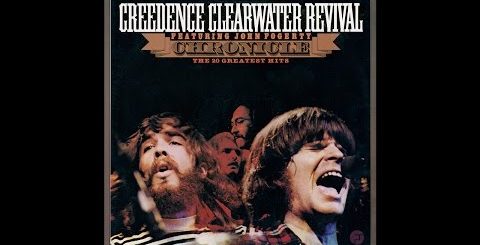
Creedence Clearwater Revival (CCR), known for their definitive swamp rock sound, tapped into the rock ‘n’ roll roots with their cover of ‘Good Golly Miss Molly.’ The song, originally made famous by Little Richard, is a spirited ode to youth, rebellion, and the infectious energy of rock ‘n’ roll. It’s a celebration of living in the moment, a tribute to the dance halls and juke joints of the ’50s and ’60s.
Yet, beneath its rollicking surface, CCR’s rendition of ‘Good Golly Miss Molly’ captures a cultural zeitgeist and the universality of youthful enthusiasm. The lyrics, simple and repetitive, convey an enduring message about freedom, love, and the spirit of dance that transcends generations, making us ponder the depth of the song’s seemingly straightforward verses.
A Tidal Wave of Rock ‘n’ Roll Escapism
At its core, ‘Good Golly Miss Molly’ exemplifies the escapism that rock ‘n’ roll promised in its golden era. The relentless tempo and sheer energy of the track transport listeners back to a time when the only thing that mattered was the music and the movement. CCR’s cover encapsulates this euphoria as both an homage and a reinvention, channeling the original’s vitality while infusing it with their distinctive sound.
The song’s opening line, ‘Good golly Miss Molly, sure like to ball,’ immediately draws the picture of unstoppable merrymaking. The term ‘ball,’ with its double entendre, evokes both the act of dancing and a more risqué connotation, hinting at the underlying liberation found in rock ‘n’ roll – dancing as a metaphor for other desires.
The Call of Rebellion and The Ignored Advice
The heart of ‘Good Golly Miss Molly’ beats to the rhythm of defiance. The song’s narrative casually brushes off parental guidance, symbolizing rock ‘n’ roll’s challenge to the status quo. ‘Yeah, momma, poppa told me, “Son, you better watch your step”‘ illustrates the generation gap, the perennial struggle between youthful exuberance and the cautious wisdom of elders.
‘If I knew my momma, poppa, have to watch my pop myself,’ suggests that even the enforcers of rules are not above breaking them, capturing an undercurrent of hypocrisy in societal norms. The protagonist’s nonchalant dismissal of such advice is less about disrespect and more about the universal right to carve out one’s path.
Turn the Volume Up: The Importance of ‘Can’t Hear Your Momma Call’
A key phrase that punctuates the song is its most rebellious line: ‘When you’re rockin’ and a rollin’ can’t hear your momma call.’ Not merely a convenient rhyme, these words signify the transformative power of music. To be immersed in rock ‘n’ roll is to be temporarily free from constraints, the ‘call’ symbolizing external expectations and the demands of reality.
It’s a celebration of autonomy, a sonic blast that drowns out the mundane and the ordinary. The repetition of this line throughout the song underscores its significance as a mantra of youth – turn the music up, lose yourself in the moment, and let the world outside fade away.
The Symbolism of ‘The House of Blue Lights’
Amidst the rollicking shake, rattle, and roll, lies a reference to ‘the house of blue lights.’ This term has its origins as slang for a rowdy nightspot filled with dancing and lascivious behavior, often associated with the clubs of the jazz and early rock era.
CCR’s mention of Miss Molly rocking at the house of blue lights serves as more than a picturesque scene; it’s the embodiment of a spirit that refuses to be tamed. This bluesy imagery lends itself to the song’s atmosphere of untamed pleasure and the cultural archetype of the dance hall as the epicenter of youthful rebellion.
The Enduring Flame of ‘Good Golly Miss Molly’
The magic of ‘Good Golly Miss Molly’ is not merely in its rhythm or its rhyme, but in its capacity to capture an essential truth about the human experience. CCR’s interpretation reminds us that the search for joy, the ecstasy of dance, and the need for escape are not bound by time or tradition.
As listeners, we are invited to look beyond the veil of simplicity at the song’s heart, recognizing the shared lineage between the rocking ’50s, the revolutionary ’60s, and every generation that has since sought solace and freedom in the embrace of a good tune and a dance floor. Through this lens, ‘Good Golly Miss Molly’ becomes more than just a song – it is a reminder of the indomitable spirit that beats within us all.