Valentine’s Day by Marilyn Manson Lyrics Meaning – Unveiling the Dark Commentary on Society
Lyrics
Her mouth curled under like a metal snake
Although Holy Wood was sad
They’d remember this as Valentines day
Flies are waiting
In the shadow of the valley of death
In the shadow of the valley of death
They slit our wrists and send us to heaven
The first flower after the flood
I saw that pregnant girl today
She didn’t know that it was dead inside
Even though it was alive
Some of us are really born to die
Flies are waiting
In the shadow of the valley of death
In the shadow of the valley of death
They slit our wrists and send us to heaven
The first flower after the flood
In the shadow of the valley of death
In the shadow of the valley of death
In the shadow of the valley of death
In the shadow of the valley of death
In the shadow of the valley of death
In the shadow of the valley of death
In the shadow of the valley of death
In the shadow of the valley of death
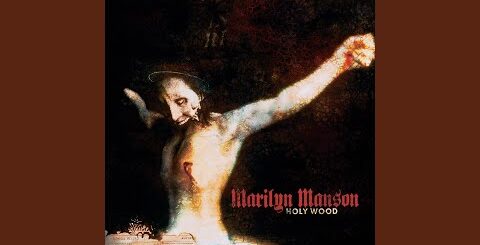
Marilyn Manson has never been one to stray away from controversy or dark thematic content. ‘Valentine’s Day,’ a track from Manson’s 2000 album ‘Holy Wood (In the Shadow of the Valley of Death),’ is no exception to his rule of thumb. Peel away the layers of this haunting ballad, and one uncovers a stark and morose reflection on society, human nature, and the concept of love wrapped in metaphor.
The lyrics, though brief, drip with grim imagery and a sinister twist on what should be one of the year’s most loving days. It’s more than a song; it’s an esoteric narrative that offers a grim perspective on the world and our place within it. ‘Valentine’s Day’ is a provocative declaration drawing lines of parallel between life, death, and the societal constructs that bind them.
The Color of Society’s Screen
The opening line, ‘She was the color of TV,’ immediately sets a somber tone, using the analogy of the television—a medium that often dictates our perceptions of beauty, reality, and morality. Manson cleverly critiques how media polishes, taints, and often distorts what we consume, with our culture’s values mirroring the ‘color’ of what’s broadcast.
By comparing a person to this overwhelming influence, Manson seems to suggest that our identities are heavily influenced by the media, leaving us hollow—much like the vacuous entertainment that often flickers across the screens in our living rooms.
Unraveling the Irony of Holy Wood
Manson’s choice of the term ‘Holy Wood’—a reference to Hollywood and its façade of glory—is juxtaposed with the sadness and despair that assumes center stage. The glamor and enchantment typically associated with Valentine’s Day is perverted into a memory marred by tragedy and mortality.
The town is holy not for its purity but immortalized in its capability to produce sadness and desolation. This creates a biting commentary on how the entertainment industry glorifies suffering and how audiences are mesmerized by its distressing narratives.
The Haunting Repetition in the Shadows
The mantra ‘In the shadow of the valley of death’ hauntingly repeated throughout the song casts a long shadow over its entirety—dark and omnipresent. Manson draws from Psalm 23’s ‘valley of the shadow of death,’ recontextualizing it to invoke a present and dystopian reality rather than a mere religious metaphor for overcoming fear.
This shadow is not only a place but a state of existence—an acknowledgment of the ever-present nature of death and decay in our lives, constantly lurking and unavoidable.
The First Flower After the Flood: A Symbol of Hope or Despair?
In what might seem like a glimmer of hope, ‘the first flower after the flood’ appears as a symbol for rebirth and new beginnings. However, Manson’s complex imagery here might imply a stark irony—can there truly be new life in the aftermath of apocalyptic desolation, or is it merely a fleeting reminder of what once was?
This line questions whether rebirth in the wake of devastation is a blessing or simply the natural course—one that is as futile as it is inevitable. It can also be interpreted as a symbol of the cyclical nature of human mistake and despair—hope arises, only to be followed again by inevitable downfall.
Born to Die: Valentine’s Day’s Most Chilling Revelation
The irony of life’s beginnings taking place within the proximity of death is exemplified in the lyric ‘I saw that pregnant girl today/She didn’t know that it was dead inside.’ This reveals a duality between birth and death, a central theme in ‘Valentine’s Day.’
Manson sheds a harsh light on the concept of predetermined fate—some are ‘really born to die.’ The artist forces us to confront the uncomfortable notion that for some, life offers nothing more than the straight path towards death, a predestined and inescapable conclusion.