The Great River by Howard Shore Lyrics Meaning – Navigating the Currents of Tolkien’s Emotional Landscape
Lyrics
yeni unotime ve ramar aldaron!
yeni ve linte…
‘Alas! golden leaves fall in the wind,
long years numberless as [the] wings of trees!
Long years like swift…’
Verse 2
Et Earello Endorenna utulien.
Sinome maruvan ar Hildinyar tenn’ Ambar-metta!
‘Out of the Great Sea to Middle-earth I am come.
In this place I will abide, and my heirs, unto the ending of the world’
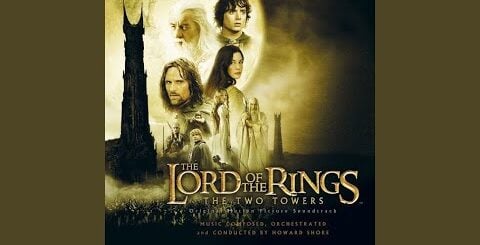
When Howard Shore penned the music for ‘The Great River,’ a track from his iconic score for ‘The Lord of the Rings: The Two Towers,’ he wasn’t merely composing; he was conjuring a world. The lyrics, drawn from J.R.R. Tolkien’s grand tapestry of myth and language, twine themselves through the melody, guiding listeners on a journey that transcends the mere notes.
Beneath the surface of this haunting piece lies a world teeming with rich symbolism, timeless themes of longing and belonging, nature’s eternal cycles and, not least, the defiant proclamation of a lineage untarnished by the passing of eras. Let’s set sail down this Great River to uncover the heart of its profound narrative, as Shore harmonizes folklore with orchestral finesse.
Golden Leaves and the Ebb of Time
The opening lines of the song, sung in Tolkien’s fictional Elvish language, summon images of leaves cascading in a relentless wind—an allegory for the passage of time and the fleeting nature of beauty. It reflects a sentiment deeply embedded in ‘The Lord of the Rings’: the world is changing, an epoch is ending, and with it goes the last vestiges of an enchanted age.
Shore’s melody wraps around these words with a wistful cadence, a lament for the slow, inevitable march towards the autumn of the world. In much the same way that autumn flutters in with both beauty and sadness, Shore’s composition tells a story of both loss and the captivating allure of change.
A Symphony for Middle-earth’s Children
The song doesn’t only speak of loss; there’s an enduring presence, a declaration of fortitude amidst the ages. ‘Sinome maruvan ar Hildinyar tenn’ Ambar-metta!’ translates to ‘In this place will I abide, and my heirs, unto the ending of the world.’ It’s a vow, a promise extended by characters who, while acknowledging the flux around them, choose to stand firm.
Howard Shore’s orchestration reflects this defiance—a triumph of spirit clinging steadfast to its roots. The music soars here, reflecting the indomitable will to remain through strands of melody that evoke the noblest qualities of those that inhabit Tolkien’s universe.
Echoes of Ancestral Voices
Tolkien’s world is vast, its history deep. The song’s references to ‘ramar aldaron,’ or ‘wings of trees,’ and the notion of heirs, connect to the ancient lineage of the Elves, the stewards of the natural world. This ancestral echo in Shore’s music is a tribute to the roots from which Tolkien’s legacy grew—myth, language, and an innate respect for the wonders of the natural order.
Shore interweaves the instruments to create aural illusions of the forest’s whispers, its breaths and sighs. These echoes build a bridge between the tangible and the ethereal, crafting a sound that feels older than time yet fresh with immediacy—a masterstroke in scoring that draws both on nostalgia and the present moment.
The Hidden Heartbeat of Middle-earth
There’s a hidden rhythm to ‘The Great River,’ a pulse not immediately discernible beneath its serene surface. The song moves like the river it is named for, currents of deeper meaning flowing beneath the overt narrative. It is in these hidden depths that Shore invites audiences to find their own connection to the music—a journey that parallels the Fellowship’s quest.
Each listener, like each member of the Fellowship, brings a unique perspective. The music becomes a vessel, carrying layered emotions and unspoken stories. Shore’s composition demands deep listening, a readiness to dive into the unseen emotional tapestry woven beneath the eloquence of Tolkien’s Elvish prose.
Memorable Lines that Bridge Worlds and Hearts
‘Et Earello Endorenna utulien’ captures the spirit of arrival, of coming into one’s destiny against the vast backdrop of time and tide. These lines transcend their fictional origin; they speak to the universal experience of setting down roots and defining one’s place in the grand saga of existence.
This musical moment resonates with a clarity that is often sought but seldom found in fantasy works. It speaks to the longing for home that resides in every adventurer, a sentiment that Shore deftly amplifies through a score that is as grand as it is intimate—binding the mythical to the mortal coil, resonating across worlds and into the hearts of those who dare to listen.