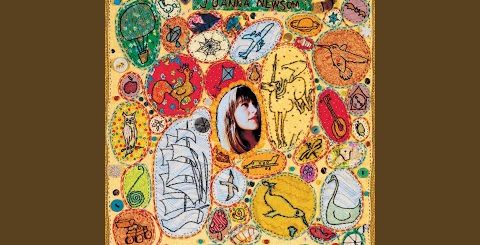
Baby Birch by Joanna Newsom: Dissecting the Intricate Tapestry of Loss and Hope
- Music Video
- Lyrics
-
Song Meaning
- Of Myths and Maternal Musings: Exploring ‘Baby Birch’s’ Poetic Depths
- Navigating the Waters of Regret: A Look at ‘Baby Birch’s’ Emotional Undertow
- The Wrenching Procession of Lyrics: Profoundly Memorable Lines in ‘Baby Birch’
- The Hidden Ache Within ‘Baby Birch’: Decoding the Song’s Underlying Message
- Resonating Echoes: How ‘Baby Birch’ Reverberates Beyond Its Last Note
Lyrics
Though I will never know you
And at the back of what we’ve done
There is the knowledge of you
Well, I wish we could take every path
Could spend a hundred years adoring you
Yes, I wish we could take every path ’cause you know
I hated to close the door on you
Do you remember staring up at the stars?
So far away in their bullet-proof cars
When we heard the rushing, slow intake
Of the dark, dark water and the engine brakes
And I said how about them engine brakes?
And if I should die before I wake
Will you keep an eye on baby birch?
Because I’d hate to see her make the same mistake
When it was dark I called and you came
When it was dark I saw shapes
When I see stars I feel your hand
And I see stars and I reel again
Well mercy me, I’ll be goddamned
It’s been a long, long time since I last saw you
And I have never known the plan
It’s been a long, long, time
How are you?
Your eyes are green, your hair is gold
Your hair is black, your eyes are blue
I closed the ranks and I doubled back
But you know I hated to close the doggone door on you
We take a walk along the dirty lake
Hear the goose cussing at me over her eggs
You poor little cousin, I don’t want your dregs
A little baby fussing over my legs
There is a blacksmith and there is a shepherd and there is a butcher boy
And there is a barber who’s cutting and cutting away at my only joy
I saw a rabbit as slick as a knife and as pale as a candlestick
And I had thought it’d be harder to do but I caught her and skinned her quick, held her there
Kicking and mewling upended unspooling unsung and blue
Told her wherever you go little runaway bunny I will find you
And then she ran
As they’re liable to do
Be at peace baby, and be gone
Be at peace baby, and be gone
Unraveling the complex layers of Joanna Newsom’s ‘Baby Birch’ is akin to embarking on a treacherous yet enlightening journey through the woodland of raw emotion and poetic intricacy. As Newsom weaves her harp strings, she also intertwines themes of grief, love, and the inexorable passage of time, crafting a song that demands the listener to pause and reflect.
Through her signature blend of obscure, fairy-tale-like lyrics, Newsom taps into a deep well of personal and universal musings. With each verse of ‘Baby Birch,’ audiences are invited into a contemplative space where the lines between imagination and reality blur, leaving a haunting afterimage of connection and loss.
Of Myths and Maternal Musings: Exploring ‘Baby Birch’s’ Poetic Depths
At a cursory glance, ‘Baby Birch’ might seem an ode to an unknown child, a specter of potential life. The opening lines, ‘Though I will never know you,’ hint at a form of mourning, perhaps for a life Newsom imagined but never realized. It could be an acknowledgment of loss, miscarriage, or a conscious decision against motherhood in a world where such paths can be, at times, achingly divergent.
Delving deeper, it becomes evident that the ‘knowledge of you’ is both a painful recognition of absence, and a profound understanding of the interconnectedness between the artist and this ethereal ‘baby birch.’ It is not merely a reflection on what could have been, but a lamentation of potential, swaddled tenderly in the complex fabric of Newsom’s lyrical prowess.
Navigating the Waters of Regret: A Look at ‘Baby Birch’s’ Emotional Undertow
Newsom’s reference to ‘the dark, dark water and the engine brakes’, washes listeners with an inevitable sense of doom, yet the juxtaposition of mechanical and natural imagery cleverly symbolizes the often rough merger of life’s progress with its inevitable ebbs and flows. The imagery propels us into memories of choices made, paths taken, and the echoing what-ifs that haunt the recesses of the mind.
The artist’s appeal, ‘if I should die before I wake, will you keep an eye on baby birch?’ goes beyond a personal plea. It’s a universal cry for the safeguarding of innocence, for gentle guidance through a world that can be both beautiful and cruel. This plea embodies the core struggle of the human condition – the blending of hope and fear as we reckon with our own mortality.
The Wrenching Procession of Lyrics: Profoundly Memorable Lines in ‘Baby Birch’
Among the undulating verses of ‘Baby Birch’, certain lines strike the listener forcibly, leaving a mark that time won’t easily erode. For instance, ‘It’s been a long, long time since I last saw you’ is not just a statement of temporal distance, but a viscerally felt gap, a hole in the fabric of one’s personal history.
Equally striking is the transformation of a gentle bunny into a symbol of innocence lost as Newsom sings, ‘And as pale as a candlestick / And I had thought it’d be harder to do but I caught her and skinned her quick.’ This stark, unsettling imagery delivers a gut punch of realization, challenging the listener to confront the darker nuances of the tune.
The Hidden Ache Within ‘Baby Birch’: Decoding the Song’s Underlying Message
Newsom’s ‘Baby Birch’ is not just painted with the brush of loss; it is filled with the hues of questioning and searching for meaning in a universe that often feels indifferent to individual sorrow. By presenting a tapestry of symbols – the blacksmith, the shepherd, the butcher boy – she invites interpretation of the joys and sacrifices inherent in any act of creation, be it a song, a life, or a love.
In giving voice to the ‘little runaway bunny,’ Newsom highlights a sense of defiant survival and the painful, beautiful act of letting go. This acceptance of life’s impermanence and the courage to continue in the face of it underscore the nuanced emotional landscape presented by the song. ‘Baby Birch’ thus becomes an invitation to consider the intertwining of joy and pain, the cyclical nature of existence, and inevitability of change.
Resonating Echoes: How ‘Baby Birch’ Reverberates Beyond Its Last Note
The lasting power of ‘Baby Birch’ lies not solely in its exquisite melody or Newsom’s captivating voice, but in the song’s ability to leave the listener changed. The emotional candor and poeticism resonate, echoing within and altering perspectives on loss, love, and the difficulty of moving forward.
Listeners come away from ‘Baby Birch’ with a sense of having navigated a complex web of emotions that might take multiple listens to fully unravel. Its strength as an artistic creation lies in its refusal to provide easy answers or closure, thereby replicating the often-unfinished business of coping with life’s profound mysteries.