Ball and Chain by Social Distortion Lyrics Meaning – An Odyssey of Despair and Longing
Lyrics
And look at the mess I’m in
A broken nose and a broken heart,
An empty bottle of gin
Well I sit and I pray
In my broken down Chevrolet
While I’m singin’ to myself
There’s got to be another way
Take away, take away
Take away this ball and chain
I’m lonely and I’m tired
And I can’t take any more pain
Take away, take away
Never to return again
Take away, take away
Take away this ball and chain
Well I’ve searched and I’ve searched
To find the perfect life-
A brand new car and a brand new suit
I even got me a little wife
But wherever I have gone
I was sure to find myself there
You can run all your life
But not go anywhere
Take away, take away
Take away this ball and chain
I’m lonely and I’m tired
And I can’t take any more pain
Take away, take away
Never to return again
Take away, take away
Take away this ball and chain
Well I’ll pass the bar on the way
To my dingy hotel room
I spent all my money
Been drinkin’ since a half past noon
I’ll wake there in the mornin’
Or maybe in the county jail
Times are hard getting harder
I’m born to lose and destined to fail
Take away, take away
Take away this ball and chain
I’m lonely and I’m tired
And I can’t take any more pain
Take away, take away
Never to return again
Take away, take away
Take away this ball and chain
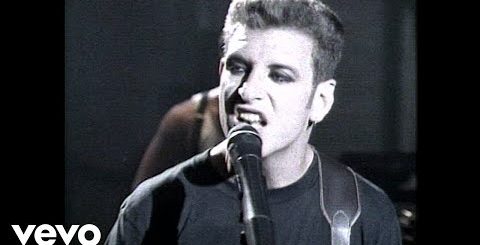
In the pantheon of punk rock anthems, Social Distortion’s ‘Ball and Chain’ resonates as a timeless portrait of personal desolation and the yearning for redemption. This track, ripe with grit and the raw energy that encapsulates the very essence of punk’s appeal, reaches beyond mere chords and lyrics to unearth the struggles that bind the human spirit.
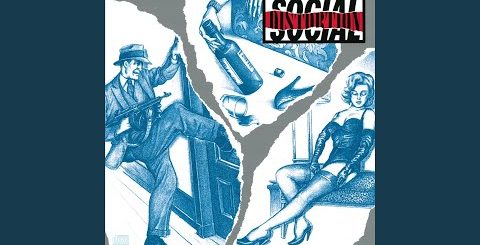
The song, released in 1990 as part of Social Distortion’s self-titled album, encapsulates frontman Mike Ness’s gravelly tones, evoking scenes of a life worn down by the relentless ticking of the clock and the unyielding weight of one’s decisions. The narrative weaves a tapestry of regret and the desperate plea for release, delving into themes that are as universal as they are poignant.
A Decade of Sorrow and Gin: Unpacking the Pain
Each verse of ‘Ball and Chain’ is loaded with imagery that conjures up a decade’s worth of regret and heartache. The ‘thousand tears’ and the ‘mess I’m in’ set the stage for a confessional that groans under the weight of time lost and opportunities squandered. The crushed dreams and broken promises aren’t just metaphors but real specters that haunt the narrator’s every step.
It’s a rugged landscape painted not just with the physical signs of a troubled life – the broken nose, the empty bottle of gin – but also the emotional desolation that saturates Ness’s voice. Within these lines, the listener grasps not only the toll on the individual but the universal struggle against the chains that life can shackle us with.
Behind the Wheel of Desperate Prayer: Seeking Salvation
‘I sit and I pray in my broken down Chevrolet’ is not just a lyric, it’s a scene. There, in the solitude of a car that’s seen better days, is a man coming to grips with the truth of his circumstances. This line evokes the sheer human need for a glimmer of hope, for a path to redemption, and the acknowledgment that change must come. The automobile, often a symbol of freedom, becomes a confession booth on wheels—the place where one man’s soul lays bare.
The Chevrolet becomes a metaphorical vessel, stuck in place like the life of the man within it. It’s not just about the need to move physically, but emotionally and spiritually. Singing to oneself becomes an act of survival, a fight to stay afloat in the vast ocean of life’s troubles.
The Illusion of Escape: Coming Face-to-Face with Oneself
As we delve into the song’s profound narrative, one pivotal realization arises: ‘But wherever I have gone, I was sure to find myself there.’ It’s a philosophical bombshell that explodes the myth of escapism. Ness delineates the futility of seeking solace in material possessions or in running from one’s troubles – the ‘brand new car and a brand new suit’ are mere accessories to existential inertia.
The little wife and the promise of a perfect life fail to fill the void that echoes deep within the protagonist’s soul. The stark permanence of self that he can never outrun underscores the song’s message — you can change your scenery, but the inner chains of dissatisfaction and regret are much harder to shed.
An Anthem for the Weary: The Cry for Relief
‘Take away this ball and chain’ – the emotive refrain that is as much a plea as it is a chorus. It becomes clear that the ball and chain are metaphors for a profound sense of existential weariness, a burden of consciousness that festers with each passing moment. As the song’s fabric unravels, these words become a desperate cry from the depths, seeking an end to the pain — an end to the chains of life’s cruel circumstances.
‘I’m lonely and I’m tired / And I can’t take any more pain’ — with these lines, Ness voices the ache and fatigue that weigh heavily not just on him, but potentially on every listener who has felt the cold hand of despair clutching at their heart.
The Ballad of the Doomed: Destined to Fail or a Beacon of Hope?
In examining the concluding verses, one finds the sobering self-awareness of a narrator teetering on the edge, ‘born to lose and destined to fail.’ Here lies the stark reality of determinism — or does it? While it may read as a somber acceptance of one’s fate, there lies an undercurrent of resistance. The acknowledgment of his circumstances exhibits a hidden strength, a refusal to surrender entirely to the shadows that court him.
The brilliance of ‘Ball and Chain’ is not just in its raw honesty, but also in its ambiguous finish. Does the song end as a dirge for the broken or does it serve as a cautionary tale that implores the listener to break free from their own metaphysical restraints? The power of the song’s message resides in its inherent duality – a recognition of defeat that somehow carries the torch of resilience.