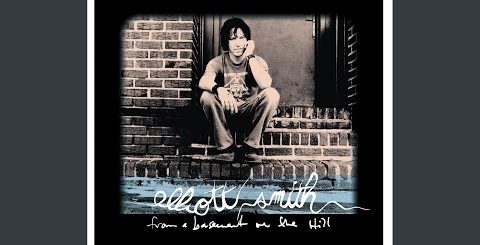
Better Be Quiet Now by Elliott Smith Lyrics Meaning – Unraveling the Haunting Melancholy Behind the Melody
Lyrics
Wish I could call you today
Just to hear a voice
I got a long way to go
Getting further away
If I didn’t know the difference
Living alone probably be okay
It wouldn’t be lonely
I got a long way to go
Getting further away
A lot of hours to occupy it was easy
When I didn’t know you yet
Things I’d have to forget
But I better be quiet now
I’m tired of wasting my breath
Carrying on, getting upset
Maybe I have a problem
But that’s not what I wanted to say
I prefer to say nothing
I got a long way to go
Getting further away
Had a dream as an army man with an order
Just to march in my place
But a dead enemy, screams in my face
But I better be quiet now
I’m tired of wasting my breath
Carrying on, not over it yet
Wish I knew what you were doing
Why you want to do it this way
So I can’t go the distance
I got a long way to go
I’m getting further away
I got a long way to go
Getting further away
Elliott Smith, renowned for his introspective lyrics and haunting melodies, has always been a whisper in the cacophony of mainstream music—a gentle force that still manages to resonate deeply with listeners. ‘Better Be Quiet Now’ is no different; a heartrending single that encapsulates Smith’s unique ability to blend personal pain with universal emotion, crafting a song that speaks to the solitary soul.
With its mournful guitar strumming and Smith’s intimate vocal performance, the track delves into themes of isolation, longing, and self-censure. The lyrical journey of ‘Better Be Quiet Now’ takes listeners through a labyrinth of introspection that demands a closer look to unravel its deeper meaning—a testament to Smith’s songwriting genius.
The Echoes of Solitude: Understanding ‘Better Be Quiet Now’
The song begins with a wish—a simple yearning for connection that sets the stage for Smith’s exploration of loneliness. The lines ‘Wish you gave me your number / Wish I could call you today / Just to hear a voice’ serve as an admission of the need for companionship, an all-too-human desire to hear a sound that signifies another’s existence.
As the melody proceeds, we infer that it isn’t just any ‘voice’ Smith longs for but a specific one that remains out of reach. This creates a pervasive sense of getting ‘further away’ from something, whether it be another person, a past self, or a happier time—yielding an arduous emotional journey.
A Nostalgic Lament: The Pain of Separation
Smith’s acknowledgment of the ‘long way to go’ suggests a protracted struggle, infused with the melancholy of what once was. The lyrics ‘A lot of hours to occupy it was easy / When I didn’t know you yet / Things I’d have to forget’ speak to the difficulty of moving past a relationship that once provided solace. The nostalgic lament for easier times, ones not encumbered by the weight of memory, provides a bittersweet taste.
In this light, the act of forgetting becomes a necessary yet painful process of self-preservation. Smith eloquently captures the duality of wanting to hold on to cherished memories and the need to let go in order to heal.
A Battle Within: The Song’s Hidden Conflicts
The lines ‘Had a dream as an army man with an order / Just to march in my place / But a dead enemy, screams in my face’ could be considered the central metaphor expressing the internal struggle Smith faces. The image of an ‘army man’ suggests a battle, perhaps with oneself or the remnants of past relationships—’a dead enemy’ that still manages to haunt the present.
This haunting indicates that despite his attempts at emotional stoicism—marching in place—the past refuses to remain silent. It’s an ongoing conflict where the outcome is neither victory nor defeat, but a weary truce with the ghosts of what’s been lost.
A Mantra of Resignation: Memorable Lines Resonate
‘But I better be quiet now / I’m tired of wasting my breath / Carrying on, getting upset’—these lines become a mantra of resignation, a turning point in the narrative. Smith captures a sentiment of surrender to the immutable, an understanding that perhaps the effort expended in longing and lamentation is futile.
The repetition of ‘I better be quiet now’ not only resonates as a haunting refrain but also as a moment of self-awareness. It’s an attempt to still the internal turbulence, a poignant nod to the energy spent in pursuits that perhaps, deep down, Smith knows are in vain.
The Journey Continues: Navigating the Distance
The song concludes without resolution, an open-ended reflection of the ‘long way to go’. It refuses to offer comfort or closure, mimicking the cyclical nature of Smith’s ruminations. His final acceptance that he is ‘getting further away’ is both liberating and desolate—a recognition that the journey through pain, like all journeys, continues indefinitely.
In ‘Better Be Quiet Now’, Elliott Smith’s raw eloquence solidifies his legacy as an artist who could artfully convey profound sadness and truth. What begins as a personal narrative transcends into a universal ode to the human condition—reverberating through the silence it so beautifully personifies.