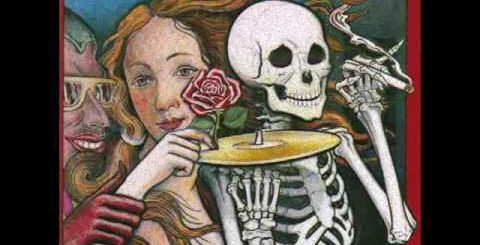
Casey Jones by The Grateful Dead Lyrics Meaning – Unpacking the Iconic Track’s Cautionary Tale
Lyrics
Casey Jones you better watch your speed
Trouble ahead, trouble behind
And you know that notion just crossed my mind
This old engine makes it on time
Leaves Central Station ’bout a quarter to nine
Hits River Junction at seventeen two
At a quarter to ten you know it’s travelin’ again
Driving that train, high on cocaine
Casey Jones you better, watch your speed
Trouble ahead, trouble behind
And you know that notion just crossed my mind
Trouble ahead, Lady in red
Take my advice you’d be better off dead
Switchman’s sleeping, train hundred and two is
On the wrong track and headed for you
Driving that train, high on cocaine
Casey Jones you better watch your speed
Trouble ahead trouble behind
And you know that notion just crossed my mind
Drive your train, whoo
Trouble with you is the trouble with me
Got two good eyes but you still don’t see
Come round the bend, you know it’s the end
The fireman screams and the engine just gleams
Driving that train, high on cocaine
Casey Jones you better, watch your speed
Trouble ahead, trouble behind
And you know that notion just crossed my mind
Driving that train, high on cocaine
Casey Jones you better, watch your speed
Trouble ahead, trouble behind
And you know that notion just crossed my mind
Driving that train, high on cocaine
Casey Jones you better, watch your speed
Trouble ahead, trouble behind
And you know that notion just crossed my mind
Driving that train, high on cocaine
Casey Jones you better, watch your speed
Trouble ahead, you know, trouble behind
And you know that notion just crossed my mind
And you know that notion just cross my mind
The Grateful Dead, known for their eclectic style and psychedelic storytelling, often weaved intricate tales with real-world parallels. ‘Casey Jones,’ a track off the band’s 1970 album ‘Workingman’s Dead,’ serves as a brilliant tapestry of metaphor and history. It goes beyond the allure of its catchy refrain, dissecting layers of meaning that encapsulate both the legend and the lifestyle of the era.
The tune tells the tale of a reckless train engineer barreling down the tracks, a metaphorical and literal juggernaut of potential catastrophe. Let’s unfold the vivid imagery and cautionary essence embedded in the lyrics as ‘Casey Jones’ continues to resonate with audiences, transcending generations with its timeless melody and profound implications.
The Locomotive Legend and Its Psychedelic Counterpart
At the heart of ‘Casey Jones,’ there’s an intertwining of American folklore and ’60s counterculture. The song draws its narrative from the historic engineer Casey Jones, known for his death-defying train expeditions, but the Grateful Dead morph this figure into a commentary on the fast-living, risk-taking spirit that pervaded the hippie movement.
While some listeners might take the storyline at face value, it’s a deeper dive into the American psyche of the time, capturing both the adventurous spirit and the inherent dangers that came with the liberated lifestyles of the era. This duality provides the canvas upon which the Grateful Dead paint their lyrical imagery.
A Siren Song for the Countercultural Odyssey
Much like Odysseus facing the call of the Sirens, ‘Casey Jones’ issues a dual warning – a siren song against the tempting nature of excess and the pitfalls of hedonism. In the era of sex, drugs, and rock ‘n’ roll, the song’s refrain, ‘Driving that train, high on cocaine, Casey Jones you better watch your speed,’ reads as a prophetic call to those ensnared in the clutches of addiction.
The Dead signal the treacherous waters ahead for those who might lose sight of the terrain as they ride their own metaphorical trains. The repeated cautions about the trouble ahead and behind not only point to the perils bounding Casey Jones but also to those ensnaring the youth who reveled in the counterculture.
Decoding the Hidden Meanings Within the Song
Beneath the surface of ‘Casey Jones,’ there is an intricate map of symbolism. The ‘Lady in red’ offers a haunting image, possibly representing temptation or death – a grim reminder of the ultimate toll one’s choices might exact. In contrast, the ‘Switchman’s sleeping’ denotes a lack of guidance or control, as if fate and personal responsibility are asleep at the wheel.
This deeper analysis reveals a stark commentary on the lack of oversight during a time where many sought to push boundaries. The Dead don’t just spin a yarn about a railroad engineer; they craft a reflection of society’s journey – a society barreling towards an uncertain future without the necessary vigilance.
The Immortal Lines That Echo through Generations
When audiences hum the words, ‘Driving that train, high on cocaine,’ they’re invoking more than a catchy tune; they’re recalling a cautionary phrase that has echoed throughout the halls of music for over half a century. It is a line of poetry that is immortalized in the American songbook, laden with the weight of its warning and the history of its time.
The lines resonate not because they’re glorifying the lifestyle but because they’re illuminating the stark realities behind the façade of invincibility. It is a reminder that our actions have consequences, and our journeys—both literal and metaphorical—require mindful navigation.
The Resonance of ‘Casey Jones’ in Today’s World
While the song hails from the ’70s, its messages hold importance in the modern era. Substance abuse, the rush of life, and the dangerous oversight of potential consequences are as relevant today as they were back then. ‘Casey Jones’ serves as a timeless vehicle delivering warning signals across time.
The Grateful Dead’s ability to create songs that transcend time and remain relevant speaks to their deep understanding of human nature and the cyclical nature of society’s issues. ‘Casey Jones,’ with its layers of meaning and haunting refrain, remains a testament to the band’s enduring legacy and the powerful role of music in shaping, reflecting, and challenging cultural narratives.