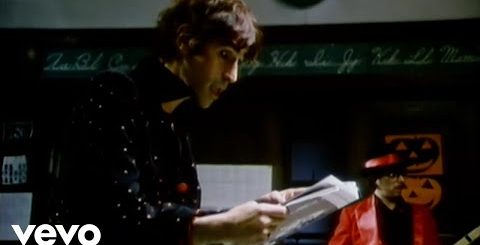
Centerfold by The J. Geils Band Lyrics Meaning – Unraveling Nostalgia in a Pop Culture Staple
Lyrics
Does she walk? Does she talk?
Does she come complete?
My homeroom, homeroom angel
Always pulled me from my seat
She was pure like snowflakes
No one could ever stain
The memory of my angel
Could never cause me pain
Years go by I’m lookin’ through a girly magazine
And there’s my homeroom angel on the pages in-between
My blood runs cold
My memory has just been sold
My angel is the centerfold
Angel is the centerfold
My blood runs cold
My memory has just been sold
Angel is the centerfold
Slipped me notes under the desk
While I was thinkin’ about her dress
I was shy I turned away
Before she caught my eye
I was shakin’ in my shoes
Whenever she flashed those baby-blues
Something had a hold on me
When angel passed close by
Those soft and fuzzy sweaters
Too magical to touch
To see her in that negligee
Is really just too much
My blood runs cold
Yeah, my memory has just been sold
My angel is the centerfold
Angel is the centerfold
My blood runs cold
My memory has just been sold
(Oh yeah)
Angel is the centerfold
Na-na, na-na-na-na
Na-na-na, na-na-na-na
Na-na, na-na-na-na
Na-na-na, na-na-na-na
Na-na, na-na-na-na
Na-na-na, na-na-na-na
Na-na, na-na-na-na
Na-na-na, na-na-na-na
(Now listen)
It’s okay I understand
This ain’t no never-neverland
I hope that when this issue’s gone
I’ll see you when your clothes are on
Take your car, yes we will
We’ll take your car and drive it
We’ll take it to a motel room
And take ’em off in private
A part of me has just been ripped
The pages from my mind are stripped
Oh no, I can’t deny it
Oh yeah, I guess I gotta buy it
My blood runs cold
My memory has just been sold
My angel is the centerfold
Angel is the centerfold
My blood runs cold
My memory has just been sold
My angel in the centerfold
Na-na, na-na-na-na
Na-na-na, na-na-na-na
(Alright, alright)
(One, two, three, four)
Na-na, na-na-na-na
Na-na-na, na-na-na-na
Na-na, na-na-na-na
Na-na-na, na-na-na-na
Na-na, na-na-na-na
Na-na-na, na-na-na-na
Na-na, na-na-na-na
Na-na-na, na-na-na-na
My blood runs cold
My memory has just been sold
My angel is the centerfold
Angel is the centerfold
My blood runs cold (oh yeah)
My memory has just been sold
Angel is the centerfold
Angel is the centerfold
Na-na, na-na-na-na
Na-na-na, na-na-na-na
Na-na, na-na-na-na
The J. Geils Band’s ‘Centerfold’ strikes a chord of nostalgia woven into an upbeat rock anthem, and its catchy chorus has etched itself into the great American songbook. But beyond the infectious ‘Na-na’ singalong lies a lyrical depth, a tale of innocence lost and the stark confrontation with adult reality.
The song’s seemingly straightforward narrative encapsulates a complex emotional journey; a journey that sees youthful ideals clashing with the often unspoken realities of growing up. Let’s unfold the pages and peer into the heart of this iconic track, examining the poignancy behind the pop.
A Nostalgic Trip Down ‘Homeroom’ Lane
To fully grasp ‘Centerfold,’ one must delve into its vivid portrayal of adolescence. The narrative pivots on the shock of discovering a high school crush immortalized in a men’s magazine. The lyrics reminisce about the naivety of school-days, invoking the purity of a first crush who ‘was pure like snowflakes’ and whose mere memory ‘could never cause me pain.’
This romanticization of the past, set to a jarring contrast with an adult magazine’s reality, not only reflects on personal loss but also symbolizes the universal experience of coming-of-age. It grapples with the realization that as one grows, so does the world around them – often in ways that can be disorienting and disillusioning.
The Stark Shock of Growing Up
What truly gives ‘Centerfold’ its enduring resonance is the visceral ‘My blood runs cold’ response to the unanticipated discovery. That moment embodies an abrupt loss of innocence, a sentiment arguably familiar to many. It’s a musical representation of a universally shared moment when the veil of childhood naivety is lifted, leaving behind a colder, more complicated reality.
The song masterfully juxtaposes the euphoric rock riff with melancholic undertones, encapsulating the rollercoaster of emotions that come with nostalgia, desire, and the eventual acceptance of change. It sings to the heart of anyone who has ever looked back and realized that they can’t return to simpler times.
Discovering The Song’s Hidden Meaning
‘Centerfold’ goes beyond mere shock and disillusionment; it subtly critiques society’s objectification of women and the commodification of sexuality. ‘My memory has just been sold’ is not just a personal lament but a striking comment on how intimate memories are repackaged for mass consumption, stripping them of their original sentimentality.
It’s also a song of internal conflict, capturing the push and pull between cherishing memories and the dawning realization that people, including our icons of purity, have the autonomy to make choices that may defy our constructed images of them. In this way, ‘Centerfold’ serves as a bittersweet ode to both personal and cultural awakening.
Memorable Lines That Echo Through Time
‘My angel is the centerfold’ delivers an emotional gut-punch with its juxtaposition of the sacred (‘angel’) with the profane (‘centerfold’). This line alone captures the theme of shattered ideals, yet it also possesses an underlying warmth – acknowledgement of a shared past and the bittersweet march of time.
The catchy na-na chorus, on the other hand, serves as a hook that’s both celebratory and lamenting, a chorus that finds listeners belting out in unison, perhaps subconsciously understanding that they too are part of this collective memory – this shared transition from simplicity to complexity.
An Era-Defining Classic
‘Centerfold’ is not merely a song but a cultural touchstone. Released in 1981, it rapidly became a staple of the ’80s rock scene, defining a generation wrestling with the rapid changes of the time – from the end of the free-love era to the growing commercialization of personal life.
The song remains an era-defining piece that deftly balances upbeat rock with introspective lyricism. It has continued to resonate with audiences, not just for its undeniable catchiness but for its enduring relevance as a narrative of lost innocence and the complexities of growing up in a rapidly changing world.