Crucify by Tori Amos Lyrics Meaning – The Soul’s Struggle Against Self-Imposed Chains
Lyrics
Is pointing at me
I wanna spit in their faces
Then I get afraid of what that could bring
I got a bowling ball in my stomach
I got a desert in my mouth
Figures that my courage would choose to sell out now
I’ve been looking for a savior in these dirty streets
Looking for a savior beneath these dirty sheets
I’ve been raising up my hands
Drive another nail in
Just what God needs
One more victim
Why do we
Crucify ourselves
Every day
I crucify myself
Nothing I do is good enough for you
Crucify myself
Every day
I crucify myself
And my heart is sick of being
I said my heart is sick of being in
Chains, oh oh oh
Chains, oh oh oh
Got a kick for a dog
Begging for love
I gotta have my suffering
So that I can have my cross
I know a cat named Easter
He says, “Will you ever learn?
You’re just an empty cage girl if you kill the bird”
I’ve been looking for a savior in these dirty streets
Looking for a savior beneath these dirty sheets
I’ve been raising up my hands
Drive another nail in
Got enough guilt to start
My own religion
Why do we
Crucify ourselves
Every day
I crucify myself
Nothing I do is good enough for you
I crucify myself
Every day
I crucify myself
And my heart is sick of being
I said my heart is sick of being in
Chains, oh oh oh
Chains, oh oh oh
Please be
Save me
I cry
Looking for a savior in these dirty streets
Looking for a savior beneath these dirty sheets
I’ve been raising up my hands
Drive another nail in
Where are those angels
When you need them
Why do we
Crucify ourselves
Every day
I crucify myself
And nothing I do is good enough for you
I crucify myself
Every day
I crucify myself
And my heart is sick of being
I said my heart is sick of being in
Chains, oh oh oh
Chains
Why do we, in chains (why do we crucify ourselves?)
Crucify ourselves, everyday (why do we crucify ourselves?)
Oh, chains, oh yeah (why do we crucify ourselves?)
Yeah, chains (why do we crucify ourselves?)
Never going back again, no (why do we crucify ourselves?)
To crucify myself again, you know (why do we crucify ourselves?)
Never going back again
To crucify myself, everyday
Tori Amos’s ‘Crucify’ isn’t just a song, it’s a raw and wrenching psalm that delves deep into the human psyche. With an evocative vocal performance that oscillates between vulnerability and defiance, Amos lays bare the torments and self-inflicted wounds that define so much of the human condition.
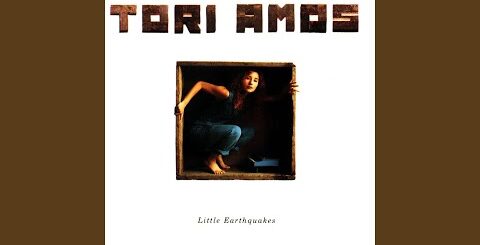
Traversing the thorny terrain of self-doubt and the pursuit of perfection, ‘Crucify’ offers a glimpse into the tumultuous journey towards self-acceptance. The song, released as part of Amos’s 1992 album ‘Little Earthquakes,’ remains a timeless anthem for all who’ve battled with their inner critic.
A Dissection of the Struggle Within
‘Crucify’ presents a stirring narrative of self-imposed martyrdom. With each verse, Amos describes the sensation of being judged and chastised, not by external forces, but by one’s own harsh self-evaluations. The vivid imagery of having a ‘bowling ball in my stomach’ and a ‘desert in my mouth’ conjures the physical manifestation of anxiety and the overwhelming pressure to conform to unattainable standards.
The song’s chorus questions this relentless self-punishment, asking ‘Why do we crucify ourselves?’ This repeated line isn’t just poetic; it’s a piercing inquiry into why individuals continuously seek approval and validation to the point of emotional self-destruction.
Peeling Back the Layers of Metaphor
Tormented by an unquenchable thirst for a savior, the song’s protagonist searches ‘in these dirty streets’ and ‘beneath these dirty sheets’ — suggesting a quest for salvation in the most unlikely, or perhaps unworthy, places. This search reflects a common human experience: the desperate yearning for something or someone to lift us out of our own existential mire.
Contrasting the longing for redemption with the undertones of guilt that permeate the song, Amos crafts a complex metaphorical landscape where suffering and the desire for deliverance coexist in an endless dance. By doing so, she casts light on the cyclic nature of self-imposed martyrdom that haunts many.
The Telltale Heart: Emotion’s Raw Cadence
Arguably one of the most striking elements of ‘Crucify’ is its emotional resonance. As the depth of personal angst is explored, listeners are ushered into a heart ‘sick of being in chains.’ The repetition of this sentiment echoes like a refrain of desperation, capturing the essence of being entrapped by one’s own insecurities and fears.
The aural journey through Amos’s heartache is accentuated by her unmistakable piano harmonies — a musical embodiment of the push-and-pull dynamics inherent in struggles with self-identity and self-forgiveness.
Beyond the Lyrics: The Song’s Hidden Meaning
Diving beyond the surface, ‘Crucify’ can be interpreted as an insightful commentary on societal expectations and the destructive pursuit of perfection in the eyes of others. The song touches on the idea that individuals often become victims to the ideals set by society, sacrificing authentic self-expression at the altar of conformity.
Amos’s use of religious imagery, such as ‘nailing’ oneself – a clear allusion to the crucifixion – further amplifies the song’s message about the self-inflicted pain stemming from trying to live up to divine-like expectations, be they personal, cultural, or spiritual.
Lines that Linger in the Collective Consciousness
‘Nothing I do is good enough for you’ — this line, sung with haunting candor, encapsulates the essence of the song. It serves as a poignant reminder of the unending quest for external validation that often defines and confines one’s sense of self-worth.
Moreover, the mention of ‘enough guilt to start my own religion’ is a sardonic twist on the notion of guilt, subverting the concept of religion, which often offers solace, into an institution of perpetual self-flagellation. It is through these memorably biting lines that ‘Crucify’ secures its place not only in the pantheon of Tori Amos’s discography but also within the hearts of listeners who find a reflection of their own emotional battles.