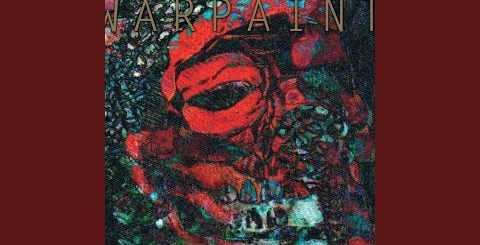
Disco//Very by Warpaint Lyrics Meaning – Exploring Intensity in Modern Soundscapes
Lyrics
She will eat you alive
Like cyanide it’s poison
She’ll eat you alive
Don’t you battle we’ll kill you
We’ll rip you up and tear you in two
Don’t you battle we’ll kill you
We’ll rip you up and tear you in two
Don’t you battle we’ll kill you
We’ll rip you up and tear you in two
Only in the sound of the voices I scream
I’m an angel don’t tell me what I did
You saw me standin’ on my own mountain
? not to put it longer
Tears are not worth their weight
Your love faded is over ?
Your another one in a long long time
Wrestling people for peace
Wrestling people for peace
Only in the sound of the voices I scream (x3)
I make room for everyone
I make room for everyone
I need to take a break
If you had to go where I was not looking out
It won’t happen anymore but look what I found
I was always talking too much
Only in the sound of the voices I scream
Only in the sound of the voices I scream
Warpaint, an all-female quartet hailing from Los Angeles, has long been celebrated for their ethereal take on indie rock. ‘Disco//Very’ from their self-titled 2014 album stands as a particularly mesmerizing track that combines hypnotic vocals with impelling percussion, creating a soundscape that is as vibrant as it is thought-provoking. The song blurs the lines between aggression and peace, self-assertion and self-reflection, offering a multifaceted examination of inner turmoil and the search for harmony.
Peeling back the layers of ‘Disco//Very’ reveals a complex narrative of personal battles, emotional resilience, and the liberation found in voicing one’s deepest frustrations. It’s a track that resists easy interpretation, inviting listeners to dive into its sonic depths and explore the intricate weave of thematic elements that make Warpaint’s creation a compelling piece of art.
A Deeper Look at ‘Disco//Very’ – Aggression vs. Inner Peace
At first glance, the venomous lyrics ‘I’ve got a friend with a melody that will kill’ may suggest a violent confrontation, but there’s a twist – the aggressor is music itself, embodying both danger and allure. The redundancy of ‘We’ll rip you up and tear you in two’ emulates the repetitive nature of a dance track, yet it evokes a sense of raw combativeness that is closer to punk in spirit. Warpaint’s ‘Disco//Very’ flirts with a kind of psychological unrest, where the internal battle is so poignant, it can almost be felt physically.
Contrastingly, the ‘melody’ could also be interpreted as a metaphor for the transformative power of music. Here, the ‘disco’ element paints a picture of dance and escapism, often associated with discotheques, while the ‘very’ implies a superlative, an essential essence at the core of being. This dualistic nature of the track embodies the struggle to find peace amidst chaos, emphasizing that such tranquility can often only be attained through a confrontation of the self, much like the cathartic screams mentioned in the refrain.
Poetic Justice – Warpaint’s Alchemy of Words and Rhythms
The lyrics in ‘Disco//Very’ straddle the boundary between ominous warning and poetic introspection, ‘I’m an angel don’t tell me what I did,’ confers a sense of innocence corrupted or a plea for autonomy in judgment. This line, with its halo of ambiguity, challenges listeners to question notions of culpability and the gulf between how we perceive ourselves versus how we are perceived by others.
The song’s words also contribute to the overall rhythm of the piece. ‘Wrestling people for peace’ isn’t just a vivid imagery of struggle; it’s also a masterful example of Warpaint’s skill in creating cadence and syncopation with language. It’s a powerful assertion, encapsulating the paradox of fighting as a means to achieve harmony and reflecting the turmoil that can exist in the pursuit of tranquility.
Unpacking Warpaint’s Sonic Seduction
Sonically, ‘Disco//Very’ is a textured landscape, filled with staccato guitar riffs and a bassline that drives the song forward with an almost predatory pulse. But it’s the vocals that stand out: whispered one moment and assertive the next, they embody the push-and-pull dynamic referenced in the lyrics. This tension and seduction are crucial to understanding the track’s allure.
Moreover, Warpaint employs a kaleidoscopic approach to melody and rhythm, weaving them into a song that can be seen as a nod to disco’s repetitive hooks but distorted through a prism of indie-rock sensibilities. The result is a song that’s capable of moving both the body and the mind, confronting the listener with a demand for physical and emotional engagement.
Dissecting the Heartache: The Song’s Hidden Meaning
There’s a hidden layer in ‘Disco//Very’ that speaks to the universal experience of heartache and the quest for self-discovery. ‘If you had to go where I was not looking out / It won’t happen anymore but look what I found’ can be seen as an acknowledgment of personal growth following the loss of love or innocence. Possible heartbreak permeates the lines, suggesting an evolution from vulnerability to resilience.
This resilience is further exhibited by the declaration ‘I make room for everyone’ – a potential hymn to inclusivity or perhaps a reminder of the need to set boundaries. It’s this duality, this introspective reckoning with the boundaries of the self and others, that gives ‘Disco//Very’ its profound sense of hidden depth.
Memorable Lines That Resonate and Challenge
The repetition of ‘Only in the sound of the voices I scream’ stands as the song’s core refrain and presents a paradox. It evokes a sense of isolation and the act of finding one’s voice amidst the cacophony. This line resonates especially among those who often feel unheard, serving as an anthem for the struggle to express inner turmoil in an indifferent world.
Warpaint challenges listeners to not only engage with ‘Disco//Very’ as a piece of music but also as a piece of themselves. By crafting lyrics that mirror personal battles and the human condition’s complexities, Warpaint provides a mirror in which listeners can see their own struggles reflected, and perhaps find a little peace in the acknowledgement.