Disgustipated by Tool Lyrics Meaning – Unveiling the Paradox of Existence
Lyrics
Snatching me up from my place of slumber
And took me on high and higher still
Until we moved to the spaces betwixt the air itself
And he brought me into a vast farmlands of our own Midwest
And as we descended cries of impending doom rose from the soil
One thousand nay a million voices full of fear
And terror possessed me then
And I begged Angel of the Lord what are these tortured screams?
And the angel said unto me
These are the cries of the carrots, the cries of the carrots!
You see, Reverend Maynard
Tomorrow is harvest day and to them it is the holocaust
And I sprang from my slumber drenched in sweat
Like the tears of one million terrified brothers and roared
“Hear me now, I have seen the light!
They have a consciousness, they have a life, they have a soul!
Damn you! Let the rabbits wear glasses! Save our brothers!
Can I get an amen? Can I get a hallelujah? Thank you Jesus
This is necessary
This is necessary
Life feeds on life feeds on life feeds on life feeds on
This is necessary
This is necessary
Life feeds on life feeds on life feeds on life
This is necessary
This is necessary
Life feeds on life feeds on life feeds on life feeds on
This is necessary
This is necessary
Life feeds on life feeds on life feeds on life
This is necessary
This is necessary
Life feeds on life feeds on life feeds on life feeds on
This is necessary
This is necessary
Life feeds on life feeds on life feeds on life
This is necessary
This is necessary
Life feeds on life feeds on life feeds on life feeds on
This is necessary
This is necessary
Life feeds on life feeds on life feeds on life feeds on life
It was daylight when you woke up in your ditch
You looked up at your sky then
That made blue be your color, you had your knife there with you too
When you stood up there was goo all over your clothes
Your hands were sticky
You wiped them on your grass, so now your color was green
Oh Lord, why did everything always have to keep changing like this
You were already getting nervous again
Your head hurt and it rang when you stood up
Your head was almost empty
It always hurt you when you woke up like this
You crawled up out of your ditch onto your gravel road and began to walk
Waiting for the rest of your mind to come back to you
You can see the car parked far down the road and you walked toward it
If God is our Father, you thought, then Satan must be our cousin
Why didn’t anyone else understand these important things?
You got to your car and tried all the doors
They were locked. it was a red car and it was new
There was an expensive leather camera case laying on the seat
Out across your field, you could see two tiny people walking by your woods
You began to walk towards them
Now red was your color and, of course
Those little people out there were yours too
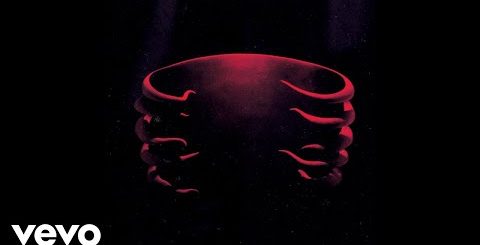
Tool’s ‘Disgustipated’ is a track that defies the conventional constructs of music, veiling its meaning behind layers of visceral imagery and abstract philosophy. As the final song on their 1993 release ‘Undertow’, it is a profound piece that encapsulates the band’s penchant for challenging their audiences both sonically and intellectually.
In a world where art often reflects the complexity of human thought and the darkness of our collective psyche, ‘Disgustipated’ stands as an audacious confrontation of our moral compass and the nature of existence. It is a deep metaphysical exploration that strikes at the heart of what it means to be a conscious entity within the global ecosystem.
The Carrot Holocaust: A Vivid Allegory for Human Insensitivity
When the angel declares, ‘Tomorrow is harvest day and to them it is the holocaust,’ we are faced with an allegory that juxtaposes the mundane with the sacred. The song presents a scenario wherein the humble carrot is bestowed consciousness, posing the question of moral relativity when it comes to life and death. It is a stark comment on how humanity often turns a blind eye to the plight of beings considered inferior or less sentient.
This allegory extends to challenge our own desensitization towards forms of suffering that society accepts as ‘necessary.’ Through hyperbolic imagery, Tool pushes listeners to reevaluate hierarchical constructs of life and confront the inherent violence of our food systems.
A Divine Comedy: Religious Satire in Disgustipated’s Narrative
Tool’s careful weaving of religious references throughout ‘Disgustipated’ suggests a satirical take on the blind faith and dogmatism that can be prevalent in religious thought. The protagonist, awakened by an angel and confronted with the concept of a veggie holocaust, mirrors the revelatory visions often cited by prophets and messengers of faith.
This play on religious themes may also highlight the arbitrary line drawn between the sacred and the mundane. By cloaking vegetables in the light of souls worth saving, the song questions the validity of distinctions we make in what is considered holy or sacrilegious. The call for ‘amen’ and ‘hallelujah’ evokes an ironic worship of life in all its forms, parodying the process of salvation.
Cyclical Nature of Existence: Life Feeds on Life
The mantra-like repetition of ‘Life feeds on life feeds on life feeds on life…’ encapsulates one of the song’s central theses: the biological imperative of predation and survival. It reflects the uncomfortable truth of our existence – all life is sustained through the consumption of other life, positing a natural order that is both necessary and brutal.
In this context, the phrase ‘This is necessary’ is not only an acceptance but a somber resignation to the realities of earthly life. The song challenges us to consider the moral landscape that arises from the food chain and, by extension, the broader implications of the systems humans partake in.
From Reverence to Disgust: The Conflicted Consciousness
The title ‘Disgustipated’ itself, a portmanteau of ‘disgusted’ and ‘constipated,’ suggests an overarching theme of a consciousness filled with an inability to assimilate or expel an unpleasant truth. The internal conflict of the song’s protagonist demonstrates this through a journey from reverence in a prophetic vision to repulsion at the natural order of life.
The voice of the carrots and the gore-stained awakening suggest the torment of heavy knowledge—a mind unable to reconcile the world’s beauty with its inherent cruelty. It uncovers the complicated layers of guilt, confusion, and enlightenment that come with the deep contemplation of existence.
Dissecting the Iconic: ‘Can I get an amen? Can I get a hallelujah?’
The invocation of religious affirmation in the song becomes a memorable line, one that is both a cry for community and a mocking of the exuberance found in religious ceremonies. The way the song plays with the context, applying it to the salvation of carrots, injects dark humor into the narrative while also underscoring the gravity of the issues it tackles.
These lines compel listeners to evaluate their own positions and beliefs, to find either solace in collective agreement or to further question the structures of belief that hold sway in society. The line is a powerful reflection of the search for meaning and the necessity of questioning the world, and our responses to its offerings.