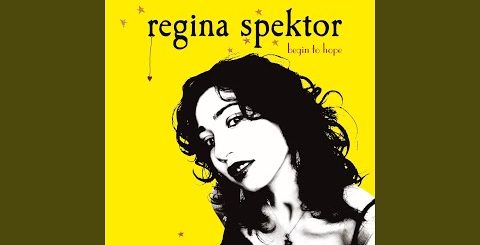
Eet by Regina Spektor Lyrics Meaning – The Anthem of Lost Innocence and Nostalgia
Lyrics
You can’t believe it
You were always singing along
It was so easy and the words so sweet
You can’t remember
You try to feel the beat
Eet, eet, eet, eet
Eet, eet, eet, eet
You spent half of your life trying to fall behind
You’re using your headphones to drown out your mind
It was so easy, and the words so sweet
You can’t remember
You try to move your feet
Eet, eet, eet, eet
Eet, eet, eet, eet
Someone’s deciding whether or not to steal
He opens the window just to feel the chill
He hears that outside a small boy just starting to cry
‘Cause it’s his turn but his brother won’t let him try
It’s like forgetting the words to your favorite song
You can’t believe it
You were always singing along
It was so easy and the words so sweet
You can’t remember
You try to move your feet
It was so easy and the words so sweet
You can’t remember, you try to feel the beat
In an evocative brush with the ephemeral nature of memory, Regina Spektor’s ‘Eet’ tugs at the strings of nostalgia, grappling with the poignant loss of things once held dear. The song, with its cryptic title and haunting melody, unfolds as a lyrical enigma, inviting listeners to decipher its true essence.
Spektor is known for her ability to weave intricate stories through minimalistic narratives, capturing entire universes within the confines of a three-minute track. ‘Eet’ is no exception; it is a masterful concoction of melancholy and elegance, a tune that resonates with anyone who has ever tried to recapture a fleeting moment from their past.
A Walk Down Memory Lane: Regina Spektor’s Poetic Nostalgia
At its core, ‘Eet’ can be interpreted as a lamentation on the loss of simplicity and the inevitable complexity that time brings. Much as one might struggle to recall the lyrics of a once dearly-beloved song, Spektor’s lyrics suggest a yearning for the ease and innocence of youth that slips away as we age.
This theme is beautifully rendered through the recurring motif of a forgotten melody. It’s more than just the literal forgetfulness; it’s symbolic of how we lose touch with parts of ourselves and the leitmotifs of our lives. The ease with which we once embraced joy becomes a bittersweet memory, clouded by the layers of experiences that shape our existence.
The Space Between Notes: ‘Eet’ as a Metaphor for Mindfulness
To ‘eet’ could imply the act of trying to fill in the blank spaces, the silent struggle to recapture the essence of something once inherent. The repetition of the word, nonsensical at first glance, mimics the sometimes fruitless attempts to relive the past, to re-learn the tune of life that once played effortlessly.
Through its ethereal chorus, ‘Eet’ becomes an anthem for the internal monologue many of us rehearse when we are caught in a loop of reminiscence. There’s a subtle nod to mindfulness here – one interprets it as being present even when the soul feels displaced, even when the mind wanders to the rhythm of the past.
The Hidden Mechanics of Melancholy Unveiled
The hidden meaning of ‘Eet’ may lie in its introspective exploration of the inner workings of the human mind. The references to using headphones to ‘drown out your mind’ speak to the distractions we employ to avoid confronting the dissonance within ourselves. The act of forgetting becomes a metaphor for personal disengagement, for the emotional distance we place between our current selves and past versions.
But Spektor is meticulous not to leave her listeners in a void. The presence of intense emotional imagery, like the small boy crying, jolts us back to the acute, often painful, beauty of human experience. It is in these sharp contrasts that Spektor deftly examines the spectrum of human emotion.
Dance to the Beat of Lost Time: Movement as Memory in ‘Eet’
The commands to ‘move your feet’ or ‘feel the beat’ throughout the song underscore the intrinsic link between music, movement, and memory. Spektor isn’t merely discussing the act of dancing; she refers to how we navigate through life to the rhythm of experiences engraved in our memories, how we continue to dance even when the music isn’t playing anymore.
The difficulty in moving one’s feet, paralleling the struggle to remember lyrics, captures the struggle of moving through life when one feels disconnected from their past, or when one’s history has become muddled by the passage of time.
The Echo of Memorable Lines: How ‘Eet’ Captures the Collective Experience
Lines like ‘It was so easy and the words so sweet’ hold a mirror to the listener’s own past, reflecting back those fleeting moments of joy and ease that life once presented. Spektor’s genius lies in her restraint – her use of simple, evocative language that cuts to the core.
These memorable lines become a shared experience, a collective sigh for times gone by, allowing ‘Eet’ to transcend the personal and become an anthem for anyone who has wrestled with the ghost of their former selves.