Enter Tragedy by In Flames Lyrics Meaning – Exploring Life’s Inescapable Darkness
Lyrics
Fallen of the edge again.
Need some space, need disgrace,
I’m confused, I’m in a maze.
I need for you to pick me up,
When I fall down!
There’s so much more, we can go far,
But I can’t control my selfish ways.
[Chorus]
Enter tragedy, slash my soul!
Why is it part of the plan?
Do you question me?
I question you!
Who’s the man in front of me?
I’m blindfolded, I can’t see,
Need a reason, I’m left empty.
I need for you to pick me up,
When I fall down!
[Chorus]
This inner apathy, brings me to life.
I know it’s strange and it’s draining me.
I’m tired, I’m fed up, I’m a slave!
I’m tired, I’m fed up, I’m a slave!
[Chorus]
There’s something invigorating yet ominous about In Flames’ ‘Enter Tragedy’ that captures the listener from the first distorted guitar chord. The Swedish metal titans have long been known for intertwining intense riffs with deeply introspective lyrics, and this track is no exception. ‘Enter Tragedy’ delves into the themes of inner turmoil and the incessant search for meaning within chaos, which echo universal human experiences of despair and the strive for self-improvement.
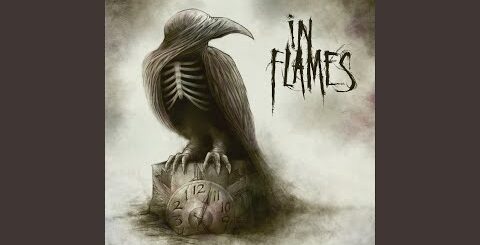
As we dissect this track from their twelfth studio album, ‘Sounds of a Playground Fading’, we encounter a narrative that’s both personal and universal, a duality that In Flames has mastered in their storytelling. Beyond its powerful instrumentation, the poignancy of ‘Enter Tragedy’ lies within its lyrical content, which demands a closer examination to truly appreciate the layers and textures of meaning the band has woven into this sonic tapestry.
The Vortex of Confusion and Despair
Starting with ‘Twisting tongue, Fallen off the edge again’, listeners are ushered into a state of disarray. These words open a gate to an existential labyrinth where one is constantly struggling with the slipperiness of reality and self-identity. In Flames isn’t just describing a temporary setback; they’re illustrating a cyclical pattern of losing oneself to the abyss, only to yearn for a lifeline that brings stability.
This sense of disorientation is mirrored in the request, ‘I need for you to pick me up, When I fall down!’ Here, dependence isn’t just a cry for help—it’s a crucial acknowledgment of our need for others in navigating life’s complex maze. The band captures a vulnerable moment many listeners can resonate with—the despairing recognition of one’s own limitations and the dire need for external support.
The Cruel Dance of Hope and Self-Defeat
‘There’s so much more, we can go far, But I can’t control my selfish ways.’ Through these lyrics, In Flames lays bare a common human dichotomy—the recognition of potential against the backdrop of self-sabotage. It suggests a moment of clarity where possibilities are visible, yet just as quickly, they’re sullied by our own destructive tendencies. It’s the quintessential struggle between aspiration and the darker aspects of human nature.
This war within reflects a larger narrative witnessed throughout the song as it grapples with development and stagnation. The aspiration for growth only to be hindered by one’s own actions is a reality that many can understand, and In Flames skilfully articulates this battle with a raw honesty that gives weight to every syllable.
The Tragic Entrance: A Lyrical Assault
‘Enter tragedy, slash my soul!’ With these words, the chorus thunders in, depicting an unavoidable collision with hardship. Rather than a slow, creeping melancholy, the song suggests an abrupt confrontation. It’s a thematic and auditory onslaught that pierces to the core, as though tragedy itself is an event that bursts forth, leaving little time to brace for its impact.
The interrogation that follows—’Why is it part of the plan?’—reveals a search for a higher meaning or structure within life’s seemingly random pains. The song doesn’t provide comfort; instead, it challenges both the individual and fate, and carves into the listener’s mind the unnerving thought that suffering may be inexplicably woven into existence.
The Man in the Mirror: Identity Shrouded
In questioning, ‘Who’s the man in front of me?’ In Flames dives into a confrontation with identity and self-perception. The line denotes a moment of self-alienation, where one scarcely recognizes their own reflection. This idea continues with ‘I’m blindfolded, I can’t see,’ which points to the fear and uncertainty of living without self-awareness or direction, groping for a semblance of clarity.
The band deftly navigates these feelings of emptiness, projecting them through the lens of metal music, whose raw energy often encapsulates such complex emotional states. It’s a cry out from the void, a recognition of the inescapable need to find meaning, to understand oneself amidst the cacophony of existence.
The Cyclic Struggle and Apathetic Redemption
As the song nears its close, the repetition of ‘I’m tired, I’m fed up, I’m a slave!’ reflects a surrender to the weariness brought about by the continuous struggle against internal chaos. There’s a cyclical nature in these lyrics, a grim mantra that articulates both resignation and insight into the human condition. It speaks to the arduous journey of remaining resilient amid the storms of life.
Yet, even as the song expresses exhaustion, it finds an inadvertent solace in ‘This inner apathy, brings me to life.’ It’s paradoxical and profound, suggesting that perhaps there is strength to be found in detachment itself. By acknowledging one’s limitations and the tiresome battle against them, there may lurk a hidden path to psychological liberation—if only we dare to traverse it.