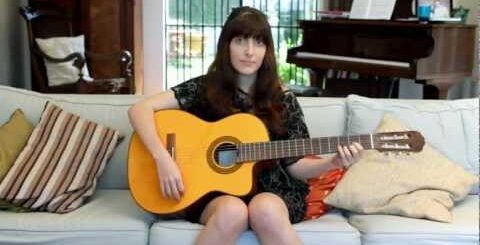
Eu Me Lembro by Clarice Falcão Lyrics Meaning – Unraveling the Mosaic of Memories in Music
Lyrics
Três da tarde
Quando ele chegou
Foi ela que subiu
Eu disse “oi! fica a vontade”
Eu é que disse “oi” mas ela não ouviu
E foi assim que eu vi que a vida colocou ele/ela pra mim ali naquela terça-feira/quinta-feira de setembro/dezembro
Por isso eu sei de cada luz de cada cor de cor, pode me perguntar de cada coisa
Que eu me lembro
A festa foi muito animada
Oito ou nove gatos pingados no salão
Eu adorei a feijoada
Era presunto enrolado no melão
E foi assim que eu vi que a vida colocou ele/ela pra mim ali naquela terça-feira/quinta-feira de setembro/dezembro
Por isso eu sei de cada luz de cada cor de cor, pode me perguntar de cada coisa
Que eu me lembro
Que eu me lembro
Ela me achou muito engraçado
Ele falou, falou e eu fingi que ri
A blusa dela tava do lado errado
Ele adorou o jeito que eu me vesti
E foi assim que eu vi que a vida colocou ele/ela pra mim ali naquela terça-feira/quinta-feira de setembro/dezembro
Por isso eu sei de cada luz de cada cor de cor, pode me perguntar de cada coisa
Que eu me lembro
Eu me lembro
Eu me lembro
Eu me lembro
Nestled within the chords and melodies of Clarice Falcão’s song ‘Eu Me Lembro’ lies a profound exploration of memory’s eccentricity and the enigmatic ways in which we recall our personal history. In this intimate ballad, Falcão offers listeners a masterclass in lyrical storytelling, where vivid snapshots of a moment collide with the hazy mists of uncertainty that envelop our past.
As we delve into the lyrical depths of ‘Eu Me Lembro’, we grapple not only with the song’s surface narrative—an account of a memorable encounter—but also with the underlying currents of nostalgia, selective detail, and the bittersweet nature of remembrance that linger long after the music fades.
A Portrait of Porous Time: Blending Hours with Emotion
Falcão’s reference to time in ‘Eu Me Lembro’, with contradictory cues such as ‘Era manhã, Três da tarde’, is more than a poetical device—it’s a commentary on how emotional significance distorts our perception of time. The specifics of when ‘ele chegou’ blur into a feeling rather than a chronological fact, suggesting that significant moments defy the strict confines of the clock.
This intentional ambiguity is echoed throughout the song, as memories are painted in strokes of maybes and uncertainties, yet stand out in the mind’s eye with the clarity of emotion. Falcão challenges the listener to ponder not just the narrative of remembrance but the essence of how we experience and subsequently recall important chapters of our lives.
Feast of the Senses: Decrypting the Details
In the second verse, Falcão crafts a seemingly whimsical scene at a party; but it’s the peculiarities and sensory details, like the ‘feijoada’ and ‘presunto enrolado no melão’, that anchor the memory. These seemingly mundane details, the flavors, and the surroundings, become the keystones of our own memory palaces, shaping ‘Eu Me Lembro’ into an ode to the little things that become synonymous with our most cherished recollections.
Thus, Falcão spins a yarn of celebration that is as much about the subtle intricacies of a shared meal as it is about the people and the interactions. The juxtaposition of food and festivity speaks volumes about the connections we make between taste, companionship, and happiness in our recollections.
Missteps and Mismatches: The Beauty of Imperfect Encounters
The characters’ flawed interactions, such as the ‘blusa delata do lado errado’ and the feigned laughter, reflect a realistic portrayal of human connection. It’s in these flawed moments that Falcão finds truth, suggesting that authentic memories are not of perfection but replete with awkwardness and authentic human emotion.
Rather than diminishing the memory, these imperfections enrich the narrative, adding layers to the recollection that foster a deeper resonance with the listener. ‘Eu Me Lembro’ tells us that real moments don’t require flawless execution to be impactful or meaningful; it is often the idiosyncrasies that make them truly memorable.
The Tapestry of Memory: Weaving Fact and Fiction
Fluctuating between past and present tense throughout the song, Clarice toys with the idea of how memory and present experience intertwine, with lines like ‘E foi assim que eu vi’ and ‘pode me perguntar de cada coisa’. This oscillation brings forth the notion that memory is not just a record of the past but a living, breathing narrative that evolves with each recollection.
In doing so, ‘Eu Me Lembro’ becomes a dynamic canvas where each listen might reveal new interpretations or hidden nuances, much in the way that our own memories gain different meanings over time. Falcão invites the audience into a dance between what was and what is remembered, elevating the song to a meditation on the fluidity of personal history.
The Song’s Veiled Balladry: Falcão’s Coded Language
Beyond the charm of its melodies and the vividness of its lyrics, ‘Eu Me Lembro’ harbors a subtext that speaks to the core of human emotion and the mercurial nature of our mental archives. Each harmonious phrase seems to be chosen carefully, not only for its surface meaning but also for the subtle emotional echoes it carries, enticing the listener to look deeper.
As Clarice Falcão serenades about the hazy contours of a September or December, a Tuesday or Thursday, she artfully captures the elusive essence of nostalgia, where facts are less important than the subjective hue they are remembered in. In this way, ‘Eu Me Lembro’ transcends its own narrative to become a universal touchstone for exploring the ever-shifting sands of the human heart.