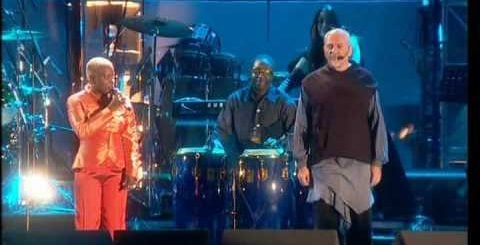
Games Without Frontiers by Peter Gabriel Feat. Youssou N’Dour Lyrics Meaning – Exploring the Depths of Global Conflict Through Song
- Music Video
- Lyrics
-
Song Meaning
- The Clash of Innocence and War: Understanding Gabriel’s Metaphorical Playfield
- Breaking Down the Iconic Chorus – A Rallying Cry for Peace
- Under the Microscope: The Hidden Meaning Behind the Lyrics
- To Whistle in the Face of Adversity: A Look at the Song’s Memorable Lines
- A Dance of Alleys: How Gabriel and N’Dour Bridged Musical Borders
Lyrics
Hans plays with Lotte, Lotte plays with Jane
Jane plays with Willi, Willi is happy again
Suki plays with Leo, Sacha plays with Britt
Adolf builts a bonfire, Enrico plays with it
Whistling tunes we hid in the dunes by the seaside
Whistling tunes we’re kissing baboons in the jungle
It’s a knockout
If looks could kill, they probably will
In games without frontiers-war without tears
Games without frontiers-war without tears
Jeux sans frontieres
Andre has a red flag, Chiang Ching’s is blue
They all have hills to fly them on except for Lin Tai Yu
Dressing up in costumes, playing silly games
Hiding out in tree-tops shouting out rude names
Whistling tunes we hide in the dunes by the seaside
Whistling tunes we piss on the goons in the jungle
It’s a knockout
If looks could kill they probably will
In games without frontiers-wars without tears
If looks could kill they probably will
In games without frontiers-war without tears
Games without frontiers-war without tears
Jeux sans frontieres
When Peter Gabriel released ‘Games Without Frontiers’ in 1980, with Senegalese singer Youssou N’Dour, it wasn’t just a song; it was a momentous melding of cultures and sounds that encapsulated a period of intense geopolitics and social consciousness. The track, which remains an ample swirl of art-pop aesthetics and deep lyrical content, traverses beyond mere musical mastery to relaying a poignant message on the human condition.
‘Games Without Frontiers’ masterfully blends English and French lyrics, meshing the two languages in a way that mirrors the collaboration of Western and African influences within the track. The cryptic and allegorical nature of its lyrics has invited listeners to delve into their interpretation, making the song an endless reservoir of meaning and a subject of fervent discussion for music enthusiasts and critics alike.
The Clash of Innocence and War: Understanding Gabriel’s Metaphorical Playfield
On the surface, the song appears as a hodgepodge of children’s names and playful activities, beset by an undercurrent of darker themes. Gabriel uses the innocent lens of childhood games to skewer the absurdity of global politics. Each verse can be dissected to unveil the dichotomy of playfulness juxtaposed with the brutality of conflict, presenting a stark comment on how nations interact under the guise of diplomacy – often with high stakes and hidden agendas.
The whimsical names in the lyrics may be perceived as proxies for nations or leaders, as the games they play – typically associated with joy and innocence – are subverted into a commentary on war. The chilling line ‘If looks could kill, they probably will’ serves as a somber reminder of the lethal consequences resulting from the geopolitical chess games conducted by these entities.
Breaking Down the Iconic Chorus – A Rallying Cry for Peace
The repetitive and succinct chorus ‘Games without frontiers, war without tears’ drives home Gabriel’s plea for a world where competition doesn’t end in sorrow. He idealizes a scenario where the geographical and political boundaries (‘frontiers’) that typically lead to conflict are rendered irrelevant, envisioning a utopian form of competition that doesn’t involve the suffering brought on by warfare.
The phrase ‘Jeux sans frontieres’ is not just a multilingual bridge within the song, but it subtly critiques the socio-political landscape of Europe. This hearkens to the Cold War backdrop during which this song was conceived, highlighting the widespread yearning for a world without divisive lines, despite being staunchly in the grip of them.
Under the Microscope: The Hidden Meaning Behind the Lyrics
Each narrative vignette within ‘Games Without Frontiers’ is rife with potential symbolism. References to names like ‘Adolf’ and ‘Chiang Ching’, historical figures known for their roles in wars and revolutions, anchor the song in a real-world context. They call attention to the lasting impact of historical conflicts and the persistence of similar patterns in the seemingly benign interactions on the international stage.
Dressed in metaphor, Gabriel’s lyrics invite the listener to peel back the layers. For instance, the absence of a hill for ‘Lin Tai Yu’ – potentially a reference to the isolation that Taiwan faces in global politics – illustrates the peripheral status of some nations in the theatre of diplomacy. These crafty insertions of political commentary transform the song into a treasure trove for those seeking a deeper understanding of 20th-century strife.
To Whistle in the Face of Adversity: A Look at the Song’s Memorable Lines
‘Whistling tunes we hid in the dunes by the seaside / Whistling tunes we’re kissing baboons in the jungle’ – these lines stand out not just for their lyrical whimsy but their potent symbolism. The act of whistling amidst the dangerous environments represented by ‘dunes by the seaside’ and ‘in the jungle’ speaks to the human ability, or perhaps naivety, to maintain levity in the face of peril.
Moreover, the whistling could also be interpreted as the unspoken alliances and communications between countries, conducted out of sight – the chatter and negotiations that happen out of the public’s earshot, guiding the hands of international relations and shaping the world with every breathy tune.
A Dance of Alleys: How Gabriel and N’Dour Bridged Musical Borders
The collaboration between Peter Gabriel and Youssou N’Dour in itself speaks volumes, mirroring the song’s message of transcending frontiers. The fusion of Gabriel’s progressive rock roots with N’Dour’s traditional African music influences not only produced a sound that was ahead of its time but also embodied the very ideal of peaceful global interaction and creative exchange.
Their partnership serves as a testament to the power of art in breaking down barriers and fostering mutual understanding. The blending of English and French lyrics, the interplay of diverse musical styles, and the uniting of artists from different worlds are all pieces of a tapestry that ‘Games Without Frontiers’ deftly weaves, enshrining the song as a timeless anthem of hope amidst an era of discord.