Good Morning, Captain by Slint Lyrics Meaning – Unraveling the Depths of Human Desolation
Lyrics
From outside the wooden door.
Scattered remnants of the ship could be seen in the distance.
Blood stained the icy wall of the shore.
“I’m the only one left, the storm took them all.”
He managed as he tried to stand.
The tears ran down his face.
“Please, it’s cold”
When he woke, there was no trace of the ship
Only the dawn was left behind by the storm.
He felt the creaking of the stairs beneath him
That rose, from the sea to the door.
There was a sound at the window then.
The captain started, his breath was still.
Slowly, he turned.
From behind the edge of the windowsill
There appeared a delicate hand of a child.
His face was flush and timid.
He stared at the captain through frightened eyes.
The captain reached for something to hold on to.
“Help me”, he whispered, as he rose slowly to his feet.
The boy’s face went pale.
He recognized the sound.
Silently, he pulled down the shade against the shadow.
Lost in the doorstep of the empty house.
“I’ve been trying to find my way home.
I’m sorry, I miss you.
I miss you.
I’ve grown taller now.
I want the police to be notified.
I’ll make it up to you.
I swear, I’ll make it up to you.
I miss you.”
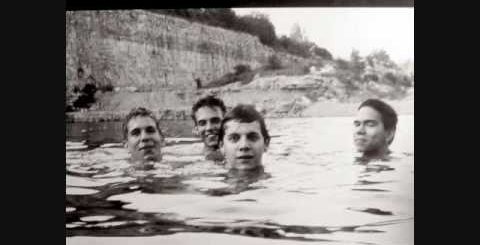
As the haunting strains of ‘Good Morning, Captain,’ by Slint, echo into the silence, listeners are compelled to embark on a voyage through the turbulent waters of human emotion. This seminal track from their 1991 album ‘Spiderland’ is often seen as a pinnacle of the post-rock genre, with its raw narrative wrapped in minimalistic instrumentation.
The song takes us through a fragmented story that oscillates between desperation and hope, a reflection of the psyche grappling with loss, isolation, and the ceaseless quest for redemption. By dissecting the song’s poignant lyrics and the somber mood they evoke, we may unearth layers of meaning that resonate with the shared human experience.
An Anchor in the Storm: A Tale of Loss and Survival
The lyrics commence with a cry for help, a literal and metaphorical knocking on the ‘wooden door’ of salvation. The imagery of ‘scattered remnants of the ship’ speaks volumes of catastrophe, suggesting a tale of survival against the merciless backdrop of nature’s fury. The protagonist’s isolation is palpable; he is the ‘only one left,’ a lone voice amidst the wreckage of existence.
Blood on the icy ‘wall of the shore’ paints a stark canvas of violence and the aftermath of a tempest, possibly alluding to inner turmoil or reflecting on the relentless hardships life can impose. The character’s plea, imbued with vulnerability—’Please, it’s cold’—reveals a fundamental human yearning for warmth, both physical and emotional.
Climbing the Ladder of Consciousness: From Darkness to Dawn
The protagonist wakes to a new day, ‘only the dawn was left behind by the storm,’ indicative of the cycles of despair and renewal that mark our existence. The ‘creaking of the stairs’ symbolizes a treacherous ascent from the abyss of trauma, each step a possibility of overcoming the waves of past afflictions.
The dawn, while typically a metaphor for hope and new beginnings, here retains a ghostly quality—the haunting memory of the ship persists, echoing the idea that while time moves forward, our scars and memories do not so easily fade.
A Glimpse Beyond the Sill: Innocence Interrupted
The moment of ‘a sound at the window’ introduces an unexpected twist, as the spectral image of a child’s ‘delicate hand’ emerges, stationed at the threshold of the internal and external world. Such an apparition could symbolize lost innocence or the haunting remnants of a past self that no longer exist save for in memory, watching the present unfold with ‘frightened eyes’.
This encounter with innocence personified—whether as a memory or a spirit—leaves the captain motionless, his ‘breath still.’ Does he recognize himself within the child, or is the boy a herald of some unquenched hope?
Deciphering the Echoes: The Song’s Hidden Meaning
‘Good Morning, Captain’ might well be an allegory for grappling with the aftermath of trauma and the complexities of a psyche bruised by regret. The repeated calls for entry, for finding a way back to something resembling home, signify more than mere physical survival—they hint at an existential odyssey.
As the captain seeks solace in the solidity of something ‘to hold on to’, he embodies our own search for anchors in a fluid world. The boy’s ‘pale’ reaction to the familiar sound and the subsequent pulling down of the shade suggests a retreat into the self, an unwillingness, or inability, to face the shadow.
Memorable Lines: Whispered Promises to the Absent
The lyric ‘I miss you’ recurs like a mantra, intensifying the sentiment of longing and loss that courses through the song. Here is a universal lament, a whisper across the void to those we’ve loved and lost, whether to time, distance, or death.
The protagonist’s promise—’I’ll make it up to you’—though whispered almost to no one, serves as a solemn vow of restitution, perhaps not just to another, but to oneself. It’s a striving for atonement, a wish to right the unnamed wrongs, that captures the essence of human contrition and hope for reconciliation.