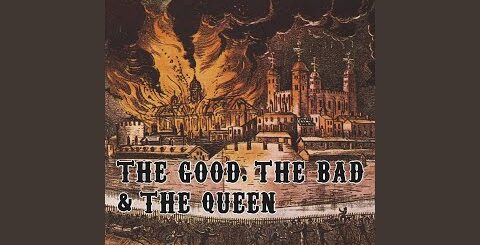
Green Fields by The Good The Bad and The Queen Lyrics Meaning – Unraveling the Fabric of Nostalgia in Modern Tunes
Lyrics
I was never sure how or why
Before the war and the tidal wave engulfed us all it’s true how the world has changed
And I was learning how to change with you
We saw the green fields
Turn into stone
Such lonely homes
All in a badman’s dream
He ain’t asleep
It’s just a dream
In the darkest hour the song had gone it passed among the people I hardly knew
And I was losing it all the time
But she stayed with me and found me out and above all things I’ve learnt
It’s that honesty that secures the bond in the heart
We saw the green fields
Turn into stone
Such lonely homes
All in a badman’s dream
He ain’t asleep
It’s just a dream
A lyrical odyssey through a changing landscape, ‘Green Fields’ by The Good The Bad and The Queen transcends mere melody to embody a soulful conversation about transformation, loss, and the immutable connection between the past and present. The track, a melancholic homage to the impermanence of place, is nothing short of a modern-day elegy.
With its haunting verses and stirring composition, ‘Green Fields’ etches into the mind’s canvas a poignant narrative evoking both collective history and intimate revelation. This article delves into the complex layers that make ‘Green Fields’ a testament to the art of introspective songwriting in the contemporary era.
A Modern Ballad’s Brush with History
When Damon Albarn, frontman of The Good The Bad and The Queen, penned ‘Green Fields’, it was an act of reflection, a call to an era slipping from the grip of collective memory. The song tackles the stark metamorphosis of landscapes and communities, a transformation that mirrors the rapid changes of our own times. Here stands a narrative steeped in the tides of history, yet achingly relevant.
Albarn invokes the imagery of ‘green fields turned into stone’ to symbolize the relentless march of urban development, the innocence and purity of nature swallowed whole by concrete modernity. This transformation is depicted not with triumph, but with a somber recognition of something essential, irretrievably lost.
Decoding the Ethereal Enigma: The Song’s Hidden Meaning
The allure of ‘Green Fields’ lies in its cryptic narrative, where every line whispers secrets waiting to be decoded. Is the ‘badman’s dream’ an allegory for the collective nightmare of societal decay? Or perhaps a personal demon, a specter of internal conflicts? The juxtaposition of wakefulness and dreams blurs the boundary between internal struggle and external reality.
This song contains an existential dimension as well. The haunting motif of the dream suggests a questioning of one’s own actions and the reality they construct. The characters in the song seem to navigate this illusory dreamscape, challenging the listener to ponder the nature of their own realities.
The Bonds That Hold: Love Among the Ruins
One cannot ignore the potent undercurrent of love in ‘Green Fields’. As the world changes around the narrator, there’s a beacon of hope in the form of unwavering support. The presence of someone who ‘stayed with me and found me out’ suggests a connection deep enough to weather the storms of change, perhaps hinting at a powerful love story interwoven within the song’s broader commentary.
With heartfelt candor, Albarn conveys that despite the altering external world, it is ‘honesty that secures the bond in the heart.’ These lyrics resonate as a clarion call to cling to the truths of the human heart amidst the shifting terrain of life.
The Goldhawk Road Revisited: A Nostalgic Touchstone
The mention of ‘Goldhawk Road’ is not merely a geographical marker—it’s an emotional lynchpin. This London street serves as a symbolic nexus of memory and time, encapsulating a moment of creation tinged with uncertainty. Albarn’s enigmatic inspiration on this very road bridges his personal history with the anatomy of the song, lending it an air of wistful intimacy.
This landmark reference isn’t just for the locals. It serves as a universal symbol, sparking the recognition that everyone has their ‘Goldhawk Road,’ a place or moment representing the fog of the past and the crossroads of our lives.
Memorable Lines That Echo in Eternity
‘Before the war and the tidal wave engulfed us all,’ these words strike with ominous foreboding, evoking images of destructive erasure. Yet, it is the ability of such lines to serve as a vessel for individual and collective reflection that truly renders them timeless. Albarn manages to frame universal themes within a deeply personal context, encouraging the listener to draw from their well of experiences.
Moreover, the simplicity and repetitive structure of the refrain ‘We saw the green fields turn into stone’ reinforces its thematic essence as a lament. It becomes an echoing cry, an incantation for the dispossessed landscapes and once inhabited moments—now but a reverberating memory in the chorus of history.