Harvest Breed by Nick Drake Lyrics Meaning – Unraveling the Mystique of Melancholy
Lyrics
Falling fast and falling free this could just be the end
Falling fast you stoop to touch and kiss the flowers that bend
And you’re ready now
For the harvest breed
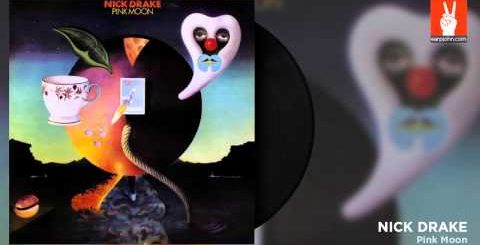
Harvest Breed is not merely a song; it’s a hauntingly beautiful introspective journey cloaked in the mellow acoustic timbre characteristic of Nick Drake’s ephemeral body of work. The track, culled from his posthumously celebrated album ‘Pink Moon,’ invites listeners into a world rife with poetic introspection and enigmatic allusions.
Decoding the lyrics of Harvest Breed—a merely 90-second piece overflowing with depth and nuance—requires peering into the delicately crafted words that have long intrigued Drake’s audience. It’s an exploration of finality, nature, and the passage of time that exudes a mysterious warmth paired with an existential chill.
An Ode to Transience: Nick Drake’s Lyrical Elegy
In Harvest Breed, Nick Drake’s lyrics invoke a sense of fleeting existence—’falling fast and falling free’ much like autumn leaves destined to return to the earth. It’s as if the song cradles the listener in a ruthless but gentle reminder of life’s impermanence. The repetition of ‘falling’ not only emphasizes a descent but also a letting go, which can be seen as a surrender to natural cycles.
The song adopts an almost meditative rhythm that matches the inevitability of the fall. By doing so, Drake leads us through the acknowledgement of life’s cycles, seemingly comforting us with acceptance, and allowing us to find solace in the inescapable.
The Dance with Nature’s Melancholy Waltz
Drake’s brief yet potent imagery of ‘stoop[ing] to touch and kiss the flowers that bend’ is laden with an appreciation for the delicate dance with nature’s creations, even as one faces their own end. This interaction with nature’s humility bears an echo of the Romantic poets, where beauty and pathos collide.
The dichotomy of a delicate touch to flowers, which themselves bend as a prelude to decay, confers a human kinship with the natural world—a world that both celebrates life and mourns its loss within the same breath.
Discovering The Song’s Hidden Message: A Reflection On The Soul
Perhaps the ‘harvest breed’ Drake alludes to may be interpreted as a metaphor for the yield of one’s life—the fruition of experiences and wisdom accumulated and ultimately reaped at the end. The ‘friend’ mentioned could be seen as an entity, whether it be another person, an aspect of the self, or even death, with whom one finds companionship in this concluding chapter.
Through masterful ambiguity, Drake does not limit the song to a singular interpretation, but rather allows the symbolism to resonate differently with each listener, thereby weaving a personal connection that speaks to the silent conversations within one’s soul.
Memorable Lines That Echo Through Time
While the entire song presents itself as a poem, the lines ‘Falling fast and falling free’ stand out for their effective portrayal of surrender to fate. It encapsulates the human experience of letting go, an act both terrifying and liberating, which Drake encapsulates in a hauntingly serene mantra that continues to resonate.
Indeed, the beauty in these lyrics lies in their ability to convey profound emotion and existential truth in a mere handful of words—a testament to Drake’s songwriting prowess.
Ready Now for the Harvest Breed: Embracing Life’s Culmination
The assertion that one is ‘ready now’ speaks to a final acceptance, a preparation for whatever lies beyond. In stark contrast to the initial lines, which contemplate freefall, this readiness suggests a culmination of the journey, a serene reconciliation with the end of the season—both literally and metaphorically.
The brevity of the song itself mirrors life’s fleeting nature, leaving the listener with a lasting impression of Drake’s poignant message. It’s an example of how sometimes, the most profound statements are made not through verbosity, but rather through the sparse eloquence of simplicity.