History Song by The Good, the Bad & the Queen Lyrics Meaning – Delving into the Echoes of the Past
Lyrics
You see the sun
Hit the arch
A history song
If you don’t know it now then you will do
If you don’t know it now then you will do
A ship across
The estuary
Sundays lost
In melancholy
If you don’t know it now then you will do
If you don’t know it now then you will do
A storm of strings
Far away
The hangers on
Saved the day
If you don’t know it now then you will do
If you don’t know it now then you will do
And if you don’t feel it now then you will do
And if you don’t feel it now then you will do
La la la la la la la
La la la la la la la
La la la la la la la
La la la la la la la
La la la la la la la
La la la la la la la
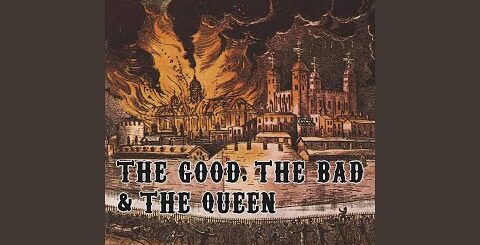
The Good, the Bad & the Queen, a supergroup comprised of Damon Albarn, Paul Simonon, Simon Tong, and Tony Allen, have a knack for weaving historical tapestries into their music. ‘History Song,’ a track from their eponymous album, serves as a socio-political commentary wrapped within a deceptively simple melody. Like reflections in a mirror, the lyrics resonate with the state of the collective consciousness, delving into themes that interlace our shared past with the present.
On closer inspection, ‘History Song’ reveals itself as more than a melodic venture; it is rife with allegories of memory, time, and the repetitive nature of human experiences. Each verse, each chorus, is a cryptic piece in a jigsaw puzzle spanning eras. Through this examination, we unravel the nuanced threads of the tapestry that The Good, the Bad & the Queen have meticulously laid out for us.
The Arch as a Gateway to the Past
The term ‘hit the arch’ in ‘History Song’ is a portal to interpretation. The arch, a classical symbol, often represents the dichotomy of triumph and decay. Here, it encapsulates the flow of time, the coming of day, signifying a revelation—in this case, a historical enlightenment. It heralds an awakening to the cycles of time, suggesting that what we have yet to comprehend will become clear with the dawn.
The use of the sun striking the arch suggests a merging of the elements, where light illuminates history’s nooks, revealing truths often forgotten or overlooked. It beckons the listener to be patient; understanding will unfurl with time, just as sure as the sun’s daily journey across the sky.
Sailing Through Time: Estuaries and Lost Sundays
Water bodies, like estuaries, are junctions where tides meet streams, much as the present dances with history. The ‘ship across the estuary’ can be seen as our own journey through the continuum of time. However, the ‘Sundays lost in melancholy’ juts out as poignant moments frozen in time—perhaps acknowledging that amidst progress, there is loss, constants amid change.
This sense of melancholy could also be interpreted as a longing for simpler times, a yearning evoked by the calm and quietness of Sunday reveries. It paints a picture of reflection and sorrow that often accompanies the remembrance of days gone by and the recognition of their passage.
The Hidden Meaning: Storms and Strings
In literary tradition, storms are harbingers of change, of tumultuous upheaval. ‘A storm of strings’ then might symbolize the chaos of history—the unseen forces that tug at the fabric of society, orchestrating events from afar. This line suggests that history is not merely a sequence of events but a symphony composed by countless, unseen players.
The phrase ‘far away’ can be indicating both physical and temporal distance, places, and times removed from our direct sight. Yet, they resonate within us, affecting us in ways we may not fully comprehend or feel until the strings of these distant storms pull upon our own lives.
Unsung Heroes: The Hangers On Who Saved the Day
In the song’s narrative, ‘the hangers on’ aren’t merely spectators but the unnamed heroes of everyday life. They’re the individuals who, through their silent perseverance, anchor us throughout the storied tempest. This could be a tribute to the common people, often neglected in grand historical narratives, whose resilience has borne the weight of empires.
Throughout history, these ‘hangers on’ could represent the voices that history books don’t always acknowledge—the minorities, the disenfranchised, the silent majority. Yet, their role in ‘saving the day’ implies a vindication, a recognition of their unheralded influence, and a challenge to our understanding of what truly shapes our world.
Memorable Lines Wrapped in Charming Melancholy
The recurring motif, ‘If you don’t know it now then you will do, and if you don’t feel it now then you will do,’ lends a comforting certainty that evokes both mystery and inevitability. This mantra-like refrain becomes the central pivot around which the song spins, encapsulating the inevitability of learning and feeling the weight of our collective past.
The simplicity of the line is its genius—it speaks to the heart of human experience, to the idea that the passage of time brings wisdom and emotion into sharper focus. It’s a line that can be whispered across centuries, a gentle reminder that the threads of history are woven deeply into the fabric of our being, always ready to reveal themselves—even if they lay dormant for a time.