I Walked by Sufjan Stevens Lyrics Meaning – Unraveling the Melancholy Journey
Lyrics
I’m already dead to you
But I’m inclined to explain
To you what I could not before
Whatever you didn’t do, what you couldn’t say
I am sorry that the worst has arrived
For I deserve more.
For at least I deserve the respect of a kiss goodbye
Tell me, do you think of me now
As I think of you?
For I could not have shaken the touch of your breath on my arm
For it has stayed in me as an epithet
I am sorry the worst has arrived
For I’m on the floor
In the room where we made it our last touch of the night
I walked, ’cause you walked
But I won’t probably get very far
Sensation to what you said
But I’m not about to expect something more
I would not have run off
But I couldn’t bear that it’s me
It’s my fault
I should not be so lost
But I’ve got nothing left to love
Lover, will you look from me now
I’m already dead
But I’ve come to explain
Why I left such a mess on the floor
For when you went away
I went crazy. I was wild with the breast of a dog
I ran through the night
With the knife in my chest
With the lust of your loveless life
I walked, ’cause you walked
But I won’t probably get very far
Sensation to what you said
But I’m not about to expect something more
I would not have run off
But I couldn’t bear that it’s me
It’s my fault
I should not be so lost
But I’ve got nothing left to love
I walked, ’cause you walked
I walked, ’cause you walked
I walked, ’cause you walked
I walked, ’cause you walked
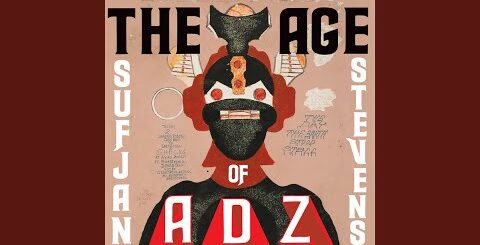
Sufjan Stevens, with the artistic precision of a poet and the emotive force of a seasoned storyteller, often lays open the human heart, presenting its raw intricacies through melody and metaphor. ‘I Walked’, a track from his 2010 album ‘The Age of Adz’, unfolds as a narration of love’s aftermath—a cartography of pain, reflection, and an unvoiced yearning that resonates with those who have traversed through the hinterlands of a love lost.
This stirring piece bears Stevens’s hallmark: delicate arrangements and intimate lyrics that map the subtleties of human emotion. Yet, with ‘I Walked’, there lies an additional layer of profound subtlety that demands a patient and thoughtful unraveling. The song’s narrative, while somber and personal, sparks a universal chord on severed connections and the solitary path one must walk in their wake.
A Soliloquy of Severance
From the very onset, ‘I Walked’ is established as a soliloquy, a personal address from one who is ‘already dead’ to their unresponsive lover. The opening lines carry an air of resignation, where the speaker reaches out—not to rekindle but to explicate the unspoken, the chasm of silence that remained. Stevens’s voice, coupled with subdued instrumentation, erects an atmosphere of finality and the solemn dignity of facing one’s emotional demise.
This act of speaking to an absent lover is rich in pathos. It’s an endeavor to obtain closure for himself—a lamentation for the respect and recognition that never arrived, epitomized by the haunting absence of ‘a kiss goodbye’. The emotional labor of the speaker is futile but necessary, a paradox that reflects the complexity of healing.
The ‘Epithet’ of Love Left Behind
Sufjan Stevens adroitly uses evocative imagery that clutches at the repository of memories inexplicably anchored to the senses. Here, the ‘touch of your breath on my arm’ transcend temporal bounds, immortalizing a moment, perhaps benign in its occurrence, now made sacred by loss. This arresting image, referred to as an ‘epithet’, suggests a narrative frozen in remembrance, an indelible mark left by the departed lover.
The use of this particular word, typically associated with commemorative inscriptions, signals that the impression left behind by the lover is both a tale of endearment and a tombstone of their existence in the speaker’s life. Tightly latched to this sensory ghost is the stark realization: ‘I am sorry the worst has arrived.’ It is a mournful acceptance that interrupts the song’s measured pace with the gravity of despair.
Chasing Shadows on an Inescapable Track
Contrary to the song’s title, the act of walking in ‘I Walked’ is not about motion but about paralysis—the heart’s pursuit after an untouchable phantom. In the confessional chorus, ‘I walked, ’cause you walked,’ lies the acknowledgment of following in the other’s emotional footsteps, yet without hope for reconciliation or progress. Stevens’s refrain is the Sisyphean ordeal of heartbreak, the rhythm of steps that only trace in circles.
The resolve to walk without the expectation of ‘something more’ is the tragic heroism of the wounded. There is neither delusion of a Hollywood ending nor fantasy of reciprocated feelings. It is the bareness of self-awareness—a wayfaring voyage into the interiority of one’s desolation, accompanied by the specters of what once was.
The Symphony of Destruction in Love’s Wake
Stevens captures the aftermath of separation with a visceral intensity that borders on the chaotic. The imagery of running ‘with the knife in my chest’ contrasts sharply with the rest of the song’s serene introspection. Exposing the internal pandemonium that can follow losing someone, the lyrics evoke a sort of madness, the feral ‘wild with the breast of a dog’ untamed by society’s expectations of composed grieving.
Furthermore, these powerful metaphors encapsulate the violence of feelings unmoored and the self-destructiveness that sometimes shadows abandonment. ‘Why I left such a mess on the floor,’ is not only a testament to physical disarray but the colossal mess left in the unseen alcoves of a heart that loved too fiercely.
Deciphering the Melancholic Harmony
Among the song’s most memorable lines is the recurring confessional, ‘It’s my fault, I should not be so lost.’ Serving as a fulcrum for personal accountability, Stevens confronts the dichotomy between knowing one’s role in their heartbreak and the lingering inability to find solace. The admittance of fault is both an act of self-flagellation and a piercing insight into the burden of cognizance without relief.
In the song’s closing moments, the repetition of ‘I walked, ’cause you walked’ becomes a ghostly echo, a litany, and a maddeningly quiet resignation to the sorrow that beams with painful clarity throughout the track. Stevens leaves listeners inclined towards introspection, pondering the mutability of love and the haunting permanence of its departure.