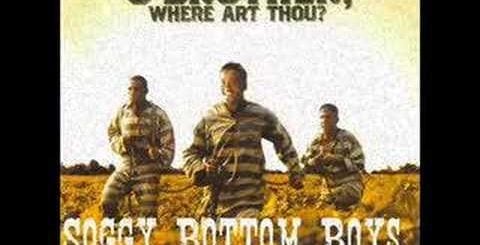
I’m A Man Of Constant Sorrow by The Soggy Bottom Boys Lyrics Meaning – Unraveling the Layers of Folk’s Timeless Tale
Lyrics
I am a man of constant sorrow,
I’ve seen trouble all my days.
I bid farewell to old Kentucky,
The place where I was born and raised.
The place where he was born and raised!
For six long years,
I’ve been in trouble.
no pleasure here,
on earth I’ve found.
For in this world,
I’m bound to ramble,
I have no friends to help me now.
He has no friends to help him now!
It’s fare thee well,
my old true lover,
I ne’er expect to see you again.
For I’m bound to ride,
that Northern Railroad,
Perhaps I’ll die upon this train.
Perhaps he’ll die upon this train!
You can bury me in some deep Valley,
For many years, there I may lay.
Then you may learn to love another
while I am sleeping in my grave
While he is sleeping in his grave!
Maybe your friends think I’m just a stranger,
My face you’ll never see no more.
But, there is one promise that is given,
I’ll meet you on God’s golden shore.
He’ll meet you on God’s golden shore!
To the uninitiated, ‘I’m A Man Of Constant Sorrow’ by The Soggy Bottom Boys might just be a catchy tune, a relic from an era bygone woven into the soundtrack of the acclaimed film ‘O Brother, Where Art Thou?’. But to those who listen, really listen, the song is a profound narrative of hardship and existential wanderings, encapsulating the spirit of American folk music.
The ballad, with its mournful fiddle and earnest banjo, carries within it the weight of generations, echoing the O Brother’s Depression-era setting and beyond. It’s a song that speaks not only of personal heartache but that whispers the collective woes of those who’ve found themselves at the mercy of life’s relentless churn.
An Odyssey of Grief and Resilience
The lyrics of ‘I’m A Man Of Constant Sorrow’ are a chronicling of the human condition—its trials, its impermanence, and its stoic resilience. Each verse is a vessel of sorrow, carrying stories of displacement, loneliness, and unfulfilled desires. The song’s narrator bids farewell to Kentucky, the place of his origin, recognizing that the seeds of agony have been sown deep in the fabric of his being.
Yearning for a silver lining, the character finds none. His six years of trouble serve as a metaphor for the lifelong journey of struggle. Devoid of pleasure on earth, he’s resigned to a nomadic existence of rambling, untethered to friends or his true love, symbolizing the brutal truth of disconnection that many face.
The Weight of the Road’s Solitude
In deciphering the enigma entwined with the song’s verses, one can sense the aloneness encircling the protagonist. Opting to ride on the Northern Railroad hints at escaping, or perhaps a seeking—a quest fraught with its uncertainty, with the looming specter of death as his only companion.
There is a universality to this solitude, a reflection of the times when people left their hearts and homes behind seeking better fortunes, only to be embraced by a blanket of seclusion. The Soggy Bottom Boys encapsulate this sense of outbound exile, where friendships become a luxury and former lovers turn into distant memories.
Love Lost But Not Forgotten
Perhaps the most gripping element of the song is the narrator’s heartfelt goodbye to his old true lover, a farewell not driven by choice but by circumstance. It’s a tender acknowledgment of the intimate casualties of a wayfarer’s life, where love remains a constant, even when it’s relegated to the irretrievable past.
The depth of this lost connection casts a shadow on the path ahead, as he contemplates a lonely fate where even in death, he imagines himself buried alone, reconciled to be remembered by a love that could blossom anew for someone else. It’s a poignant surrender to the transitory nature of life and love.
From Earthly Graves to Golden Shores
In the throes of constant suffering, the song’s subject clings to a sliver of hope embedded in a sacred promise—a meeting on God’s golden shore. This is the turning point, a transition from the earthly plight to a celestial hope; a conviction that beyond the vale of tears exists a plane of eternal reunion.
This ultimate consolation resonates with the despairing soul seeking solace in spirituality and fate. It provides a redemptive denouement to the otherwise bleak journey, offering an eschatological perspective that uplifts the narrative from mere sorrow to a spiritual pilgrimage.
Eternal Echoes of Memorable Lines
It’s the raw simplicity of lines like ‘I am a man of constant sorrow, I’ve seen trouble all my days’ that brands the song into the collective consciousness. These words, repetitive in their structure and haunting in their delivery, underscore the unavoidability of life’s hardships while reminding us of our shared humanity.
And it’s in the refrain ‘The place where he was born and raised’ that the melody finds its heart, a compass point of identity and memory that, despite the sorrow and the roaming, remains an undeniable anchor in the flux. As the Soggy Bottom Boys render the song with heart-wrenching sincerity, it becomes clear that their performance is not just an act—it’s a genuine echo of the human spirit.