It’s Too Late by The Streets Lyrics Meaning – The Shattered Timelines of Young Love
Lyrics
‘Leave now, don’t be late’
She said one day she’d walk away
‘Cause I was always late
Thought things were okay
Didn’t care though anyway
Say ‘Sorry, babe, I had to meet a mate’
Tempting fate
We first met through a shared view
She loved me and I did too
It’s now seven-fifty
Getting ready, better be nifty
Do my hair quickly
Step out, it’s cloudy
Mate bells me to borrow money
I’ve got two Henrys and a dealer to pay
Call up on geezers to rid these green trees
From my reeking jeans
Got a ‘you-think-I-care’ air
Out glaring geezers’ stares
I’m here and I’m there
Couldn’t see past the end of my beer
What was getting near
All of the silence after the tears
[Chorus]
I didn’t know it was over
Till it was too late, too ate
But if I ever needed you
Would you be there?
She said ‘Meet me at the gates, don’t be late’
But pretty soon the day came for change
And I was glad she never walked away
So I’m choosing what to wear
Doing my hair with an hour to spare
When my life went pear
She’d been there with a fixed stare
Big wheel climbed to the top
Geezers’ stares bounced off
Standing at the top of this huge mountain
Smiling and shouting
Spring flowers sprouting
Not one inch of doubt in my mind
As I reached the gates
Came around the corner at a rate
Risked her love
But I was gonna set things straight
Never again am I gonna be late [x3]
[Chorus]
I said meet me at the gates
Leave now, don’t be late
I waited for a while
Listening to her voice mail
Mind set sail
Then the facts turned me pale
Wind, rain, hail
My fears unveiled for my fair female
She’d walked away
Too little to late
I step up the pace
Walk past the gate
Rain runs over my face
Spirit falls from grace
I purchase a hazy escape at the alcohol place
In the chase, I sat down, got a fat frown
Weeping and drown in my senses
For this love game’s expensive
I walk in a trance
Got a wounded soldier stance
And the everyday geezers’ stares throw me off balance
Now nothing holds significance
And nothing holds relevance
‘Cause the only thing I can see is her elegance
[Chorus x2]
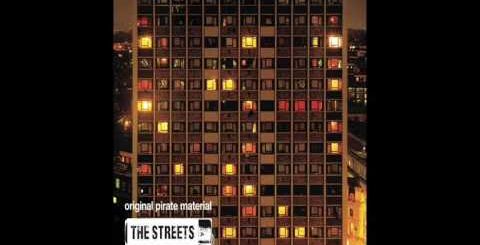
In the pantheon of modern urban ballads, The Streets’ ‘It’s Too Late’ occupies a particularly bittersweet niche. The track, a staple from Mike Skinner’s early 2000s discography, unfolds the narrative of a flawed relationship, held together by threads of hope and habit rather than the firm cord of mutual commitment. It’s a chronicle of missed chances and the creeping realisation that love, no matter how fervently clung to, can slip like sand through desperate fingers.
With Skinner’s hallmark raw narrative and garage-beat backing, the song stands as a confessional soliloquy of a protagonist too caught up in his own world to see his relationship’s demise. This article delves deep into the heart of ‘It’s Too Late,’ exploring the themes of time, regret, and the haunting clarity that hindsight brings to our most significant moments.
A Timeline Torn Asunder: The Perils of Procrastination
‘It’s Too Late’ taps into the universal theme of procrastination and its dire consequences on personal relationships. Skinner constructs a narrative where time itself becomes a character, an ever-receding horizon buffered by commitments, distractions, and idle indulgences that ultimately lead to the relationship’s downfall.
The protagonist’s repeated mantra, ‘Leave now, don’t be late,’ becomes an ironic echoing throughout the song, underlining each moment they chose something, or someone else, over the person they claim to love. In the cruel hindsight of loss, the realization dawns—time was never their ally, but the silent arbiter of their neglect.
The Lingering Scent of Regret: When Apologies Are Not Enough
As the story unfolds, the protagonist’s apologies sprawl out like the breadcrumb trail of their retreating figure. Each ‘Sorry, babe’ reflects habitual indifference, where sorry serves not as a plea for forgiveness, but a perfunctory pause in the monologue of self-absorption. Skinner’s portrayal of remorse shows that when not coupled with action, apologies lose potency and become empty echoes of what could have been.
The listener is dragged through this purgatory of half-measures and hollow words, witnessing how the space between words and deeds widens like a chasm, inevitable to swallow the protagonist’s last chance for redemption.
From Shared Views to Divergent Paths: The Fragmentation of Once Whole
One of the song’s most poignant elements is the shared view that brought them together. Yet as the narrative progresses, their paths diverge, mirroring the many couples who start in sync only to find their journeys veering apart, leaving behind a tangle of ‘what ifs’ and ‘if onlys.’
Skinner’s deft storytelling lays bare the evolution of a relationship from its promising inception—marked by common visions—to the stark reality of mutual estrangement, where shared views become nothing but distant memories on separate roads.
The Hidden Meaning: A Metaphor for Lost Youth
Peering through the layers of relationship woes, ‘It’s Too Late’ resonates with a broader allegory for the recklessness and misallocation of youth. The protagonist’s tale of squandered love parallels the way one might look back at their younger years with a mix of fondness for the passion and dismay for the lack of foresight.
Layered within this modern-day ballad is a warning siren for the heedless historic that chases momentary pleasure, substance, and ego at the expense of long-term happiness—a wakeup call echoing well beyond the confines of a tortured romance.
Memorable Lines: The Inescapable Echo of ‘I Walk in a Trance’
Skinner cements the song’s haunting quality with the line, ‘I walk in a trance,’ a raw display of the numbness that accompanies the aftermath of a relational collapse. It captures the liminal space the protagonist traverses—between the reality of the present and the nostalgia of what’s lost—as they move through a world rendered colorless by their own making.
These stark words speak not just to the narrative’s heartbreak, but also to the universal human experience of moving through life in a daze, pushed forward by time yet tethered to the past. The line encapsulates the essence of the song—a timeless reminder of love’s cruel potential to transform joy into haunting lament.