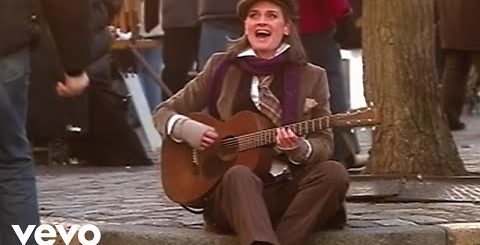
J’Ai Deux Amours by Madeleine Peyroux Lyrics Meaning – Exploring the Intricate Dance of Identity and Place
Lyrics
Là-bas sous le ciel clair
Il existe une cité
Au séjour enchanté
Et sous les grands arbres noirs
Chaque soir
Vers elle s’en va tout mon espoir
J’ai deux amours
Mon pays et Paris
Par eux toujours
Mon cœur est ravi
Manhattan est belle
Mais à quoi bon le nier
Ce qui m’ensorcelle
C’est Paris, c’est Paris tout entier
Le voir un jour
C’est mon rêve joli
J’ai deux amours
Mon pays et Paris
Manhattan est belle
Mais à quoi bon le nier
Ce qui m’ensorcelle
C’est Paris, c’est Paris tout entier
Le voir un jour
C’est mon rêve joli
J’ai deux amours
Mon pays et Paris
With a voice that drapes over the soul like a delicate, wistful shawl, Madeleine Peyroux delivers a rendition of ‘J’Ai Deux Amours’, a classic that traverses the intricate map of human affection and connection. The American-born jazz singer, known for her reminiscent inflections of Billie Holiday, brings a soul-stirring interpretation to this timeless chanson, probing deeply into the layered dimensions of love and allegiance.
The song, which originally became famous through Josephine Baker, captures a sentiment of divided passion between homeland and the enchanting city of Paris. Peyroux, with her transatlantic ties and love for French culture, embodies the song’s emotions flawlessly, singing not just with her voice, but with her very essence.
Peyroux’s Vocal Alchemy: Turning the Personal into the Universal
Peyroux has a remarkable ability to transform the lyrics she croons into something far more poignant than mere words strung together. It’s in the subtle quiver of a note held, the gentle crescendo of a verse—these are the places where Peyroux excels, transforming ‘J’Ai Deux Amours’ into a meditation on love’s complexities.
Each utterance of her ‘deux amours’, or two loves, is steeped in varied tones of tenderness and melancholy. This duality resonates universally, transcending language and border. It speaks to those who have placed pieces of their hearts in more than one location, whether it be people or places.
A Tale of Two Cities: Unraveling Dual Affections
The literal meaning of ‘J’Ai Deux Amours’ seems straightforward: a love letter to Paris and one’s own country. But Peyroux’s treatment gives rise to a compelling narrative of an individual caught between the allure of the familiar and the magnetic call of the abroad.
Herein lies a subtle discussion on identity and longing—a dance between the comfort of what one calls ‘home’ and the charm of what’s foreign. Paris, with its irresistible romantic allure, serves as a backdrop for a deep-seated desire for exploration and the perpetual pull of one’s origins.
The Hidden Meaning: Duality as a State of Being
Diving deeper into Peyroux’s rendition uncovers the ‘between-the-lines’ message of ‘J’Ai Deux Amours’. It speaks to the heart of those who live their lives straddling worlds, who find themselves loving equally, yet differently. The chanson encapsulates the essence of cultural duality—never wholly belonging to one place or another but cherishing both deeply.
This bittersweet duality is the song’s hidden anchor, resonating with anyone who has ever grappled with the complexities of identity formed by more than one influence. Peyroux, with a personal history of cultural entwining, projects this introspective narrative into each note she delivers.
Enchanted by the ‘City of Light’: Dissecting Memorable Lines
‘Ce qui m’ensorcelle / C’est Paris, c’est Paris tout entier’ – These lines are the emphatic heart of the song, laid bare by Peyroux’s nuanced performance. ‘Enchanted’ by Paris in its entirety, the singer captures the city’s ineffable pull—more than just its beauties, but its spirit as well.
The repetition of ‘Paris tout entier’ is an embracing of the city beyond the postcard imagery; it’s a knowing nod to the city’s capacity to become enmeshed within one’s very identity, capturing the full essence of an often indescribable love.
A Requiem for The Wandering Heart: Insatiable Longing in Verse
While ‘J’Ai Deux Amours’ may seem to touch only on geographical love, under Peyroux’s guardianship, it becomes a requiem for all the wandering hearts tethered by ardent yearning. The lyrics ‘Le voir un jour / C’est mon rêve joli’ express the longing not just for Paris, but for reconciliation of the internal dichotomy that comes with dual affections.
Through ‘J’Ai Deux Amours’, Peyroux offers solace for those who dream of reconciling the disparate pieces of their love and identity. Her voice, both haunting and comforting, serves as a guiding light for those navigating the sometimes-lonely oceans between their loves, be they places, people, or the uncharted territories within themselves.