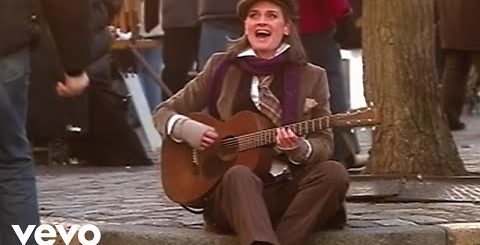
J’ai Deux Amours by Madeline Peyroux Lyrics Meaning – Unraveling the Bicultural Love Affair
Lyrics
On dit qu’au delà des mers
Là-bas sous le ciel clair
Il existe une cité
Au séjour enchanté
Et sous les grands arbres noirs
Chaque soir
Vers elle s’en va tout mon espoir
J’ai deux amours
Mon pays et Paris
Par eux toujours
Mon cœur est ravi
Manhattan est belle
Mais à quoi bon le nier
Ce qui m’ensorcelle
C’est Paris, c’est Paris tout entier
Le voir un jour
C’est mon rêve joli
J’ai deux amours
Mon pays et Paris
Manhattan est belle
Mais à quoi bon le nier
Ce qui m’ensorcelle
C’est Paris, c’est Paris tout entier
Le voir un jour
C’est mon rêve joli
J’ai deux amours
Mon pays et Paris
There’s a profound eloquence to Madeline Peyroux’s rendition of ‘J’ai Deux Amours,’ a song that circles back through time from its origins with Joséphine Baker to touch on the enthralling subject of dual affections in a modern era. While the melody serenades, the lyrics unfold a tale of hearts divided across oceans and identities crafted by the love for a homeland interwoven with the enchantment of a city afar.
Exploring deeper into Peyroux’s philosophy of love and belonging, we encounter a complex narrative of personal and cultural identity, set to a melodious backdrop that begs for a second and third listen. It’s a song that, on the surface, pays homage to the allure of the City of Lights, yet beneath its luster, it suggests a broader tale of romance, nostalgia, and the immigrant experience.
The Emotional Geography of Love
By evoking ‘deux amours’—two loves—Peyroux frames a dual allegiance that many listeners know all too well: the love for one’s country of origin and the infatuation with a new, distant city. These are not merely geographical locations; they are emotional landscapes, each with its own culture, rhythm, and soul. As Peyroux croons about the irresistible pull of Paris, she conjures in her listeners the universal struggle of rooting oneself in the familiar or branching outwards towards the allure of the unknown.
Whether it’s the metaphorical Manhattan representing new beginnings or the timeless charm of Paris, each place commands a different aspect of one’s heart. One is the manifestation of ravenous ambition and the boundless dream, the other, a romantic yearning for history-laden streets and starry French nights. The lyrics, layered over Peyroux’s smoky tones, suggest that such divided loves are not mutually exclusive, but rather, inform each other and define a richer human experience.
Seducing the Senses with Parisian Charm
Paris is not just a city in Peyroux’s song; it is the epitome of the entrancing and the magical. The verses paint Paris as the subject of lore and dreams, seducing the senses and capturing the heart of any who cast their dreams under its ‘grand arbres noirs.’ It is no mere concrete jungle, but a living, breathing muse that enchants ‘tout entier’—completely.
When Peyroux declares her love for Paris, she’s not just subscribing to the rosy image of the city presented in countless songs and stories before, she’s anchoring deep into the cultural consciousness of Paris as a haven for artists, lovers, and dreamers. Her voice carries a timeless connection to the city’s artistic legacy—a place where Ernest Hemingway wrote about moody cafés and F. Scott Fitzgerald lauded the vibrant parties—and in doing so, continues to establish Paris as an eternal fountain of inspiration.
A Riveting Repertoire of the Immigrant Dilemma
Madeline Peyroux’s performance of ‘J’ai Deux Amours’ resonates beyond its Parisian infatuation by articulating the inherent duality of the immigrant experience. This is a song where the experiences of leaving, belonging, and the ‘rêve joli’—the beautiful dream—of returning, or perhaps visiting for the first time, run deep.
Each listener may find mirrors of their own story within its lines, feeling the simultaneous tug of their motherland and the adopted land that offers new opportunities or freedoms. This tension can be a wellspring of emotional and creative energy, as much about actual geography as it is about the expansive landscape of identity shaping itself across different horizons.
The Memorable Lines That Bind
In ‘J’ai Deux Amours,’ the lyrics that remain etched in memory reveal Peyroux’s loves: ‘Mon pays et Paris.’ These simple words carry layers of nuance, each permutation a new shade of affection for one’s origins and the admiration for the city that represents aspirational beauty and cultural grandeur.
By capturing the essence of these sentiments in such concise, yet evocative language, Madeline Peyroux articulates a narrative that feels both personal and universal. It’s a tale of balancing love for the past with the passions of the present—a harmonic convergence of roots and wings coexisting in the melody of life.
The Hidden Meaning in the Musical Tapestry
While on the façade ‘J’ai Deux Amours’ is about the dichotomy between homeland love and the enchantment with Paris, there is a subtext that speaks volumes on the cross-pollination of cultures. Madeline Peyroux’s interpretation evokes the subtle ways in which people’s identities intertwine with places, ideas, and dreams.
The song itself becomes a tapestry, each thread representing different facets of life and love, interwoven to create a portrait of complex bicultural sentiments. In embracing both Paris and her country, the singer is not splintering her identity but enriching it—embracing a multicultural melody that plays beautifully to the tune of human experience.